
Try Telaga Waja Rafting Now to Experience the Excitement!
Telaga Waja Rafting is an exciting option for travelers looking for an adventurous rafting experience in Bali. Located in Karangasem, East Bali, the Telaga Waja River is known for its relatively long rafting route, varied rapids, and scenic natural surroundings.
Unlike a leisurely river excursion, rafting in Telaga Waja combines active paddling with changing river conditions. Participants may encounter fast-moving currents, sharp turns, rocky sections, and route-specific drops along the journey. These features create an engaging experience for visitors who enjoy outdoor challenges.
Surrounded by green landscapes and the rural atmosphere of East Bali, Telaga Waja offers more than just an adrenaline-filled activity. It also provides an opportunity to appreciate the island’s natural environment from a different perspective. Before booking, participants should check the current route, river conditions, and package details with their chosen operator.
Telaga Waja River and the Beauty of East Bali
The Telaga Waja River originates in the mountainous region around Mount Agung and flows through parts of eastern Bali. Its surroundings include rice fields, green vegetation, rocky riverbanks, and small villages that reflect the rural character of the area.
The combination of flowing water, mountain landscapes, and countryside scenery creates a refreshing atmosphere for a rafting experience in Bali. Along certain sections of the route, participants may also observe local activities near the river, such as farming and other aspects of village life.
These encounters offer a glimpse of the communities that live around the river. However, the scenery and activities visible along the route can vary depending on the rafting section, weather, and time of day.
A Rafting Terrain for Adventure Seekers
For travelers who enjoy active outdoor experiences, the Telaga Waja rafting terrain offers a combination of rapids, changing currents, and natural obstacles. Some sections are described by operators as Class III to IV, although the actual difficulty can change according to water levels, rainfall, and the route selected.
The route is commonly advertised at approximately 14 kilometers or more, depending on the operator and package. Along the journey, participants may encounter large rocks, narrow passages, and sections with stronger currents that require coordination and attention.
One interesting feature of Telaga Waja is the contrast between its river sections. After navigating more demanding rapids, participants may reach calmer stretches where they can relax briefly and enjoy the surrounding scenery. The changing pace helps make the journey feel varied rather than repetitive.
For a more enjoyable trip, listen to the guide’s commands and coordinate your paddling with the rest of the group, especially when approaching challenging sections.
Read More: Rafting Telaga Waja: The Longest and Challenging in Bali
Telaga Waja Rafting: Around Two Hours of Action and Rapids
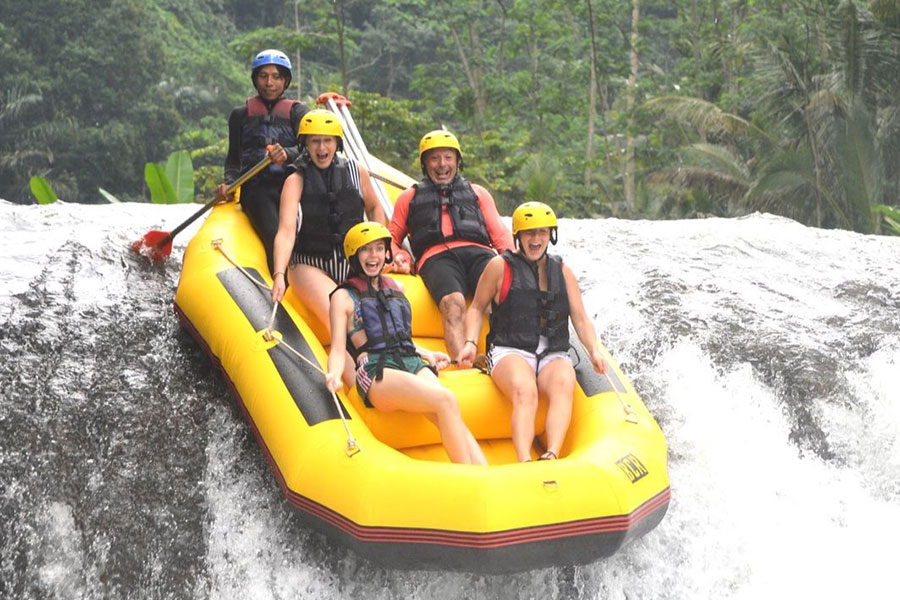
A rafting trip on the Telaga Waja River commonly takes around 2 to 3 hours on the water, although some packages advertise shorter durations of approximately 2 hours. The actual time depends on the route, water conditions, group pace, and operator arrangements.
During the journey, participants may experience different types of river sections, ranging from relatively calm stretches to more active rapids. Each section offers a different experience, requiring participants to follow the guide’s instructions and adjust their paddling as needed.
The surrounding landscape adds to the adventure. Depending on the route, you may pass bamboo bridges, rocky riverbanks, green hills, and rice fields. Calmer stretches also provide opportunities to appreciate the countryside before continuing to the next section.
When comparing packages, check whether the advertised duration refers only to time on the water or includes registration, equipment preparation, safety briefings, and other activities.
The Excitement of the Waterfall and River Drop Section
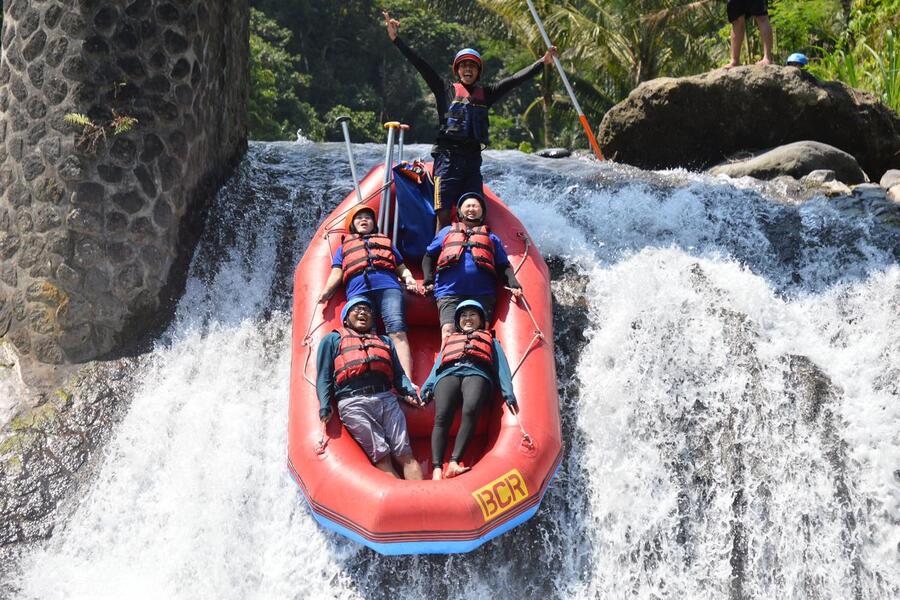
One of the features sometimes highlighted in Telaga Waja rafting promotions is a drop of approximately 4 meters. This section can create an exciting moment as the raft descends through a change in river level.
However, the feature should not be assumed to be part of every rafting package or available on every trip. Its availability depends on the operator’s route, current river conditions, and safety assessment.
Before approaching any demanding section, participants should listen carefully to the guide’s instructions. Follow the recommended seating position and paddling commands, and avoid making sudden movements. Although safety equipment and guide supervision are essential parts of rafting, they cannot eliminate every risk associated with river activities.
Safety Briefing and Protocol Before Starting Rafting
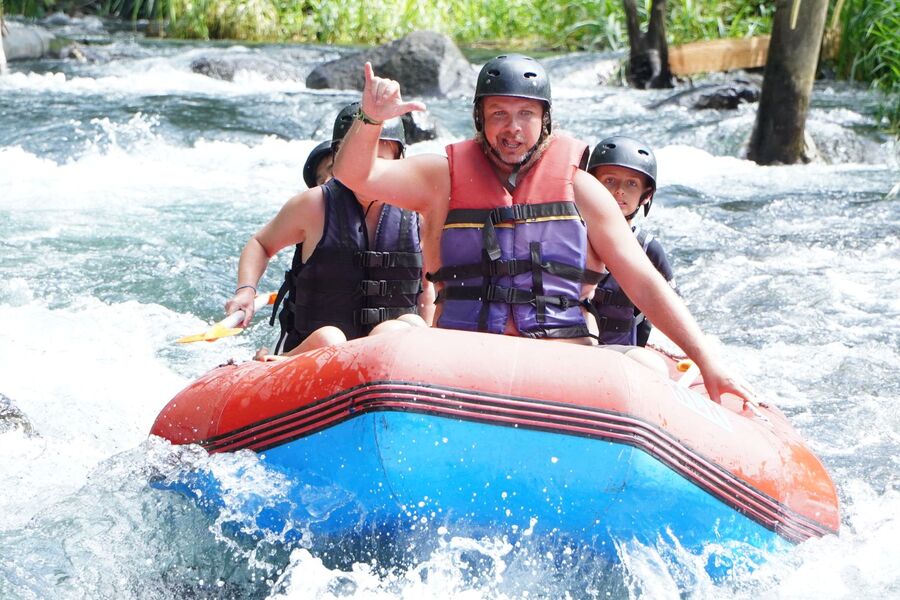
Before starting rafting at Telaga Waja, participants should attend the safety briefing provided by the rafting operator. This session explains how to use the equipment, respond to guide commands, and behave during different river conditions.
Here are some important points generally covered during the briefing:
1. Proper Use of Safety Equipment
Participants are generally provided with a helmet and life jacket. Make sure both are fitted correctly and secured before entering the raft. Paddles are also provided for participants to follow the guide’s instructions and coordinate their movements.
2. Seating Positions and Paddling Techniques
The guide will explain where each participant should sit and demonstrate basic paddling techniques. Proper positioning and coordinated movements help the group navigate the river more effectively.
3. Emergency Instructions and Guide Signals
Participants should understand the guide’s commands and signals, including instructions to paddle, stop, or adjust their position. Pay attention throughout the briefing and ask questions if any instruction is unclear.
4. What to Do If You Fall into the Water
Although guides take precautions to manage the activity, unexpected situations can occur. The briefing should explain the operator’s procedures for falling into the water and receiving assistance. Follow those instructions and the guide’s directions rather than attempting to swim independently through a fast current.
What International Visitors Appreciate About Telaga Waja Rafting
Telaga Waja attracts travelers from different countries who want to experience Bali’s natural landscape through an outdoor activity. For many visitors, the appeal comes from the combination of river challenges, scenic surroundings, and the opportunity to participate in a group adventure.
The guide’s communication and the overall organization of the activity can also influence the experience. Clear explanations before departure, suitable equipment, and helpful instructions during the journey are important considerations when choosing a rafting operator.
Experiences naturally differ between visitors and providers. Travelers who want to evaluate a particular operator should check recent reviews that specifically mention the company they plan to book. Pay attention to comments about guide service, equipment condition, route arrangements, and facilities rather than relying only on general destination descriptions.
Whether you are visiting Bali for the first time or returning for another holiday, Telaga Waja offers an opportunity to explore a different side of the island. Check the available packages through Telaga Waja Rafting and confirm the latest activity details before planning your trip.
Conclusion
Telaga Waja Rafting combines an active river adventure with the natural beauty of East Bali. Its relatively long route, varied rapids, rocky sections, and surrounding countryside make it an appealing destination for travelers looking for an exciting outdoor activity.
Some packages also highlight a river drop of approximately 4 meters, although this feature and other route details depend on the operator and current conditions. Participants should therefore confirm the itinerary, expected duration, and safety arrangements before booking.
With proper preparation, suitable equipment, and attention to the guide’s instructions, rafting at Telaga Waja can become a memorable part of your Bali holiday.
Frequently Asked Questions
1. Is there a difference between the rafting starting point and the meeting point?
Yes. The meeting point is usually where participants register, prepare, and receive equipment or instructions. The actual river entry point may be somewhere else, depending on the operator’s arrangements. Confirm both locations before departure.
2. Does the rafting experience follow the same pace from beginning to end?
No. The journey can include both active rapids and calmer stretches. The pace changes according to the river’s natural characteristics, water levels, and the selected route.
3. Can I request a particular seat position in the raft?
You can tell the guide about your preference, but the final seating arrangement should follow the guide’s assessment. The guide may consider participant size, experience, group balance, and the river conditions.
4. What happens if the river conditions change shortly before the activity?
The operator should assess the conditions and determine whether the planned trip can proceed. The route, schedule, or activity may be adjusted when necessary. Ask about the operator’s rescheduling or cancellation policy when booking.
5. Can participants talk or communicate with the guide during the rafting trip?
Yes. Participants should communicate with the guide whenever they need clarification or assistance. However, during challenging sections, focus on the guide’s commands and avoid unnecessary distractions.
6. Is the approximately 4-meter drop suitable for every participant?
Not automatically. Its availability and suitability depend on the operator’s route and safety assessment on the day. Participants should follow the guide’s instructions and ask about alternative arrangements if they have concerns.
7. How can international visitors understand the safety briefing if they do not speak Indonesian?
Ask the operator in advance whether an English-speaking guide or briefing is available. Understanding the safety instructions and guide commands is important, so participants should make sure they can follow the explanations before entering the river.
8. What should I check in visitor reviews before choosing a rafting operator?
Look for recent comments about the specific operator, including the clarity of safety instructions, guide communication, equipment condition, actual activity duration, and package arrangements. These details provide more useful information than reviews that only describe the destination as exciting.