

Rafting Telaga Waja: A Long and Challenging River Adventure in Bali
Rafting Telaga Waja is a popular choice for adventure lovers looking for an exciting white water rafting experience in Bali. Located in Karangasem Regency, the Telaga Waja River is known for its relatively long rafting route, often advertised at approximately 14 kilometers, with trips commonly taking around 2 to 3 hours on the water.
Its varied rapids, rocky river sections, and surrounding countryside create an engaging experience for travelers who want more than a leisurely outdoor activity. The river also offers beautiful views of green valleys, rice fields, and the mountainous landscape of eastern Bali.
Although Telaga Waja is frequently promoted as one of Bali’s longest rafting routes, exact distances and trip durations can vary between operators and packages. River conditions also change with rainfall and water levels. For this reason, participants should confirm the current route and difficulty with their chosen operator before booking.
Main Attractions of the Telaga Waja River for Adventure Seekers
Here are several reasons why the Telaga Waja River attracts travelers who enjoy outdoor challenges and whitewater activities.
1. A Relatively Long Rafting Route
Telaga Waja is commonly advertised with a route of approximately 14 kilometers, offering an extended journey through different sections of the river. The time on the water often reaches around 2 to 3 hours, depending on the route, river conditions, and activity arrangements.
The longer journey gives participants more opportunities to experience changing currents and enjoy the natural scenery along the river.
2. Challenging Rapids and Varied River Conditions
Some sections of Telaga Waja feature stronger currents and demanding rapids. Certain parts are described by operators using Class III to IV classifications, although the actual difficulty can vary with water levels, rainfall, and route selection.
These conditions make the river appealing to participants who enjoy active paddling and teamwork. Following the guide’s commands is essential, especially when navigating more challenging sections.
3. Beautiful Valley and Mountain Views
The rafting route passes through parts of Bali’s countryside, with views of green hills, rice fields, and river valleys. On clear days, Mount Agung may also be visible from suitable points along the surrounding landscape.
The scenery adds another dimension to the activity, allowing participants to enjoy the natural environment between sections of rapids.
4. Small Waterfalls and Natural River Features
Depending on the selected route and water conditions, participants may encounter small waterfalls, streams flowing into the river, and rocky riverbanks. These natural features contribute to the changing scenery throughout the rafting journey.
Not every route necessarily passes the same waterfalls or river landmarks, so it is worth confirming specific route highlights with the operator.
5. A Route-Specific River Drop
Some Telaga Waja rafting packages feature a drop of approximately 4 meters as one of their main attractions. This is often promoted as a memorable moment along the route.
However, the drop should not be assumed to be included in every package. Its availability and operating arrangements depend on the route, water conditions, and the operator’s safety assessment.
Read More: Rafting in Karangasem: Best River for Exciting Challenge
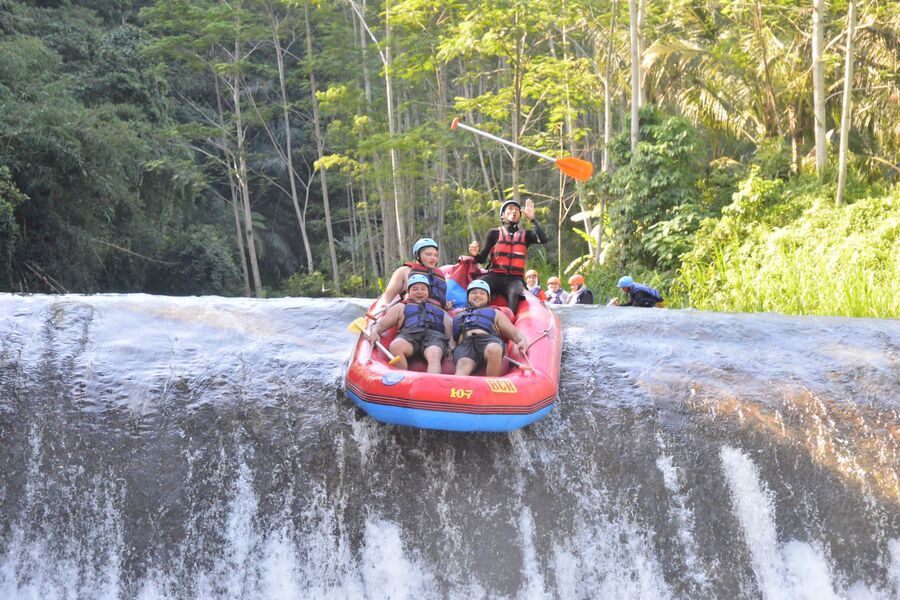
Long Routes and Challenging Rapids That Keep the Adventure Exciting
One of the main attractions of Telaga Waja is the opportunity to spend an extended period exploring different sections of the river. During a trip that may last around 2 to 3 hours on the water, participants can encounter a combination of calmer stretches and more demanding rapids.
Some operators use names such as “Broken Dam” and “The Drop” to identify particular sections or highlights along their rafting routes. These names and the features associated with them may differ between operators, so they should not be treated as universal river landmarks.
Navigating narrow passages, changing currents, and rocky sections requires attention and coordination. The guide will provide paddling commands to help the group respond to the conditions encountered along the way.
For many adventure enthusiasts, this combination of varied river sections and an extended journey is what makes the rafting experience in Bali particularly memorable.
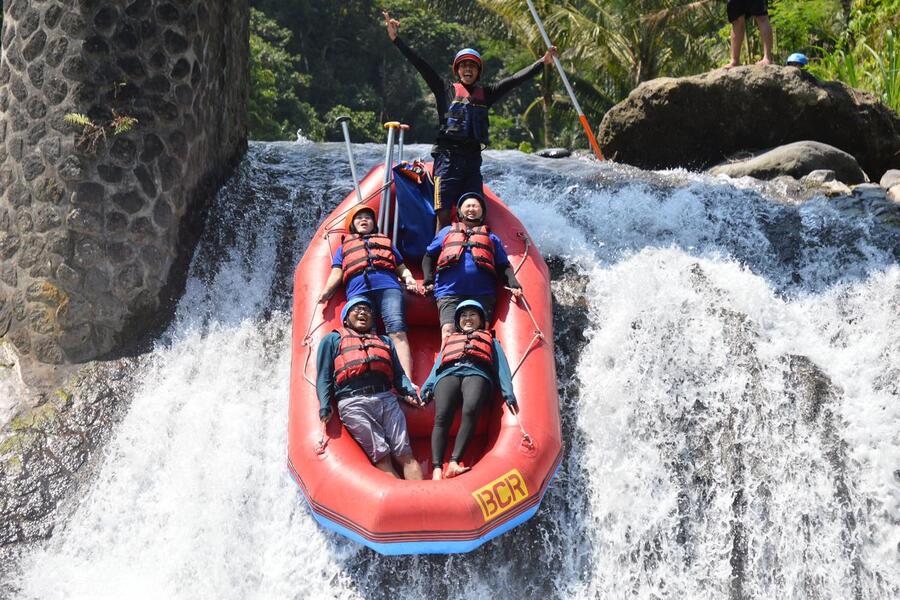
The Sensation of Navigating Spectacular Valleys and Cliffs
Beyond the physical challenge, rafting Telaga Waja offers an opportunity to experience Bali’s natural surroundings from the river. Parts of the route are bordered by green valleys, rocky slopes, and sections of vegetation that create a scenic atmosphere.
As participants move along the river, the surrounding landscape changes from one section to another. Rice fields and rural areas may also be visible from certain stretches, offering glimpses of everyday life in eastern Bali.
The combination of flowing water, natural scenery, and changing river conditions makes rafting at Telaga Waja more than just a water sport. It is also a way to explore a different side of the island while enjoying an outdoor adventure.
Safety and Equipment for Rafting Telaga Waja
Safety preparation is an essential part of every rafting activity. Before departure, participants should receive suitable equipment and a briefing from the operator’s rafting guide.
Common equipment and safety arrangements may include:
- Helmet and Life Jacket: Participants are generally provided with helmets and life jackets that should be properly fitted and secured before entering the river.
- Rafting Paddles: Paddles allow participants to follow the guide’s commands and coordinate their movements with the rest of the group.
- Suitable Footwear: Secure footwear with a good grip can help reduce slipping when walking around the rafting basecamp or getting in and out of the raft.
- Safety Briefing: Guides explain basic paddling techniques, seating positions, river commands, and procedures to follow in unexpected situations.
- Emergency Procedures: Ask the operator about its emergency response arrangements, guide supervision, and whether accident insurance is included in the package.
Equipment and safety arrangements can differ between operators. Do not assume that every package includes the same insurance coverage, rescue resources, or services. Confirm these details before making a reservation.
Participants should also remember that helmets and life jackets reduce certain risks but cannot eliminate all risks associated with whitewater rafting. Following the guide’s instructions throughout the activity remains important.
Who Is Suitable for Rafting at Telaga Waja?
Telaga Waja can appeal to different types of travelers, but participation should always depend on individual fitness, health, the operator’s requirements, and current river conditions.
Some groups who may enjoy this activity include:
1. Adventure and Adrenaline Seekers
Travelers who enjoy outdoor challenges may appreciate the varied rapids and longer route. The changing river conditions provide opportunities to practice teamwork and paddling while experiencing Bali’s natural landscape.
2. Active Travelers
People who enjoy physical activities may find the extended rafting journey rewarding. Participants should be comfortable with an outdoor water activity and able to follow instructions throughout the trip.
3. Community and Company Groups
Rafting can be an engaging group activity because everyone in the raft needs to coordinate their movements. This makes it an option for friends, community groups, and company outings that want to enjoy an outdoor experience together.
4. Families with Eligible Teenagers
Families may also consider rafting as a shared holiday activity. However, minimum age requirements, participant height or weight restrictions, and other eligibility conditions vary between operators. Parents should confirm the requirements directly and consider the current river conditions before booking for teenagers.
Location, Access, and Travel Time to the Starting Point
The Telaga Waja rafting area is associated with Muncan Village in Rendang District, Karangasem Regency, eastern Bali. The surrounding region is known for its rural atmosphere and mountainous landscape near Mount Agung.
Here is some general information to help plan your journey:
- Location: The rafting destination is in the Muncan and Rendang area of Karangasem. The exact meeting point and river access location depend on the operator.
- Access from Ubud: The journey from central Ubud may take approximately 1.5 hours or longer, depending on traffic and the exact destination.
- Access from Kuta or Seminyak: Travelers from southern Bali may need around 2 hours or more to reach the area. Actual travel time depends on traffic, road conditions, and the pickup location.
- Transportation: Some operators offer hotel pickup or shuttle services, either included in the package or for an additional charge. Others may require participants to arrange their own transportation.
Before departure, confirm the exact meeting point, pickup schedule, and estimated travel time with your operator. This is particularly useful if you are planning other activities on the same day.
Exciting Experiences from Rafting Telaga Waja Participants
Many travelers choose Telaga Waja because they want to combine an outdoor challenge with the opportunity to explore Bali’s natural surroundings. The experience can include exciting moments while navigating rapids, working together as a group, and enjoying the changing scenery along the river.
For some participants, the most memorable part may be a challenging rapid or a route-specific drop. Others may enjoy the quieter stretches between rapids, when they can take in the surrounding valleys and countryside.
Experiences can differ depending on the operator, group composition, route, and river conditions on the day. If you are comparing rafting providers, look for recent visitor reviews that refer to the specific operator you intend to book.
If you are looking for a combination of natural scenery and an active river adventure, rafting on the Telaga Waja River is worth considering for your Bali holiday. Plan your trip and explore the available options through Rafting Telaga Waja Adventure.
Conclusion
Telaga Waja is a well-known rafting destination in Bali, particularly for travelers interested in a relatively long route and varied whitewater challenges. Its rapids, rocky river sections, and surrounding valleys create an outdoor experience that combines adventure with the natural beauty of eastern Bali.
Although the river is often promoted as one of the longest and most challenging rafting routes on the island, actual route length, difficulty, and special features can vary between operators and according to river conditions. Checking these details before booking helps you choose a package that matches your expectations and abilities.
With appropriate preparation, properly fitted safety equipment, and attention to the guide’s instructions, you can enjoy a more informed and rewarding Telaga Waja rafting adventure during your stay in Bali.
Frequently Asked Questions About Rafting Telaga Waja
1. Does a longer rafting route mean there are rapids throughout the entire journey?
No. A longer route usually includes a mixture of rapids and calmer stretches of water. These quieter sections provide opportunities to recover, enjoy the scenery, and prepare for the next section under the guide’s direction.
2. Are names such as “Broken Dam” and “The Drop” used by every rafting operator?
Not necessarily. These names may be used by particular operators to describe sections or highlights along their routes. The names, locations, and features may differ, so ask your chosen operator which landmarks are included in its current itinerary.
3. How physically demanding is a rafting trip that lasts around 2.5 hours?
The physical demands depend on the river conditions, paddling requirements, and the participant’s fitness. The trip may involve repeated paddling and maintaining a stable position in the raft. Participants should discuss any concerns about physical activity with the operator before booking.
4. Can participants enjoy the scenery during the more challenging parts of the route?
Yes, but attention should remain on the guide’s instructions and the river conditions. Calmer stretches may offer better opportunities to look around, while participants should focus on paddling and coordination during demanding sections.
5. Does the advertised 4-meter drop form part of the normal rafting route?
It depends on the operator’s route and the conditions on the day. Some packages promote a drop of approximately 4 meters, but participants should confirm whether it is included and whether it is operating when they plan to visit.
6. What should company groups consider when organizing a Telaga Waja rafting activity?
Company organizers should confirm the group capacity, number of rafts, participant eligibility, activity schedule, and package inclusions. It is also useful to ask how the operator arranges participants into groups and communicates safety instructions before departure.
7. Can Mount Agung always be seen from the rafting route?
No. Visibility depends on weather, cloud cover, and the particular viewpoint along the route. Mount Agung may be visible on clear days, but a mountain view should not be considered guaranteed.
8. How can I compare the actual rafting duration between different Telaga Waja packages?
Ask whether the advertised duration refers only to time on the water or includes registration, equipment preparation, safety briefing, transportation, and post-rafting arrangements. Comparing these details gives a clearer picture of how much time to allocate for the entire activity.