
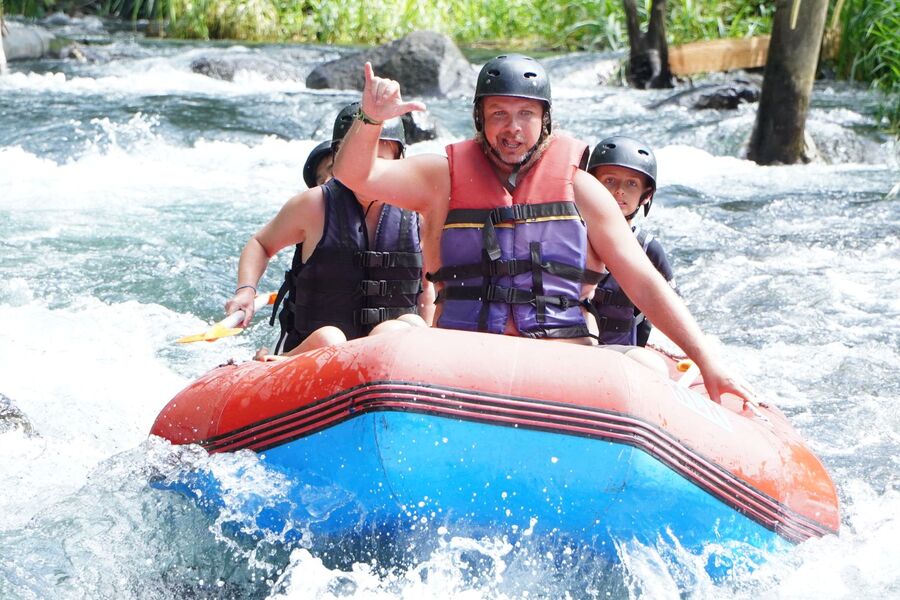
The Attraction At Telaga Waja River For Adrenaline Lovers
Telaga Waja River is an exciting destination in East Bali for travelers who enjoy outdoor challenges and water adventures. Known for its flowing currents, varied rapids, and extended rafting route, the river offers an experience that combines physical activity with the natural beauty of the surrounding countryside.
A rafting journey on Telaga Waja is commonly advertised at approximately 14 kilometers, with around 2–2.5 hours spent on the water, depending on the operator, route, and river conditions. Along the way, participants navigate different sections of moving water while passing green hills, rice fields, and tropical vegetation.
What makes the rafting experience at Telaga Waja appealing is the combination of changing river conditions and opportunities to enjoy the scenery. Participants need to stay attentive, coordinate their paddling, and follow the guide’s instructions throughout the trip. For adrenaline lovers, these elements create an engaging outdoor adventure in Bali.
Read More: Rafting Telaga Waja River: A Fantastic Water Adventure In Bali!
The Speed of the Current: Adrenaline in Every Bend
The flowing current is one of the features that makes rafting on Telaga Waja interesting for adventure seekers. As the raft travels downstream, participants encounter sections with different current speeds, bends, and waves. These changes make the journey more dynamic than simply floating along a calm stretch of water.
Some sections may require coordinated paddling and quick responses to the guide’s commands. Participants need to maintain their position, work together, and pay attention to the direction of the raft, especially when approaching more demanding passages.
The current’s strength can change according to rainfall, water levels, and other natural conditions. Therefore, the experience is not necessarily identical on every visit. The operator’s assessment and the guide’s instructions determine how participants should approach each section.
For visitors joining a Bali Rafting Tour, the combination of flowing water, teamwork, and changing river conditions is an important part of the adventure. It keeps participants involved throughout the journey while allowing them to enjoy the surrounding landscape.
The Thrilling Water Jump in Telaga Waja River
One feature often associated with rafting in Telaga Waja is a descent near a dam, commonly promoted as a water jump of approximately 4 meters. For many adventure seekers, this section is an exciting highlight because it creates a noticeable change in the raft’s movement.
However, this feature should not be treated as a jump that every participant can attempt independently. Its availability and operation depend on the selected route, river conditions, and the rafting operator’s safety assessment.
Before reaching this section, participants must listen carefully to the guide’s instructions and maintain the recommended position. The guide will explain the procedure and determine whether the descent can be carried out safely under the conditions at that time.
The experience can be memorable, but the priority should always be following the operator’s directions rather than focusing only on the height or excitement of the descent. This is an important part of enjoying a responsible rafting experience in Bali.
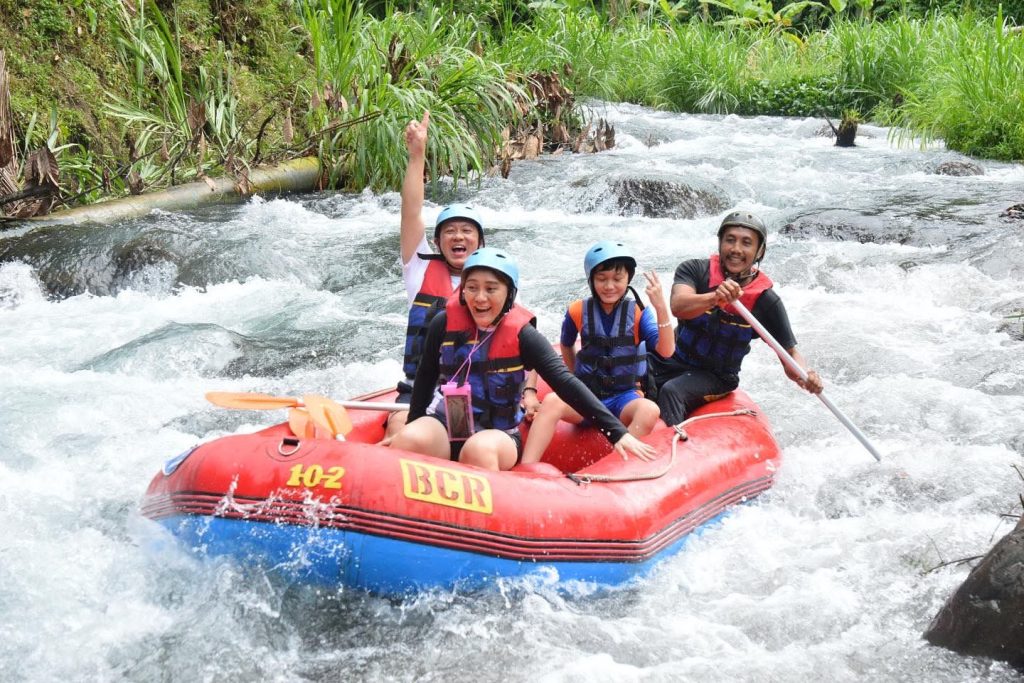
Comparing Telaga Waja River with Other Rafting Rivers in Bali
Bali offers several destinations for white-water rafting, each with its own route characteristics, scenery, and level of challenge. Telaga Waja River is an option for travelers interested in a longer rafting journey and the natural surroundings of East Bali.
Here are several features that help distinguish the Telaga Waja experience:
- An Extended Rafting Route: The route is commonly advertised at approximately 14 kilometers, although the actual distance depends on the operator and selected course. This provides plenty of time to experience different river sections.
- Varied Current Conditions: Participants may encounter flowing sections, waves, bends, and rapids that require coordinated paddling. The difficulty can change with water levels and weather.
- A Dam Descent Feature: Some routes include a descent near a dam, often promoted as an approximately 4-meter water jump. Confirm its availability and safety arrangements with the operator.
- Countryside Scenery: The journey may offer views of rice fields, tropical vegetation, rocky riverbanks, and small waterfalls, depending on the route.
- An East Bali Setting: Located in Karangasem, Telaga Waja provides an opportunity to explore a different part of Bali away from some of the island’s more developed tourist areas.
Rather than assuming that one river is always longer, faster, or more challenging than every other option, compare the actual route distance, estimated time on the water, rapid conditions, and package arrangements. You can also explore other activities through Telaga Waja Rafting.
Weather and Water Volume: How They Influence the Rafting Experience
Weather and river volume play an important role in shaping the rafting experience. Rainfall can influence the strength of the current, water level, visibility, and overall route conditions. As a result, the same river may feel different at different times of the year.
The conditions also influence the operator’s decisions about which sections are suitable for rafting. Here are some factors to consider when planning your Bali Rafting Adventure:
Rainy Season: Changes in Water Flow
During the rainy season, rainfall in the surrounding area can increase the amount of water entering the river. This may result in stronger currents and more demanding sections.
However, higher water levels do not automatically mean that rafting will be more enjoyable or suitable for everyone. Heavy rainfall can also create conditions that are unsuitable for the activity. Operators may adjust the route, postpone a departure, or cancel a trip when necessary for safety.
Dry Season: Different River Conditions
During the dry season, rainfall is generally less frequent in many parts of Bali. River levels and currents may differ from those experienced during wetter months.
Some visitors prefer this period because it can make outdoor travel planning easier. Nevertheless, the dry season does not guarantee a particular current speed or water clarity. Conditions should still be checked with the operator before the trip.
Morning Trips: Starting the Adventure Earlier
A morning rafting session can be appealing to travelers who prefer beginning their outdoor activities earlier in the day. Depending on the weather, participants may enjoy cooler air and changing natural light along the river.
The actual visibility and scenery depend on weather conditions, so a morning departure does not guarantee clear views. Confirm the available schedule and recommended arrival time when making a reservation.
The Attraction At Telaga Waja River For Adrenaline Lovers
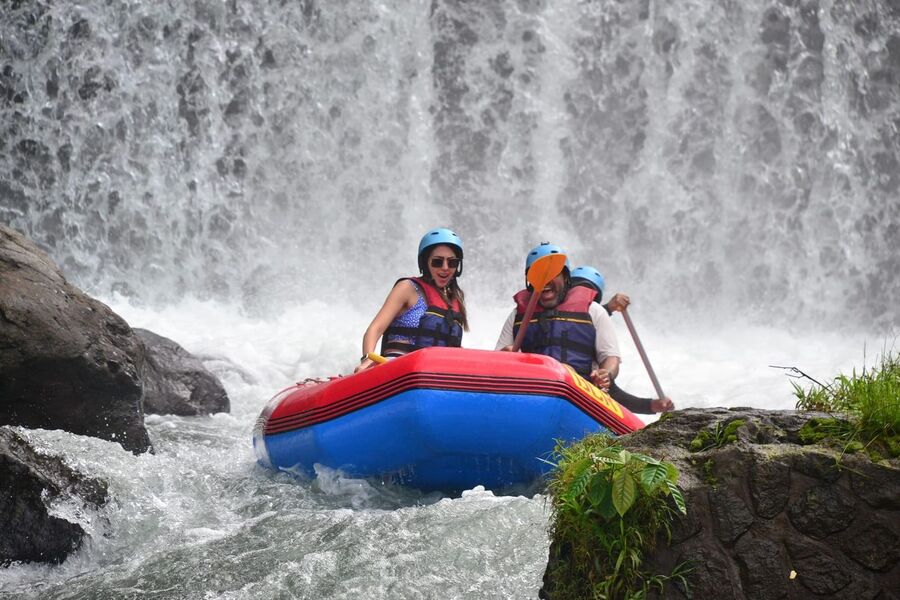
Experiences and Impressions of International Travelers
Telaga Waja River attracts visitors who want to combine an outdoor challenge with an opportunity to explore Bali’s natural environment. For international travelers, rafting can also be a different way to experience the island beyond beaches, restaurants, and cultural attractions.
The journey offers several elements that may stand out: navigating moving water, communicating with other participants, following the guide’s commands, and observing the countryside along the river.
First-time rafters may initially feel nervous when approaching their first challenging section. As they become familiar with the basic paddling instructions, they can focus more on working with the group and enjoying the journey.
Experiences naturally differ between participants. Some may remember the more active rapids, while others may appreciate the scenery or the teamwork involved. Rather than assuming that every visitor has the same impression, it is useful to consider what makes the activity appealing to different types of adventure seekers.
Capturing the Moment: Photography Tips While Rafting
Photographs and videos can help preserve memories of a rafting trip. However, capturing the action should never distract participants from safety instructions or paddling responsibilities.
If you want to document your rafting experience at Telaga Waja, consider these practical tips:
Use a Waterproof Camera or Action Camera
An action camera or waterproof camera can be useful for recording a water-based activity. Before bringing one, check whether the device and its accessories are suitable for splashes and the conditions expected during the trip.
Secure the camera properly using an appropriate attachment. Avoid holding a phone or camera in your hands while navigating rapids unless the guide has specifically confirmed that doing so is safe.
Choose Suitable Moments for Photos
The most active sections may create exciting footage, but they also require participants to concentrate on the guide’s instructions. Ask the operator whether photography is permitted and whether there are suitable moments to take pictures.
If a guide or designated photographer is available, follow their directions and let them handle photography when necessary.
Consider Drone Photography Before or After the Activity
A drone can provide a different perspective of the river and surrounding countryside. However, drone use should only take place where permitted and where it does not interfere with other visitors, wildlife, or rafting operations.
Do not fly a drone over active participants or use it while operating a raft. Check applicable local rules and obtain permission from the relevant operator or landowner before flying.
Interesting Facts About Telaga Waja River
Telaga Waja River has several characteristics that make it a recognized rafting destination in East Bali. Here are some details worth knowing before planning your visit:
- An Approximately 14-Kilometer Route: Many rafting packages advertise a route of around 14 kilometers. Actual distances can vary depending on the operator and route arrangement.
- A Dam Descent Feature: Certain routes include a descent near a dam, commonly promoted as an approximately 4-meter water jump. Its availability depends on the operator’s safety assessment.
- A River Connected to the Mount Agung Area: Telaga Waja is associated with the natural water system of the Mount Agung region. Water conditions and clarity can change due to rainfall and sediment.
- Natural Countryside Surroundings: Participants may pass rice fields, tropical vegetation, rocky riverbanks, and small waterfalls along selected sections of the route.
- Different Conditions Throughout the Year: Rainfall and seasonal changes can influence water levels, current speed, and the overall rafting experience.
These characteristics make Telaga Waja an interesting destination for visitors who want to experience the natural landscape of East Bali while taking part in a guided river adventure.
Conclusion: Discover the Adventure of Telaga Waja River
For adrenaline lovers, Telaga Waja River offers an outdoor experience that combines flowing currents, varied rapids, and the natural scenery of East Bali. The changing river conditions and teamwork required throughout the journey make rafting an engaging activity for visitors looking beyond ordinary sightseeing.
From navigating bends and waves to experiencing a dam descent when available, the route offers several memorable moments. Participants can also appreciate the surrounding countryside and capture photographs when conditions allow.
Before booking, check the route details, current river conditions, available facilities, and safety arrangements with the operator. Follow the guide’s instructions throughout the trip and remember that the river’s conditions can change with the weather.
If you are ready to add a water adventure to your Bali holiday, explore the available packages at Telaga Waja Rafting and confirm the latest activity arrangements before your visit.
Frequently Asked Questions
1. Does the rafting experience feel different depending on where I sit in the raft?
The experience can feel different depending on seating position, the raft’s movement, and the section of river being navigated. However, participants should sit where the guide instructs them rather than choosing a position based on which seems more exciting.
2. Why do some parts of the rafting route feel more intense than others?
River sections differ in their current speed, water depth, waves, rocks, and bends. These natural features influence how the raft moves. The guide provides instructions to help the group navigate each section appropriately.
3. Can I request a more challenging route when booking?
You can ask the operator about the available routes and their characteristics. However, the route is determined by operational arrangements and current river conditions. A more challenging option may not be available or suitable on every activity date.
4. Is it possible to record the rafting trip without carrying my own camera?
Ask the operator whether photography or video services are available as part of the package or for an additional charge. Availability, coverage, and delivery arrangements can differ between providers.
5. Can I use a chest or helmet camera throughout the rafting trip?
This depends on the camera attachment, operator policy, and safety instructions. Any device must be securely mounted without interfering with the helmet, life jacket, paddling, or other safety equipment. Confirm permission before the activity begins.
6. What should I consider before using a drone around the river?
Check local drone regulations, restricted areas, and permission requirements. You should also ask the operator whether drone use is allowed near the rafting route. Avoid flying over participants or interfering with the activity.
7. Will I experience the same level of excitement on every visit?
Not necessarily. Current speed, water level, rainfall, and route arrangements can change the experience. Even when using the same operator, the conditions on two different dates may feel different.
8. What can I do after rafting if I need time to recover?
After the activity, take time to change into dry clothes, have a meal if included in your package, and rest before continuing your journey. If you plan additional activities on the same day, allow enough time for travel and recovery.