
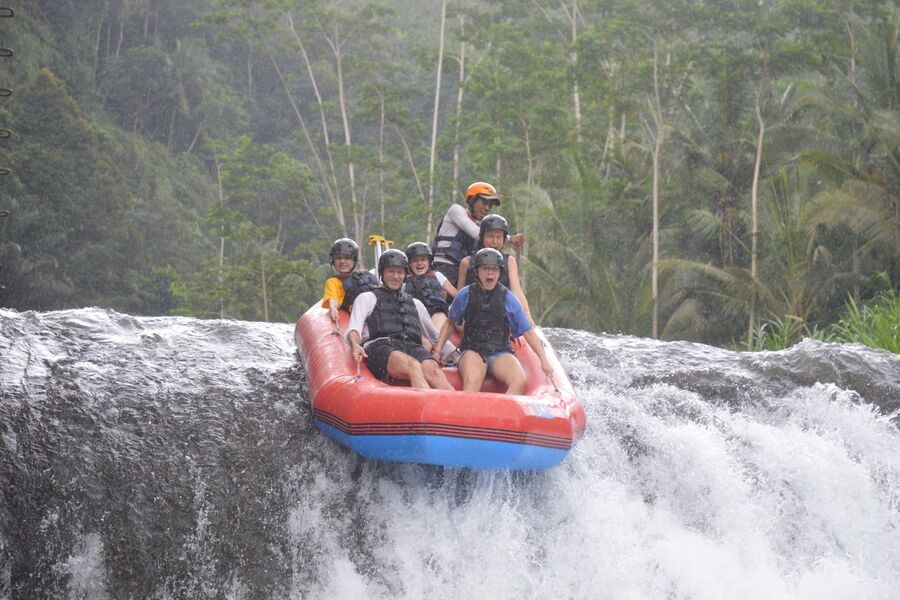
Telaga Waja Rafting from a Beginner’s Point of View
Telaga Waja Rafting has become a popular choice for adventure seekers visiting Bali. Located in Karangasem, East Bali, the river is known for its flowing water, varied rapids, and scenic natural surroundings. These features make it an appealing destination for visitors who want to experience rafting activities in Bali, including those who are trying white-water rafting for the first time.
With a route often advertised at approximately 14 km, Telaga Waja offers an extended rafting journey through a landscape of green hills, rice terraces, rocky riverbanks, and tropical vegetation. The actual route length and time on the water can vary depending on the operator and river conditions. For beginners, this means there is plenty of opportunity to become familiar with the activity while enjoying the scenery along the way.
Although Telaga Waja is known for its more adventurous character compared with some other rafting locations in Bali, first-time participants do not need to have previous rafting experience. Before entering the river, participants receive a safety briefing and basic paddling instructions from their guide. The guide also helps coordinate the group throughout the trip. However, beginners should understand that rafting is an outdoor adventure activity and requires attention, cooperation, and compliance with safety instructions.
Whether you are visiting with friends, family, or colleagues, understanding the route, possible challenges, and package details can help you prepare for a more enjoyable rafting experience in Bali.
Read More: Bali Telaga Waja Rafting: Adventure to Refresh Your Body
Rapids Classes and Challenges Along the Route
Telaga Waja River features a combination of flowing sections and rapids that create an engaging experience for rafting participants. Some operators describe sections of the river using classifications around Grade II to III or higher, but the actual difficulty can change depending on water levels, rainfall, and the route selected.
For beginners, it is important to remember that the river does not necessarily follow a fixed pattern in which every section becomes progressively more difficult. Instead, the experience may include calmer stretches, faster currents, turns, and rocky sections at different points along the journey.
The following descriptions provide a general idea of how the route may feel:
Early Sections: Getting Familiar with the River
The beginning of the trip can provide an opportunity to become familiar with the raft, paddle, and guide’s commands. Depending on the selected route and water conditions, participants may encounter relatively calmer stretches alongside smaller rapids.
Beginners can use this time to understand basic paddling movements, maintain their position in the raft, and coordinate with other participants. Listening carefully to the guide’s instructions from the beginning is important because these basic techniques will be useful throughout the journey.
Middle Sections: More Dynamic Rapids
As the trip continues, participants may encounter more dynamic water movement, including stronger currents, bends, and rocky sections. These conditions require better coordination between everyone in the raft.
The guide will provide instructions on when to paddle, stop paddling, or adjust body position. Beginners should focus on following these commands rather than trying to anticipate every movement of the river.
More Challenging Sections: Staying Focused
Some parts of Telaga Waja can feel more intense because of faster currents, larger waves, or changes in the river’s elevation. Certain routes may also include a descent near Bajing Dam, but the exact feature and whether it is included should be confirmed with the operator.
Although these sections can be exciting, participants should not assume that every route has identical challenges. Water levels and operating conditions can affect how a particular section is experienced.
Final Sections: Enjoying the Surroundings
The final part of the trip may include stretches where participants have more time to appreciate the surrounding landscape. Depending on the current and route, the raft may pass rice fields, rocky riverbanks, and green vegetation.
This is also a good opportunity to appreciate the journey as a whole. Even when the water becomes calmer, participants should remain seated as instructed and continue following the guide’s directions until the rafting activity has officially ended.
Favorite Spots to Rest and Take Photos
Beyond the excitement of navigating rapids, Telaga Waja Rafting offers beautiful natural scenery along the river. Depending on the route and operating conditions, participants may have opportunities to appreciate waterfalls, rice terraces, bridges, and views of the surrounding hills.
The rafting operator in Bali can provide information about the route and any planned rest stops. However, stopping at a particular location is subject to river conditions and the guide’s safety assessment.
Natural Waterfalls Along the River
Some sections of the Telaga Waja area feature small waterfalls and streams flowing into or near the river. These natural features add to the atmosphere of the rafting journey and can create interesting photo opportunities when conditions allow.
Participants should only approach or take photographs at these locations when the guide confirms that it is safe to do so. Water movement around rocks and waterfall outlets can be unpredictable.
Rice Field Views and Mount Agung Scenery
The surrounding landscape is another highlight of rafting in East Bali. Depending on the route, visibility, and weather, participants may see green rice terraces and distant mountain scenery, including Mount Agung.
The mountain may not always be visible because clouds, rain, or other weather conditions can affect visibility. Nevertheless, the combination of tropical vegetation, riverbanks, and rural landscapes creates a memorable natural setting.
Traditional Bridges and River Crossings
Traditional bridges and other structures can sometimes be seen along the river. They provide a glimpse of how the surrounding communities connect with the landscape.
These features can also make interesting subjects for photographs. However, participants should remain focused on the raft and follow the guide’s instructions rather than attempting to take pictures while navigating challenging sections.
Telaga Waja Rafting from A Beginner’s Point of View
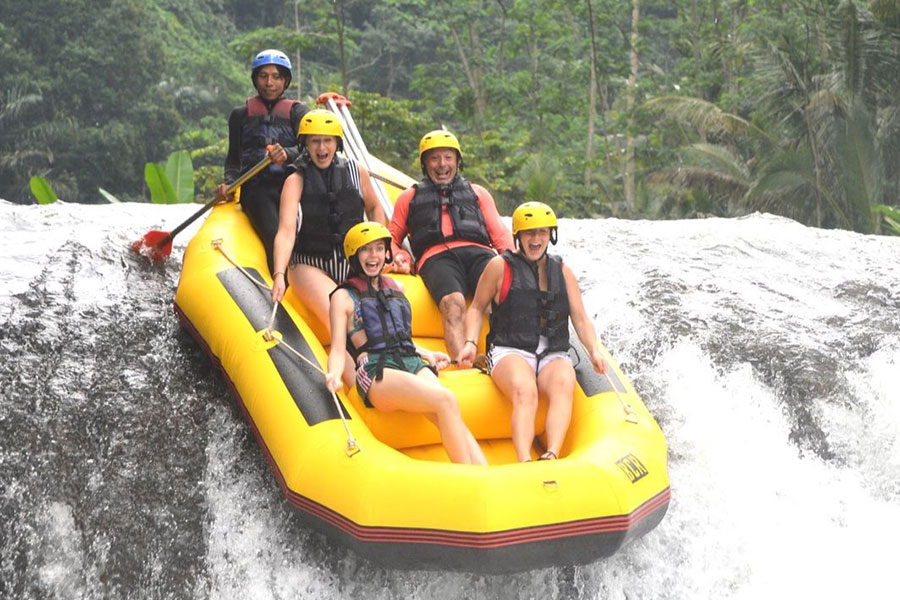

Telaga Waja Rafting Preparation for Different Age Groups
Telaga Waja River is often considered a more adventurous rafting destination than some of Bali’s other rivers. However, first-time participants can still consider joining a trip if they meet the operator’s requirements and are comfortable with the activity.
Rather than assuming that rafting is suitable for everyone, participants should consider their physical condition, age, swimming ability if relevant to the operator’s policy, and any medical concerns. Each operator may have different participation requirements.
Use Proper Safety Equipment
A helmet and life jacket are essential pieces of rafting equipment. Participants should wear them throughout the activity and make sure that both fit properly.
The guide or operator should help check the equipment before departure. If a helmet or life jacket feels loose, uncomfortable, or incorrectly fitted, ask for assistance before entering the river.
Choose Suitable Clothing
Wear lightweight clothing that is comfortable when wet and dries relatively quickly. Swimwear, sportswear, or other suitable outdoor clothing can be practical choices.
Avoid heavy fabrics that may become uncomfortable when soaked. Secure footwear, such as water shoes or suitable sandals with straps, can also help protect your feet on wet and uneven surfaces.
Rest and Hydrate Before the Activity
Rafting involves physical movement, balance, and coordination. Getting enough rest before the activity can help you stay comfortable and attentive during the trip.
Have a suitable meal before departure and drink enough water. Avoid starting the activity when you are already exhausted or feeling unwell. If you have concerns about your physical condition, discuss them with the operator before booking.
Check Age and Participation Requirements
Families planning to bring children or older relatives should check the operator’s minimum and maximum age requirements in advance. These requirements may differ depending on the route, water conditions, and company policies.
Participants with medical conditions, mobility limitations, or other concerns should also seek advice from the operator before joining. Do not assume that every participant can take part simply because they are travelling with a group.
Bring a Waterproof Camera if Appropriate
A waterproof camera can help capture memories of the rafting experience. However, photography should never interfere with paddling, holding the raft, or following the guide’s commands.
Use a secure waterproof case and suitable attachment where permitted. If you are unsure whether you can safely bring a camera, ask the guide or check whether the operator offers a photography service.
Package Price and What’s Included for Telaga Waja Rafting
Telaga Waja Rafting is commonly offered through packages that combine the rafting activity with equipment and other services. However, prices and inclusions vary between operators, group sizes, booking arrangements, and additional services.
Before making a reservation, review the package details carefully so you know what is included in the quoted price and whether any additional charges apply.
Safety Equipment
Rafting packages generally provide essential equipment such as helmets, life jackets, and paddles. Participants should check that the equipment is properly fitted before the activity begins.
The operator should also explain how to use the equipment and what to do if an unexpected situation occurs during the trip.
Professional Rafting Guides
A rafting guide accompanies the group and provides instructions throughout the activity. Beginners should pay attention during the initial briefing because it introduces basic paddling techniques, commands, and safety procedures.
Ask the operator about the guide arrangements for your group, particularly if you are booking for a large number of participants.
Accident Insurance
Insurance arrangements are not necessarily identical across all rafting packages. Some operators include accident insurance, while others may have different coverage terms or conditions.
Before booking, ask whether insurance is included, what activities are covered, and whether any exclusions or limitations apply. Do not assume that every package automatically provides the same protection.
Lunch and Refreshments
Some rafting packages include lunch after the activity, often served at the operator’s restaurant or designated dining area. Tea, coffee, and mineral water may also be provided, depending on the package.
Check the inclusions before booking, especially if you have dietary requirements or specific meal preferences. If lunch is not included, ask whether it can be arranged separately.
Conclusion
Trying Telaga Waja Rafting for the first time can be an exciting way to explore the natural scenery of East Bali while experiencing the challenge of white-water rafting. Its extended route, changing river conditions, and combination of calmer stretches and more dynamic rapids offer an adventure that can appeal to beginners who are properly prepared.
The key to enjoying the experience is understanding that rafting is not simply about navigating rapids. It also involves listening to the guide, working together with other participants, using safety equipment correctly, and respecting the changing conditions of the river.
Before booking, check the route, participation requirements, package inclusions, and insurance arrangements with your chosen operator. With realistic expectations and proper preparation, first-time participants can make their Telaga Waja rafting trip a memorable part of their Bali holiday.
Frequently Asked Questions About Telaga Waja Rafting for Beginners
1. Do beginners need to learn rafting techniques before arriving at Telaga Waja?
No previous rafting experience is generally required for participants who meet the operator’s conditions. Basic techniques and paddle commands are normally explained during the safety briefing before departure. Arriving early and paying attention to the instructions will help you understand what to do during the trip.
2. What does a Grade II or Grade III rapid mean for a first-time participant?
Rapid classifications describe the technical difficulty and characteristics of moving water. Grade II generally involves straightforward rapids with relatively clear passages, while Grade III can involve stronger currents, irregular waves, and more complex manoeuvres. Actual difficulty can change with water levels and other conditions, so the classification should be treated as a general guide rather than a guarantee of what you will encounter.
3. Is the 14 km rafting route divided into fixed stages?
Not necessarily. The approximately 14 km distance is a general route description, and operators may use different starting points, finishing points, or route arrangements. River conditions can also influence how the journey feels. Ask your operator for the route details applicable to your booking.
4. Why do beginners need to coordinate their paddling with other participants?
A rafting boat responds to the combined movements of the people inside it. When participants paddle according to the guide’s commands, the group can work together to manoeuvre the raft through changing water conditions. Good coordination also helps prevent unnecessary movements that could affect the balance of the boat.
5. Can the same rapid feel different on two separate rafting trips?
Yes. Rainfall, water levels, current speed, and other natural factors can change the character of a rapid. A section that feels relatively manageable on one day may feel more dynamic on another. This is one reason why guides assess conditions and provide instructions for the trip on the day of the activity.
6. What should beginners pay attention to during the pre-rafting briefing?
Listen carefully to the guide’s explanation of paddle commands, seating positions, how to hold the paddle, and what to do if someone falls into the water. Pay attention to the operator’s emergency procedures as well. If any instruction is unclear, ask the guide to explain it again before the raft enters the river.
7. Are rest and photography stops guaranteed during the rafting trip?
No. Rest stops and photography opportunities depend on the route, schedule, and river conditions. A guide may decide that a particular location is unsuitable for stopping on a given day. Safety and the progress of the trip take priority over visiting a specific photo spot.
8. What should first-time participants compare when choosing a Telaga Waja rafting package?
Compare more than the advertised price. Check the route and approximate duration, equipment provision, guide arrangements, insurance terms, meals, transportation, changing facilities, and photography services. Confirming these details before payment helps you understand what to expect and avoid confusion on the activity day.