
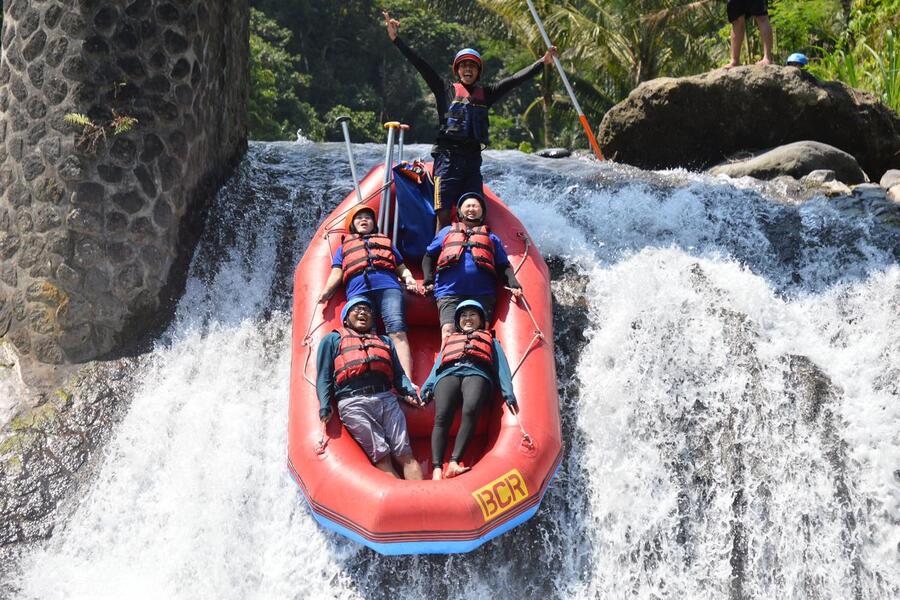
Telaga Waja Rafting Bali Is the Favorite Activity Tour
Telaga Waja Rafting Bali is a popular adventure activity for visitors looking to experience the natural beauty and excitement of East Bali. Known for its extended river route and varied rapids, Telaga Waja offers a combination of thrilling water activities and scenic landscapes.
The route is often advertised at approximately 14 kilometers, with time on the water commonly taking around 2 to 2.5 hours, depending on the operator, route, and river conditions. Along the journey, participants may encounter flowing rapids, rocky sections, and calmer stretches surrounded by tropical vegetation. These changing conditions make the experience engaging for both adventure enthusiasts and visitors who want to explore a different side of Bali.
Unlike a simple sightseeing activity, rafting on Telaga Waja involves teamwork, paddling coordination, and following the guide’s instructions. The surrounding scenery, including plantations, rice fields, and views of Mount Agung when visibility allows, adds another dimension to the adventure.
Read more: Telaga Waja Rafting from A Beginner’s Point of View
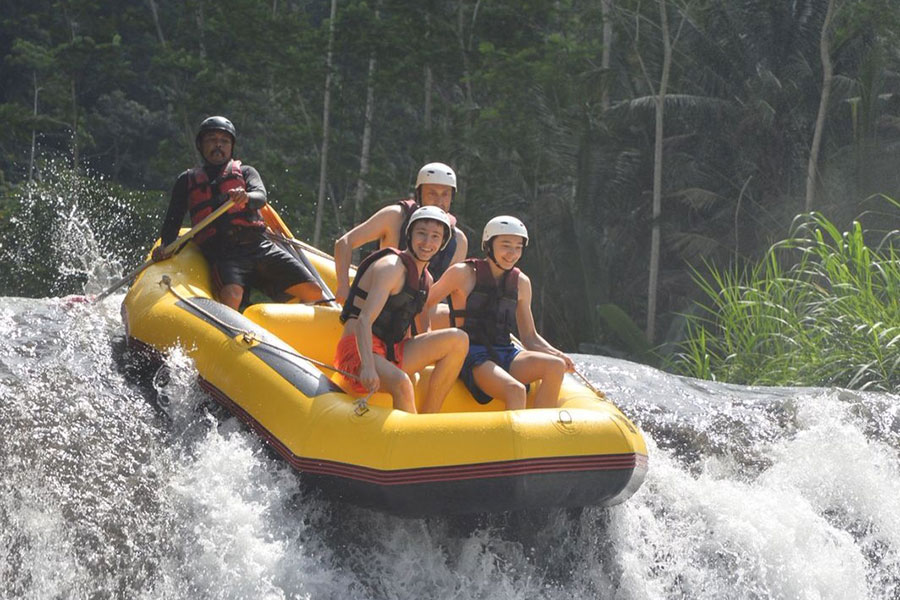
A Series of Telaga Waja Rafting Bali Rapids That Test Your Courage
One of the main attractions of Telaga Waja River is its varied river character. Participants may experience different types of rapids, from flowing sections with smaller waves to more technical passages that require coordination and attention.
The names and descriptions below are useful ways to understand the kinds of challenges often associated with rafting. However, individual operators may use different names for specific sections, and the actual river features can change with water levels and route arrangements.
Double Drop and Descending Rapids
Some sections of Telaga Waja feature changes in elevation that create an exciting descent through flowing water. These sections can be among the most memorable parts of the trip because the raft moves through changing currents and waves.
Participants should remain seated as instructed, hold the raft securely, and follow the guide’s commands. The exact number and shape of descents depend on the route and conditions on the day.
Zig-Zag Rapids and Sharp Turns
Certain parts of the river require the raft to navigate bends and changing current directions. These sections make teamwork especially important because participants need to paddle in coordination when instructed.
The guide will help the group respond to the river’s movement and choose the appropriate direction. Listening carefully is more useful than trying to make independent movements.
Narrow Rocky Sections
The river also has areas where rocks and changes in the river channel influence the flow of water. Depending on the route and water level, the raft may pass through narrower passages that require careful manoeuvring.
These sections highlight the importance of maintaining the correct seating position and following the guide’s instructions throughout the journey.
Descents and the Bajing Dam Area
A well-known feature associated with some Telaga Waja rafting routes is a descent near Bajing Dam. The height and experience can vary according to the route and operating conditions, so participants should confirm whether this section is included in their package.
Rather than assuming that every trip includes an identical drop, ask the operator to explain the route before booking. During the activity, follow the guide’s specific instructions for approaching and passing any descent.
The Thrill of Passing Through Telaga Waja Plantations and Bamboo Bridges
After navigating the more dynamic rapids, participants may have opportunities to enjoy calmer stretches of the river. These sections reveal another side of Telaga Waja, with views of rural landscapes, tropical vegetation, and plantation areas.
Depending on the route, the surrounding scenery may include salak, banana, and bamboo groves. The combination of flowing water, green riverbanks, and the sounds of nature creates a refreshing contrast to the excitement of the rapids.
Exploring the Rural Plantation Landscape
The river passes through areas where local agricultural activities form part of the surrounding landscape. Participants may see fruit trees, bamboo vegetation, and other tropical plants along the riverbanks.
These views offer a glimpse of the countryside in East Bali. However, the exact plantations visible during the trip depend on the route and the condition of the surrounding area.
Passing Beneath Traditional Bridges
Traditional bridges and other river crossings can sometimes be seen along the Telaga Waja route. Their appearance adds character to the landscape and provides an interesting perspective on how local communities connect different areas.
Some bridges may be relatively low above the river. If the guide instructs participants to lower their bodies while passing underneath, everyone should follow the command promptly and remain in the recommended position.
Avoiding Risks in Challenging Rapids with Basic Techniques
Facing challenging rapids requires more than courage. Understanding basic rafting techniques, listening to the guide, and cooperating with other participants can help make the experience more controlled.
Before entering the river, participants should pay attention to the safety briefing provided by the operator. The following points are useful reminders during a Bali Rafting Adventure:
Maintain the Correct Sitting Position
Sit in the position recommended by the guide and use the designated foot supports inside the raft when instructed. Avoid placing your feet or legs outside the raft or attempting to stand while the boat is moving through rapids.
A proper sitting position helps participants maintain balance and respond to the guide’s commands.
Hold the Paddle Correctly
A paddle is usually held with one hand on the top grip and the other on the shaft. The guide will explain the correct hand position and demonstrate basic paddling movements before departure.
Do not change your grip unnecessarily while paddling, and avoid swinging the paddle in a way that could injure another participant.
Follow the Guide’s Commands
Commands such as forward paddle, backward paddle, stop, and hold on help the group coordinate its movements. Each instruction has a specific purpose, particularly when the raft approaches a rapid or needs to adjust direction.
If you do not understand a command during the briefing, ask the guide to explain it before the trip begins.
Respond Carefully to Low Obstacles
When approaching a low bridge, branch, or other obstacle, follow the guide’s instructions about changing your body position. Do not duck or move suddenly without checking the guide’s directions, as the correct response depends on the obstacle and the raft’s movement.
Travel to Telaga Waja Rafting Bali Basecamp
Telaga Waja rafting operators generally operate in the Karangasem area of East Bali. The journey from popular tourist destinations such as Ubud can take approximately 1.5 to 2 hours, although travel time depends on the starting point, traffic, and road conditions.
The drive itself can be part of the experience, passing through rural communities, green landscapes, and hilly areas. Visitors travelling from other parts of Bali should allow sufficient time for the journey, especially if their package has a scheduled check-in or departure time.
Arriving at the Basecamp
Once you arrive, the operator’s staff will usually guide you through the registration and preparation process. Depending on the provider, the basecamp may have facilities such as parking, a waiting area, changing rooms, and access to the rafting departure point.
Participants generally receive their equipment and attend a safety briefing before heading to the river. Since facilities differ between operators, it is a good idea to confirm the available amenities when making a reservation.
Shower and Locker Facilities After Rafting
After completing the Bali Rafting Adventure, participants usually return to the operator’s basecamp to change and freshen up. Shower and changing facilities can make the transition from the river to the next activity more comfortable.
Shower and Changing Areas
Some operators provide shower facilities with warm or cold water, along with designated changing areas. The availability, condition, and level of privacy may vary between providers.
If access to a particular type of shower or changing facility is important to you, confirm the details before booking. Bringing a change of clothes and a small personal towel can also make the post-rafting routine easier.
Locker and Personal Belongings Storage
Some rafting basecamps provide lockers or designated storage areas for personal belongings. These facilities can help keep valuables and dry clothing away from the river during the activity.
However, locker availability, locking systems, and supervision arrangements are not necessarily the same at every location. Ask the operator how personal items are stored and whether you should bring your own small lock or waterproof bag.
Delicious and Fresh Lunch Menu Options
After rafting and getting changed, many participants look forward to enjoying a meal before continuing their Bali holiday. Some Telaga Waja rafting packages include lunch at a restaurant or dining area near the basecamp.
Indonesian Food and Buffet-Style Meals
Depending on the operator and package, lunch may be served buffet-style with a selection of Indonesian dishes. Possible menu items can include rice, vegetables, fried noodles, chicken, and traditional side dishes.
The actual menu may change according to the provider, availability, and meal arrangements. Participants with allergies, dietary restrictions, or specific food preferences should inform the operator in advance.
Fresh Fruit and Drinks
Some packages may also provide fresh fruit and drinks such as tea, coffee, or mineral water. These additions offer a refreshing way to relax after spending time on the river.
Check the package inclusions before booking because meals and refreshments are not automatically included in every rafting offer.
Enjoying the Meal After the Adventure
Having lunch after the activity gives participants time to rest, share stories, and look back on the rafting experience. Depending on the restaurant’s location, the dining area may also offer views of the surrounding valley or countryside.
It is a pleasant way to end the rafting activity before returning to your hotel or continuing to another destination in Bali.
Conclusion
Telaga Waja Rafting Bali brings together the excitement of white-water rapids and the natural scenery of East Bali. From navigating changing currents and passing rocky sections to enjoying views of plantations and traditional bridges, the journey offers more than just an adrenaline-filled activity.
The experience also depends on practical details beyond the river itself, including access to the basecamp, changing facilities, storage arrangements, and meal inclusions. Since these services can vary between operators, checking the package details before booking is an important part of planning.
For visitors looking for an active way to explore Bali, Telaga Waja can be a memorable choice. With proper preparation, attention to the guide’s instructions, and realistic expectations about the route and facilities, participants can enjoy both the adventure and the surrounding landscape.
Frequently Asked Questions
1. Why is Telaga Waja popular among rafting enthusiasts visiting Bali?
Telaga Waja is known for its extended rafting route, varied river conditions, and natural scenery in East Bali. The combination of flowing rapids, rocky sections, and green landscapes makes it appealing to visitors who want an adventure that also offers opportunities to appreciate the countryside.
2. Do all Telaga Waja rafting operators use the same rapid names?
No. Names such as Double Drop or Zig-Zag may be used informally or by particular operators to describe sections of the route. There is no guarantee that every provider uses the same names or that every trip includes identical river features. Ask the operator for its route description if you want to know which sections are included.
3. Can participants see local plantations directly from the raft?
Depending on the route, participants may see tropical vegetation and agricultural areas along the riverbanks. Salak, banana, and bamboo plants may form part of the surrounding landscape, although the exact views vary along the route.
4. Why might participants need to duck when passing beneath a bridge?
Some bridges or other structures may be positioned relatively low above the water. The guide may ask participants to lower their bodies to avoid contact with the structure. Always follow the guide’s timing and instructions rather than deciding independently when to move.
5. Can participants choose their own seating position inside the raft?
Seating arrangements are generally guided by the rafting guide, who considers the group’s composition, balance, and the conditions expected along the route. Participants should use the positions assigned or recommended during the briefing rather than changing seats while the raft is moving.
6. Should visitors bring their own padlock for the basecamp lockers?
That depends on the operator’s storage system. Some providers may supply lockers with their own locking arrangements, while others may use different storage facilities. Ask whether a padlock is required before arriving, and avoid bringing unnecessary valuables to the rafting activity.
7. What should visitors check if they have a specific lunch preference?
Ask whether lunch is included, what type of meal is served, and whether the operator can accommodate dietary requirements. Visitors with food allergies or vegetarian preferences should communicate these needs before the activity day rather than waiting until lunch is served.
8. Is it possible to visit another attraction after finishing Telaga Waja Rafting?
It may be possible, depending on the rafting schedule, travel time, and the location of your next destination. Remember to include time for changing, lunch if included, and the journey back from the basecamp. Confirm the expected finishing time with the operator before arranging another activity.