

Telaga Waja Rafting Bali: The Ultimate Exploration Adventure
Telaga Waja Rafting Bali is an exciting choice for adventure lovers who want to navigate river rapids while enjoying the natural beauty of East Bali. Located in Karangasem Regency, Telaga Waja River is known for its flowing currents, varied rapids, and scenic surroundings. Depending on the selected operator and route, the rafting journey may cover approximately 14 kilometers and take around 2 to 2.5 hours on the river.
During this Bali Rafting Adventure, participants can enjoy views of tropical vegetation, terraced rice fields, rocky riverbanks, and small waterfalls. The changing river conditions create a dynamic experience, combining active paddling with calmer sections where participants can appreciate the surrounding landscape.
Another appealing feature of Telaga Waja is its natural mountain environment. The fresh outdoor atmosphere and views of the countryside make the journey more than just a water activity. Participants are accompanied by rafting guides who provide instructions and explain the safety procedures before the trip. However, river conditions and participant requirements can vary, so it is important to follow the operator’s guidance.
Read More: Telaga Waja Rafting Adventure: The Ultimate Game in Bali
Rapids Classes and Challenges Along the Route
Telaga Waja River is known for its challenging rapids, with some sections commonly described as Grade III or IV. These classifications indicate that the river can involve strong currents, uneven water surfaces, and technical passages that require attention and coordinated paddling. Actual difficulty may change depending on rainfall, water levels, and the route selected by the operator.
Each section of the river has its own characteristics. Some passages feature winding currents, while others involve faster-moving water flowing around rocks and other natural formations. Participants need to listen to the guide’s commands and work together to navigate these changing conditions during the rafting adventure.
One of the most recognizable features associated with certain Telaga Waja routes is a descent of approximately four meters. This section can become a memorable highlight as the raft moves down with the current. However, it is not necessarily included in every package, so participants should confirm its availability with the operator before booking.
Although the rapids offer an exciting challenge, participants should not assume that every section has the same difficulty. Understanding the safety briefing, wearing the required equipment correctly, and following the guide’s instructions are essential throughout the journey.
Telaga Waja Rafting Bali: Resting and Photography Spots
One appealing aspect of rafting in Telaga Waja is the opportunity to appreciate the surrounding scenery along the route. Depending on the river conditions and the operator’s arrangements, there may be calmer sections or designated stopping points where participants can take a short break and enjoy the landscape.
Here are some natural features that participants may encounter:
1. Small Waterfalls Along the Riverbank
Some sections of the river feature small waterfalls or streams flowing down the surrounding slopes. These natural features create an attractive backdrop and add to the scenery along the rafting route. Whether participants can stop or take photographs nearby depends on the river conditions and the guide’s instructions.
2. Traditional Bridges
Bridges crossing the river offer a glimpse of the surrounding countryside and local infrastructure. Their appearance can add a distinctive element to photographs, especially when viewed against the green landscape. Participants should remain seated and avoid handling cameras while navigating challenging rapids.
3. Terraced Rice Fields
The green rice fields along parts of the river provide a beautiful contrast to the flowing water. These landscapes offer a glimpse of Bali’s agricultural surroundings and create opportunities to appreciate the region’s rural atmosphere.
4. Shady Cliffs and Rocky Riverbanks
Certain sections of the route pass rocky slopes and shaded areas covered with tropical vegetation. The combination of rock formations, plants, and natural light creates an interesting landscape for participants to observe during calmer parts of the journey.
Photography should always be secondary to safety. Only take pictures when the guide confirms that conditions are suitable. If you bring a camera or mobile phone, use appropriate waterproof protection and secure it properly.
Telaga Waja Rafting Bali: The Ultimate Exploration Adventure
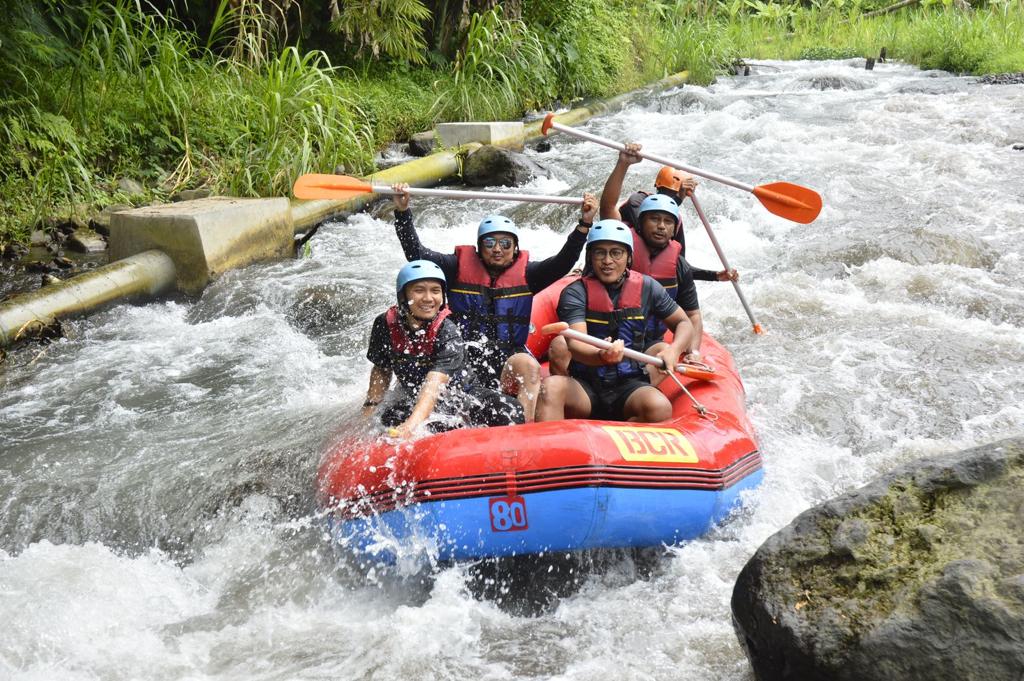

Telaga Waja Rafting Bali Preparation for Different Age Groups
Telaga Waja Rafting Bali can be considered by families, groups of friends, and adult travelers looking for an outdoor activity. However, rafting is not automatically suitable for every age or physical condition. Each operator may have different minimum-age requirements, participant restrictions, and safety policies.
Before arranging a Telaga Waja Rafting Bali trip, consider the following preparations:
1. Check Physical Fitness
Participants should be comfortable taking part in a physical outdoor activity that involves paddling and moving around wet or uneven surfaces. Anyone with a medical condition or concerns about their physical ability should seek appropriate medical advice and inform the operator before booking.
2. Confirm the Minimum and Maximum Age Requirements
Age restrictions depend on the rafting operator, route, water conditions, and safety policy. Some operators may accept children from around seven years old, while others apply different limits. Do not assume that a particular age range applies to every package. Confirm the requirements for all participants before making a reservation.
3. Choose an Operator With Clear Safety Procedures
Before booking, ask about the guide arrangements, safety briefing, required equipment, and procedures for responding to emergencies. Make sure the operator clearly explains the activity requirements and any restrictions that may apply to your group.
4. Warm Up Before the Activity
Light stretching and gentle movements can help prepare your body before paddling. Follow the guide’s instructions during the preparation stage and avoid strenuous exercise if you are already feeling tired or unwell.
5. Explain Individual Concerns to the Guide
Participants who are nervous around fast-moving water, cannot swim confidently, or have difficulty understanding instructions should tell the guide before departure. This allows the guide to explain relevant procedures and help participants understand what to expect.
Outfit for Telaga Waja Rafting Bali and Luggage Guide
Choosing suitable clothing and preparing your belongings can make the rafting experience more comfortable. Since participants will be exposed to splashing water and wet surfaces, lightweight clothing and secure footwear are practical choices.
Here are some useful items to prepare before your rafting trip:
1. Wear Sportswear or Swimwear
Choose lightweight clothing that allows you to move comfortably and dries relatively quickly, such as sportswear or swimwear. Avoid clothing that becomes excessively heavy when wet. Secure clothing is also preferable because loose items may interfere with movement.
2. Choose Suitable Water Footwear
Wear water shoes or secure sandals designed for wet conditions. Footwear should fit properly and provide a reasonable grip when walking around slippery areas. Avoid loose flip-flops that can easily come off.
3. Bring a Change of Clothes and a Towel
Prepare dry clothes and a small towel for after the activity. Keep them in a separate bag so they remain dry during the rafting journey.
4. Use a Waterproof Bag for Essential Items
If you need to bring a mobile phone or other small belongings, use a suitable waterproof case or dry bag. However, avoid carrying unnecessary valuables onto the river. Ask the operator whether storage facilities are available before departure.
5. Prepare Sun Protection and Personal Medication
Apply suitable sun protection before the activity, particularly if you are sensitive to direct sunlight. Participants who need regular medication should bring it in appropriate packaging and inform the operator about relevant medical concerns.
6. Check What the Operator Provides
Before packing, ask whether the rafting package includes items such as helmets, life jackets, paddles, or other required equipment. This helps you avoid bringing unnecessary items and ensures you understand what you need to prepare yourself.
Conclusion: A Perfect Combination for Adventure Lovers
Telaga Waja Rafting Bali combines river adventure with the natural scenery of East Bali. Its varied rapids, changing river conditions, and distinctive landscape offer an engaging experience for travelers who want to explore beyond Bali’s beaches and popular tourist attractions.
The journey also provides opportunities to appreciate small waterfalls, rice fields, rocky riverbanks, and the surrounding countryside. With suitable preparation, appropriate clothing, and attention to the guide’s instructions, participants can enjoy the activity while understanding the importance of river safety.
Whether you are planning an outing with friends, a family holiday, or an outdoor group activity, make sure to check the operator’s route, age requirements, and package details before booking. This preparation will help you plan a more comfortable and memorable Telaga Waja rafting experience.
Frequently Asked Questions
1. Can participants take photographs while the raft is moving?
Taking photographs while the raft is moving depends on the river conditions and the guide’s instructions. During rapids or technical sections, participants should focus on safety rather than photography. Use a waterproof camera or phone protection and only take pictures when the guide says it is appropriate.
2. Are there designated places to stop and rest during the rafting journey?
Rest stops and opportunities to pause depend on the operator’s route and schedule. Some routes may include suitable stopping points, but participants should not expect to stop at every scenic location. The guide will decide when and where a break is appropriate based on river conditions.
3. Can participants bring their own action cameras on the Telaga Waja route?
Some operators may allow personal action cameras, but their policies can differ. Ask about camera restrictions before the activity. If permitted, use a secure attachment and waterproof protection, and never let recording interfere with paddling or following instructions.
4. Are the natural photo spots accessible from the raft?
Some scenic features can be viewed directly from the raft, while others may only be accessible from designated stopping areas. Access depends on the river’s condition, route, and operator arrangements. Participants should not leave the raft or approach riverbanks without the guide’s permission.
5. What should families consider when booking rafting for participants of different ages?
Families should check each participant’s eligibility under the operator’s age, health, and safety requirements. It is also important to consider whether everyone is comfortable with moving water and physical activity. Ask the operator about suitable arrangements before confirming the booking.
6. Is special clothing required for Telaga Waja rafting?
Special technical clothing is generally not necessary for a recreational rafting trip, but comfortable sportswear or swimwear and suitable water footwear are recommended. The most important considerations are freedom of movement, secure fit, and comfort when wet.
7. How can participants keep their belongings dry during the activity?
Bring only essential belongings and use a suitable waterproof case or dry bag for items that must accompany you. Ask the operator about available storage for valuables, spare clothes, and other items that should remain on land.
8. Should participants bring their own helmets and life jackets?
Ask the operator what safety equipment is included in the package. Rafting participants should use the required equipment provided or approved by the operator, and make sure it fits correctly before entering the river. Do not participate without the required safety equipment.