
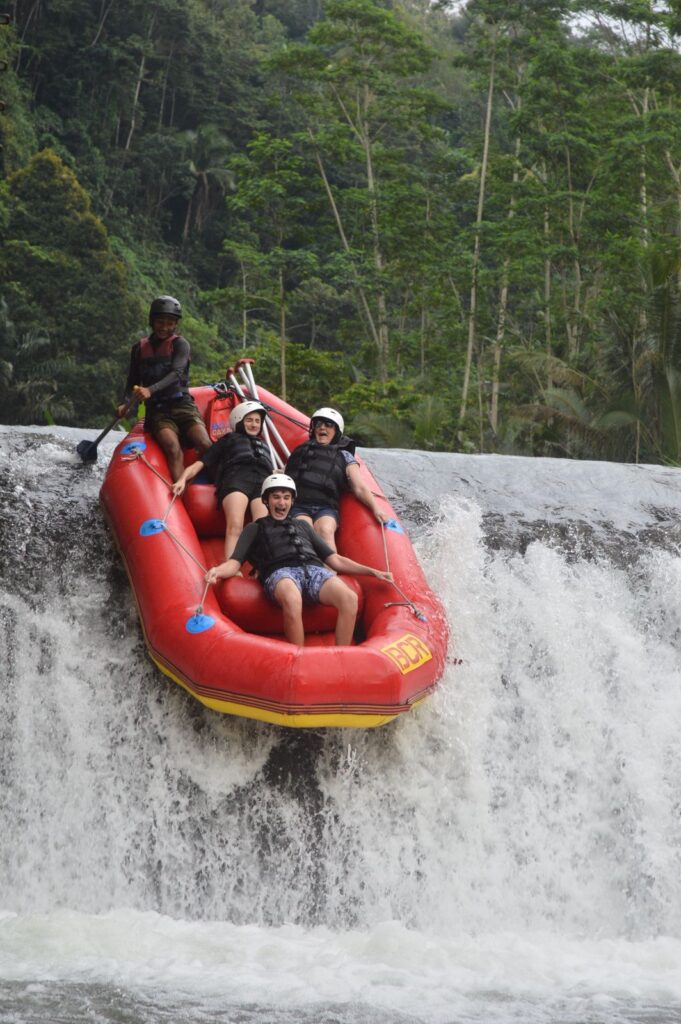
Extreme Tour of Bali Telaga Waja Rafting: Exciting Challenge
Bali Telaga Waja Rafting is an exciting option for visitors who want to experience a more adventurous rafting adventure in Bali while exploring the natural landscapes of East Bali. Known for its extended route, flowing water, and varied rapids, Telaga Waja River offers a combination of physical activity, teamwork, and beautiful scenery.
The rafting route is commonly advertised at approximately 14 kilometers, with time on the water often taking around two to two and a half hours. The actual distance and duration depend on the operator, route, and river conditions. Along the journey, participants may encounter rocky passages, changing currents, and sections with different levels of difficulty, surrounded by green rice fields, cliffs, and tropical vegetation.
Rafting in Telaga Waja is not only about navigating rapids. It also gives participants an opportunity to enjoy the countryside, cooperate with other people, and experience a different side of Bali. Whether you are travelling with friends, family, or colleagues, proper preparation and attention to the guide’s instructions are essential for making the trip enjoyable.
Read More: Telaga Waja Rafting Bali Is The Favorite Activity Tour
Maximum Adrenaline in the Challenging Rapids of Bali Telaga Waja Rafting
The adventurous character of Bali Telaga Waja Rafting comes from the varied rapids and changing water conditions along the river. Some sections may feature stronger currents, waves, rocky passages, and changes in elevation that require participants to stay alert and follow the guide’s directions.
These challenges are part of what makes the rafting experience in Bali memorable. However, the difficulty of individual sections can change depending on rainfall and water levels. Participants should not assume that the river will feel exactly the same on every visit.
Navigating Steep Rapids and River Descents
Some Telaga Waja rafting routes include a notable descent near Bajing Dam, which is often associated with the river’s more exciting sections. Certain descriptions advertise a drop of approximately four meters, although the exact feature and experience depend on the route and operator.
As the raft approaches a challenging section, participants may experience stronger splashes and sudden changes in movement. The guide will provide instructions on how to position themselves and respond to the approaching rapid.
Rather than focusing only on the excitement, participants should remain attentive and follow the recommended safety procedures. This helps the group navigate the section more appropriately.
Understanding the Changing River Conditions
The river does not have identical conditions throughout the year. Water levels, current speed, and the appearance of rapids can change with rainfall and other environmental factors.
This means that a section that feels manageable during one trip may feel more demanding on another day. The guide and operator should assess the conditions before departure and determine whether the activity can proceed.
Bali Telaga Waja Rafting with a Group
Bali Telaga Waja Rafting can be an enjoyable group activity for friends, families, school groups, and corporate outings. Sharing the experience of navigating rapids creates opportunities for communication, cooperation, and memorable moments.
Unlike activities where everyone participates individually, rafting requires people in the same boat to work together. Each participant contributes to the group’s movement by following the guide’s instructions and paddling when needed.
Here are some experiences that make Bali Rafting Adventure enjoyable with a group:
Sharing Exciting Moments on the Rapids
The movement of the raft, splashing water, and unexpected waves can create spontaneous reactions among participants. Laughter and excitement often become part of the journey, especially when everyone experiences the same challenging section together.
These shared moments can make the trip memorable long after the activity has finished.
Building Cooperation Through Paddling
Rafting requires participants to coordinate their movements according to the guide’s commands. Paddling together helps the group respond to changing river conditions and manoeuvre the raft as instructed.
For corporate outings and team activities, this provides an opportunity to practise communication and cooperation in an outdoor setting.
Capturing Group Memories
The natural surroundings of Telaga Waja provide opportunities for photographs during suitable sections of the trip. Participants may enjoy views of green riverbanks, rocky landscapes, and tropical vegetation.
Photography should only take place when the guide confirms that conditions allow it. Participants should avoid handling cameras or phones when they need to concentrate on paddling or maintaining their position.
Enjoying Time Together After Rafting
The experience does not necessarily end when the raft reaches the finish point. Depending on the package, groups may have time to change clothes, enjoy lunch, and share their favourite moments from the journey.
These relaxed moments can be a pleasant way to conclude a group adventure.
Stunning Mountain and River Views
One of the attractions of Bali Telaga Waja Rafting is the natural landscape surrounding the river. While the rapids provide the excitement, the scenery offers a different experience throughout the journey.
Depending on the route and weather, participants may see green hills, rice terraces, rocky riverbanks, and distant mountain views. Mount Agung may also be visible from suitable open areas when the sky is clear.
Mountain Landscapes Along the Route
The surrounding hills and mountain scenery create a dramatic backdrop for the rafting journey. On days with good visibility, participants may have opportunities to see Mount Agung in the distance.
Cloud cover, rain, and other weather conditions can affect visibility, so a clear mountain view cannot be guaranteed. Even without a distant mountain panorama, the green vegetation and natural river landscape remain part of the experience.
Exploring Cliffs and Tropical Vegetation
Some parts of the route pass through areas with rocky riverbanks, tropical plants, and natural vegetation. These surroundings create a refreshing atmosphere and offer a glimpse of East Bali’s countryside.
The combination of flowing water and green landscapes provides a contrast to the more energetic sections of the river.
Enjoying the Scenery Without Losing Focus
Although the views can be beautiful, participants should remain aware of their surroundings. During challenging sections, listening to the guide and maintaining the correct position are more important than taking photographs.
Enjoy the scenery whenever the river conditions allow, particularly during calmer stretches of the journey.
Extreme Tour of Bali Telaga Waja Rafting: Exciting Challenge


Avoiding Injuries While Rafting: Tips and Advice
Rafting is an outdoor adventure activity that involves natural water conditions and potential risks. Although operators provide safety equipment and guide participants throughout the trip, no rafting activity is completely risk-free.
Preparing properly and following the safety briefing can help participants understand how to respond during the journey. Here are some important points to consider before starting a rafting in Bali experience.
Wear Properly Fitted Safety Equipment
A helmet and life jacket are essential pieces of rafting equipment. Make sure they are worn correctly and adjusted to fit your body before entering the river.
If any equipment feels loose, uncomfortable, or damaged, ask the guide or operator to check it before departure. Keep the helmet fastened and the life jacket secured throughout the activity.
Listen Carefully to the Guide
The guide explains the basic techniques, paddle commands, and safety procedures before the trip. Pay attention to instructions such as forward paddle, backward paddle, stop, and hold on.
If you are unsure about a command or procedure, ask for clarification during the briefing. Following the guide’s directions is especially important when approaching rapids and other obstacles.
Avoid Standing While the Raft Is Moving
Remain seated in the position recommended by the guide. Use the designated foot supports when instructed and avoid standing or placing your legs outside the raft.
Sudden movements can affect balance, particularly when the raft is moving through uneven water.
Hold the Paddle Correctly
The guide will demonstrate how to hold and use the paddle. Keep your hands in the recommended positions and avoid gripping the paddle blade.
Be aware of other participants while paddling so that the paddle does not accidentally hit someone inside the raft.
Stay Alert Around Natural Obstacles
Rocks, branches, and other obstacles may be present along the river. Do not attempt to move independently or reach out toward obstacles.
If the guide gives instructions to adjust your position, follow them promptly. If you fall into the water, follow the rescue procedures explained during the briefing and listen to the guide’s directions.
Extreme Weather and Its Impact on River Currents
Weather conditions can have a significant influence on rafting activities in Bali, particularly on rivers where water levels and current speeds respond to rainfall. Telaga Waja’s river conditions can change during periods of heavy rain, affecting the difficulty of certain sections and the operator’s decision to run the activity.
Understanding these changes is important when planning a rafting trip.
Heavy Rainfall and Increased Water Volume
Heavy rainfall can increase the amount of water flowing through the river. This may result in stronger currents, larger waves, and changes in the appearance of rapids.
When conditions become more challenging, operators may reassess the route or postpone the activity. Participants should follow the operator’s decision rather than assuming that a scheduled trip will always proceed.
Slippery Access and Walking Areas
Rain can make paths around the starting and finishing areas slippery. Participants should walk carefully when entering or leaving the river, especially on wet steps, rocks, and uneven surfaces.
Follow the staff’s directions when moving between the basecamp and the rafting location. Avoid rushing, even when the group is eager to begin the activity.
Weather Changes During the Trip
Weather can change while participants are on the river. Rain, reduced visibility, and other conditions may affect the overall experience.
Wind can also influence exposed areas, although river flow and water levels are generally more significant factors when assessing rafting conditions. Participants should remain attentive to the guide’s instructions throughout the journey.
Possible Schedule Changes
If weather or river conditions are considered unsuitable, the operator may delay, modify, postpone, or cancel the activity. The decision depends on the conditions and the provider’s operating procedures.
Before booking, ask about the operator’s weather policy, including arrangements for rescheduling or refunds if the trip cannot proceed.
Conclusion
An extreme rafting tour on Bali’s Telaga Waja River combines exciting rapids, changing river conditions, group cooperation, and beautiful natural scenery. The journey offers an opportunity to experience East Bali from a different perspective, whether you are navigating challenging sections, sharing the adventure with colleagues, or appreciating the surrounding mountain and river landscapes.
However, an enjoyable rafting trip also depends on preparation and responsible participation. Wearing properly fitted equipment, listening to the guide, maintaining the recommended position, and understanding how weather affects river conditions are all important parts of the experience.
For visitors seeking an active outdoor adventure in Bali, Telaga Waja can be a memorable destination. Check the route, participation requirements, and weather policy with your chosen operator before booking so that you can plan your trip with realistic expectations.
Frequently Asked Questions About Extreme Telaga Waja Rafting
1. Is the most challenging section of Telaga Waja always the same?
Not necessarily. The experience of a rapid can change according to water levels, rainfall, and other river conditions. The route may also differ between operators, so the section that feels most challenging on one trip may not be the same on another.
2. Can a group be divided into separate rafts during a corporate outing?
Yes, depending on the group size, available equipment, and operator arrangements. Larger groups may be assigned to several rafts, each accompanied by a guide. Ask the operator how group allocation works when arranging a corporate or school outing.
3. What happens if participants in one raft have different paddling abilities?
Participants do not need to have identical paddling experience. The guide provides instructions and coordinates the group during the activity. It is helpful to communicate any concerns or physical limitations before departure so the operator can consider the group’s needs.
4. Can a rafting operator change the route because of river conditions?
Yes. Operators may adjust the route or operating arrangements when water levels, weather, or other safety considerations require it. The exact decision depends on the conditions and the provider’s procedures on the day.
5. Why might a rafting trip be postponed even when it is not raining at the basecamp?
Rainfall in areas upstream can affect river conditions even when the weather near the basecamp appears clear. Water levels and current strength may therefore be different from what participants can see at the starting location. Operators need to consider the river conditions along the route, not only the local weather.
6. What should corporate groups arrange before booking a rafting outing?
Corporate groups should confirm the number of participants, available rafting slots, meeting time, transport arrangements, package inclusions, and payment terms. It is also useful to provide the operator with information about participants who have specific physical or medical concerns.
7. Can the rafting activity continue if the weather changes after the trip has started?
The decision depends on the conditions along the route and the operator’s safety procedures. The guide may continue, adjust the activity, or take other appropriate action depending on the situation. Participants should follow all instructions and avoid making independent decisions about the route.
8. What should groups discuss with the operator if their trip is cancelled because of extreme weather?
Ask about the available alternatives, such as rescheduling, changing the activity date, or refund arrangements. These options depend on the operator’s booking policy, so it is best to understand the terms before confirming the reservation.