
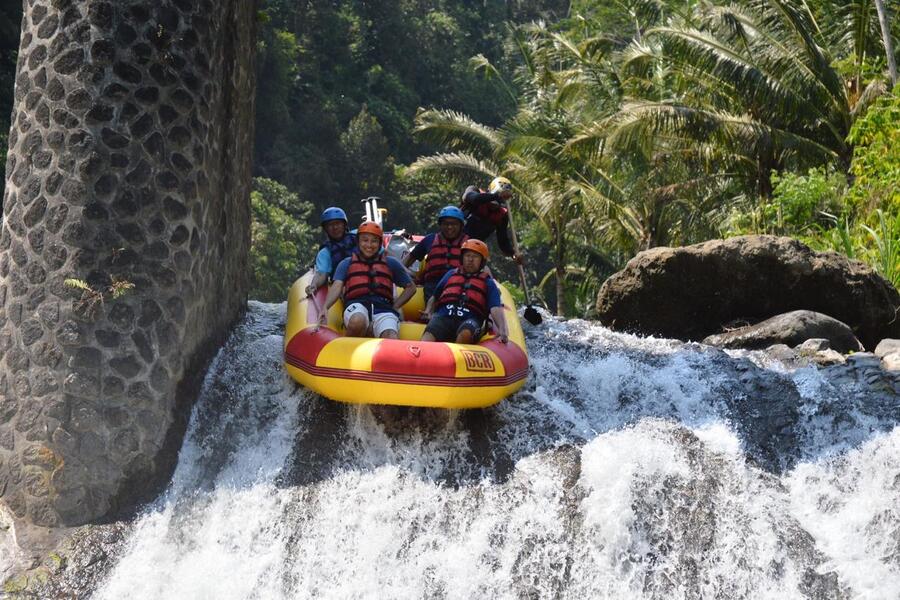
Rafting in Telaga Waja is Amazing Experience
Rafting in Telaga Waja is an exciting outdoor adventure for travelers who want to experience the natural beauty and flowing river currents of East Bali. Located near the slopes of Mount Agung, Telaga Waja River is a popular destination for white water rafting, offering a combination of rapids, green landscapes, and scenic river surroundings.
As you make your way downstream, you will encounter different river conditions, including flowing sections and rapids that require teamwork and coordination. Along the route, the surrounding landscape may feature rice fields, natural cliffs, tropical vegetation, and small waterfalls, depending on the section of the river and current conditions.
The experience is led by rafting guides who provide instructions and accompany participants throughout the activity. With the right preparation and attention to the safety briefing, rafting in Telaga Waja can be an enjoyable way to explore another side of Bali beyond its beaches and popular tourist attractions.
Beyond the physical challenge, this adventure also offers an opportunity to appreciate the natural environment. The sound of flowing water, fresh outdoor atmosphere, and green surroundings create a memorable setting for travelers seeking both excitement and nature.
Feel the Sensation on Telaga Waja River
The adventure begins when participants board an inflatable raft and start navigating the river. Telaga Waja River features a variety of water conditions, from flowing sections to rapids that require participants to follow the guide’s commands and paddle together.
Along the journey, every section offers a different experience. Some areas may feature stronger currents and changing water movement, while others provide opportunities to enjoy the surrounding landscape. Depending on the route and river conditions, participants may also encounter natural features such as small waterfalls, rocky riverbanks, and bamboo bridges.
The combination of river challenges and scenic surroundings makes rafting in Telaga Waja an appealing choice for travelers looking for an outdoor activity in Bali. It offers a chance to enjoy the natural environment while experiencing the excitement of navigating a river with a team.
Read More: Your Essential Packing List for a Bali Rafting Adventure

The Natural Beauty of Telaga Waja
Surrounded by green hills, tropical vegetation, and rural landscapes, Telaga Waja River offers a refreshing view of East Bali. Away from busy urban areas, the river provides a different perspective of the island, where natural scenery becomes part of the rafting experience.
Here are some natural attractions that participants may encounter while rafting in Telaga Waja:
Terraced Rice Field Views
The river route passes through areas of Bali’s countryside, where rice fields and cultivated landscapes may be visible along the riverbanks. These green surroundings create a contrast with the moving water and rocky sections of the river.
Natural Waterfalls
Some sections of the river may feature small waterfalls or streams flowing down from the surrounding landscape. These natural features add variety to the scenery, although their appearance and water flow can change depending on rainfall and seasonal conditions.
Lush Tropical Vegetation
Trees, green riverbanks, and tropical plants surround parts of the rafting route. The sounds of flowing water, birds, and other natural elements can make the journey feel more connected to Bali’s countryside.
Rafting Trail: Approximately 14 Kilometers of Adventure
The rafting trail at Telaga Waja is commonly advertised at approximately 14 kilometers, with the journey on the water generally taking around 2 to 2.5 hours. The actual distance and duration may vary depending on the operator, selected route, and river conditions.
During the trip, participants can experience different sections of the river, from flowing stretches to more challenging rapids. The changes in water movement create a varied journey that requires attention, communication, and cooperation among everyone in the raft.
Although the route offers an exciting challenge, the level of difficulty should not be assumed to be the same throughout the river. Conditions can change with rainfall and water levels, so participants should follow the guide’s instructions at every stage. Families and other groups should also confirm the operator’s age, health, and participation requirements before booking.
Rafting in Telaga Waja is Amazing Experience
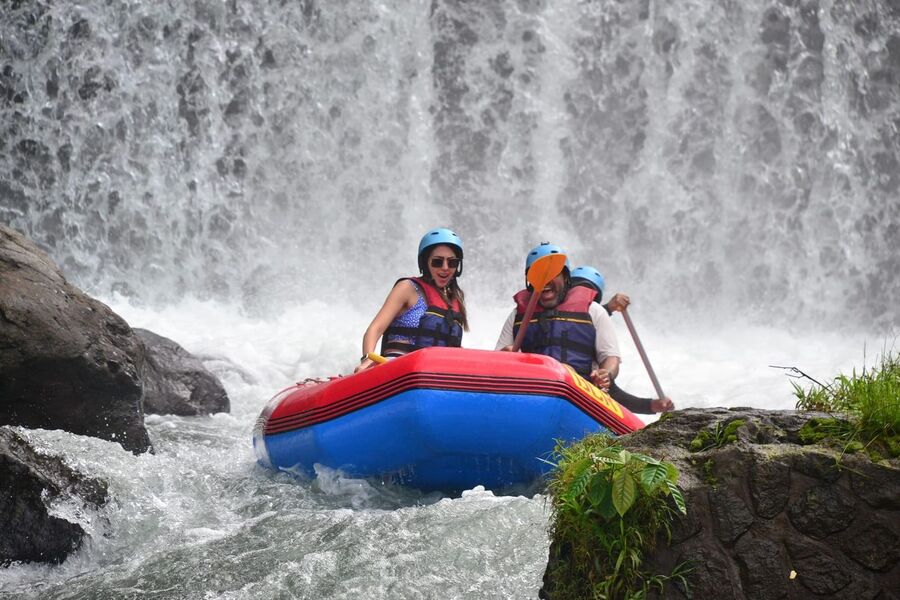
Safety and Professional Guidance While Rafting in Telaga Waja
Safety is an essential part of every rafting activity. Before starting the journey, participants should understand the basic procedures, use the required equipment, and listen carefully to the instructions provided by the rafting guide.
Here are some important safety arrangements and practices to understand before joining rafting activities at Telaga Waja:
Essential Rafting Equipment
Participants are generally provided with essential equipment such as helmets and life jackets, while paddles are used by the group to navigate the raft. The equipment should be checked and adjusted to fit each participant properly before entering the river.
Always wear the required safety equipment throughout the activity and follow the guide’s directions about its correct use.
Pre-Rafting Safety Briefing
Before the trip begins, participants receive instructions about paddling techniques, guide commands, and basic safety procedures. The briefing may also explain what to do if someone falls out of the raft or encounters an unexpected situation.
Pay close attention and ask questions if any instruction is unclear. Understanding these procedures helps participants respond appropriately during the journey.
Experienced Rafting Guides
A rafting guide accompanies each raft and leads the group through the route. Guides provide directions, coordinate paddling, and help participants respond to changing river conditions.
Participants should follow the guide’s commands rather than making independent decisions, especially when navigating rapids.
Emergency and Rescue Arrangements
Rafting operators should explain their emergency procedures and the assistance available along the route. These arrangements may differ between operators, so it is worth asking about rescue support and emergency communication before booking.
Knowing how the operator handles unexpected situations can help participants understand the safety arrangements for their chosen rafting package.
Suitable for Different Experience Levels
Telaga Waja rafting can be considered by both first-time participants and people who have previous rafting experience. However, suitability depends on the selected route, current river conditions, and each participant’s physical condition.
Beginners can learn basic paddling techniques and follow the guide’s instructions during the journey. More experienced participants may enjoy the changing currents and teamwork involved in navigating the rapids.
Rafting is not automatically suitable for every age or fitness level. Participants should confirm the operator’s minimum age and other requirements before booking. Anyone with a medical condition or physical limitation should seek appropriate medical advice and discuss their situation with the operator.
What to Prepare Before Joining Rafting in Telaga Waja
Preparing the right essentials can make your rafting experience more comfortable. Before heading to the river, consider bringing the following items:
Comfortable and Quick-Drying Clothes
Wear lightweight sportswear or clothing designed for water activities. Materials that dry quickly are generally more practical than heavy fabrics such as jeans or cotton, which can become uncomfortable when wet.
Suitable Footwear
Choose secure footwear with a good fit, such as water shoes, old athletic sneakers, or sports sandals with heel straps. Avoid loose flip-flops because they can easily come off during the activity.
Change of Clothes and Towel
Bring a complete change of clothes and a towel for after the rafting trip. Keep them in a separate bag and ask the operator where personal belongings can be stored during the activity.
Sunscreen and Sun Protection
Apply water-resistant sunscreen before the activity and follow the product instructions for reapplication. A hat and sunglasses may also be useful before or after rafting, but avoid loose accessories while on the raft unless the guide confirms they are suitable.
Good Physical Condition
Participants should be in a suitable physical condition for the activity. Although previous rafting experience is not always necessary, navigating a river involves physical movement, coordination, and the ability to follow instructions.
If you have a medical condition, recent injury, or other physical concerns, consult a healthcare professional and inform the operator before participating.
Conclusion: Rafting in Telaga Waja is an Unforgettable Adventure in Bali
Rafting at Telaga Waja offers more than just an exciting river adventure. It combines the experience of navigating changing currents with the natural beauty of East Bali, including green landscapes, tropical vegetation, and scenic river surroundings.
From the first moments on the raft to the different rapids along the route, the journey encourages teamwork, communication, and attention to the guide’s instructions. The approximately 14-kilometer route, commonly completed in around 2 to 2.5 hours on the water, provides an opportunity to experience the river at a different pace.
Whether you are travelling with friends, family members who meet the operator’s requirements, or coworkers, Telaga Waja rafting can be a memorable outdoor activity. By choosing an appropriate package, preparing the necessary essentials, and following the safety briefing, you can enjoy the adventure while appreciating the natural surroundings of Bali.
Frequently Asked Questions
1. Does the scenery along the Telaga Waja rafting route change throughout the journey?
Yes. The scenery can vary from one section to another. Participants may pass areas with green riverbanks, rocky surroundings, tropical vegetation, and views of the countryside. The landscape also depends on the specific route selected by the operator.
2. Can participants see Mount Agung directly from the river?
Visibility depends on the route, weather, and surrounding landscape. Mount Agung may be visible from certain areas around East Bali, but a clear view is not guaranteed throughout the rafting journey. Cloud cover and vegetation can also affect visibility.
3. Are the rapids on Telaga Waja River the same throughout the year?
No. River conditions can change with rainfall, water levels, and seasonal weather. The strength and movement of the current may therefore differ between visits. Participants should follow the guide’s assessment and instructions on the day of the activity.
4. Do participants need to paddle continuously during the entire rafting trip?
Not necessarily. Paddling depends on the river section and the guide’s instructions. There may be times when participants need to paddle together, while in other sections they may be asked to stop paddling and follow specific directions.
5. What makes navigating a river different from rafting on a lake?
River rafting involves moving water, changing currents, and rapids that require participants to respond to the guide’s commands. Unlike a lake, where water is generally less affected by a continuous downstream current, a river requires more coordination and attention to its changing conditions.
6. Can participants take a break during the rafting journey?
Whether a break is available depends on the route, river conditions, and the guide’s assessment. Some routes may have suitable stopping points, but participants should not expect to stop at any location they choose. Always follow the guide’s directions when entering or leaving the raft.
7. Why is teamwork important when navigating Telaga Waja River?
Teamwork helps participants coordinate their paddling and respond to the guide’s instructions. When everyone understands the commands and works together, the raft can be navigated more effectively through different sections of the river.
8. What should participants do if they do not understand a guide’s paddling command?
Ask the guide to explain the command again before the rafting activity begins. During the journey, listen carefully and watch the guide’s movements. If you are uncertain about an instruction, communicate with the guide rather than guessing or acting independently.