

Rafting in Telaga Waja: Experience the Fun of a Long River
Rafting in Telaga Waja is an exciting outdoor activity for visitors who enjoy water sports and adventure. Located in Karangasem, East Bali, Telaga Waja River is known for its relatively long rafting route, varied rapids, and beautiful natural surroundings. These features create an experience that combines physical activity, teamwork, and opportunities to explore Bali’s countryside.
The rafting route is commonly advertised at approximately 14 kilometers, although the actual distance and duration may vary depending on the operator and river conditions. During the rafting trip in Bali, participants can encounter flowing rapids, rocky passages, and calmer sections surrounded by green valleys, tropical vegetation, and rice fields. The changing character of the river makes the journey engaging from the starting point to the finish.
Telaga Waja is often chosen by visitors looking for a more adventurous rafting experience. However, the river’s conditions can change with rainfall and water levels, so the difficulty of the route is not always identical. Participants are accompanied by rafting guides who provide instructions and help coordinate the group throughout the activity. Following the safety briefing and the guide’s directions is essential for enjoying the trip responsibly.
Read More: Extreme Tour of Bali Telaga Waja Rafting: Exciting Challenge
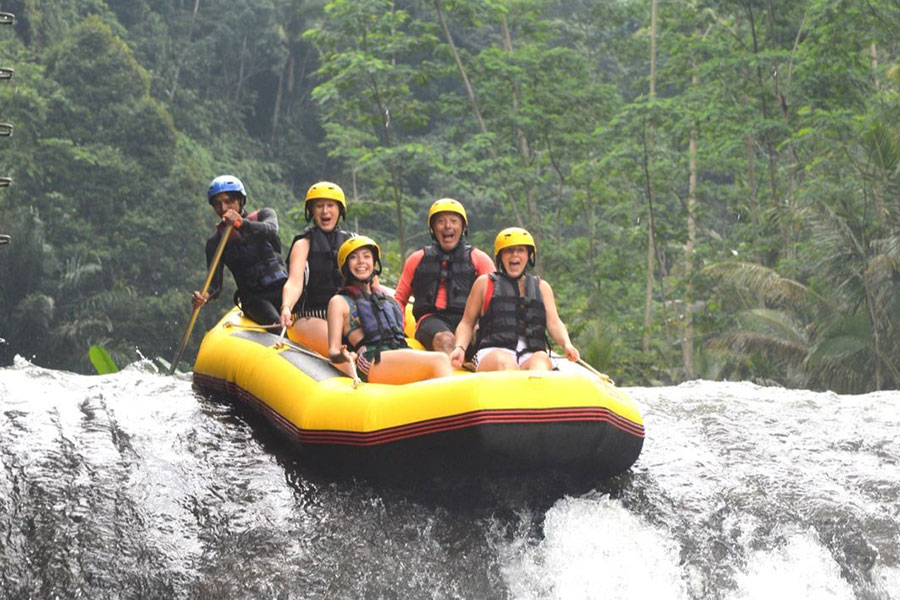
The Thrill of Rafting Through a Steep River Descent
One of the exciting features associated with rafting in Telaga Waja is the descent found on certain sections of the river. Some descriptions advertise a drop of approximately five meters, although the exact height and route feature should be confirmed with the selected operator.
Passing through a descent can create a sudden change in the raft’s movement, with splashing water and stronger currents adding to the excitement. It is a memorable part of the journey for participants who enjoy dynamic river conditions.
Understanding the Descent and River Conditions
A steep descent is not simply a matter of speed. The raft’s movement depends on the water level, current direction, river channel, and the guide’s manoeuvring decisions.
The guide will explain how participants should position themselves and respond before approaching a challenging section. Everyone should remain seated as instructed, hold the raft securely, and follow the commands given during the activity.
Teamwork During Challenging Sections
Coordination becomes particularly important when navigating sections with stronger currents or changes in elevation. Participants need to paddle together when instructed and maintain their recommended positions inside the raft.
Although the guide leads the group, cooperation from everyone helps the raft respond to the river’s conditions. The experience is therefore not only about facing a challenge but also about learning to work together.
Rafting in Telaga Waja: Experience the Fun of Longest River

Suitable for Extreme Adventure and Challenge Lovers
Telaga Waja appeals to visitors who enjoy outdoor activities involving movement, teamwork, and changing natural conditions. Its extended route and varied rapids can provide a more adventurous experience than a short river activity.
Participants may encounter different types of water movement along the journey, from relatively calm stretches to sections with stronger currents and waves. This variety makes the trip engaging, but it also means that participants should stay attentive and follow the guide’s instructions.
An Active Outdoor Experience
Rafting involves more than sitting in a boat and enjoying the scenery. Participants use paddles, maintain their balance, and respond to instructions throughout the trip.
For people who enjoy active holidays, this can be a refreshing way to spend time outdoors. However, participants should consider their physical condition and check the operator’s age and participation requirements before booking.
A Shared Challenge for Friends and Groups
The experience can also be enjoyable for friends, families who meet the operator’s requirements, and organised groups. Working together to follow paddle commands and navigate changing river conditions creates opportunities for communication and cooperation.
The shared experience can become a memorable part of a group holiday or outdoor programme. Participants should communicate any relevant physical concerns to the operator before the activity begins.
Beautiful and Refreshing Balinese Countryside
The landscape surrounding Telaga Waja River is another reason visitors enjoy rafting in this part of Bali. The route passes through a rural environment where green vegetation, agricultural areas, and river valleys create a refreshing natural setting.
Rice Fields and Tropical Vegetation
Depending on the route, participants may see rice terraces, tropical plants, and cultivated areas along the riverbanks. These landscapes provide a glimpse of rural life in East Bali and create a contrast with the more energetic rapids.
The scenery can vary from one section to another, making the journey more than just a water-based adventure.
Mountain Views and Fresh Countryside Atmosphere
The surrounding hills and distant mountains contribute to the natural character of the area. Mount Agung may be visible from suitable viewpoints when the weather is clear, although clouds and rain can affect visibility.
The sounds of flowing water and birds, together with the greenery along the river, can make calmer sections of the trip particularly enjoyable.
Exploring the Area Beyond Rafting
Visitors who want to spend more time in the region may consider exploring nearby rural areas or arranging an overnight stay, depending on their travel plans. Homestays and small accommodation options may be available in parts of East Bali, but visitors should check their location and facilities before making a reservation.
Walking through village areas and observing local agricultural activities can provide additional ways to appreciate the countryside. These experiences can complement a rafting trip for travellers who want to explore more than one activity during their visit.
Rafting in Telaga Waja During the Rainy Season
Rafting in Telaga Waja during the rainy season can offer a different experience because rainfall may affect the river’s water level and current speed. Increased water volume can make some sections more dynamic, changing the appearance and difficulty of the rapids.
However, higher water discharge does not automatically mean a better or more suitable rafting experience. Heavy rainfall can also create challenging conditions that require operators to reassess whether the activity should proceed.
How Rainfall Changes River Conditions
Rainfall in the river’s catchment area can increase water volume and influence current speed. Participants may notice stronger waves, different water movement, or changes in the appearance of familiar sections.
Conditions can also vary depending on how much rain has fallen upstream. The weather at the rafting basecamp may not always reflect conditions along the entire river route.
Greener Landscapes During the Wet Season
Rain can contribute to lush vegetation around the river, making the surrounding countryside look particularly green. The landscape may feel fresh and vibrant, although visibility and the overall experience depend on the weather on the day.
Water clarity should not be assumed to remain the same during the rainy season, as rainfall and sediment can affect the river’s appearance.
Safety Decisions During Heavy Rain
Rafting operators should assess river and weather conditions before allowing an activity to proceed. If water levels, currents, or other conditions are considered unsuitable, the operator may delay, modify, postpone, or cancel the trip.
Participants should respect these decisions and ask about the operator’s weather policy when booking. Do not assume that a trip will continue simply because the rain has stopped at the starting point.
Rafting in Telaga Waja with Ayung Dewata Rafting
Rafting in Telaga Waja with Ayung Dewata Rafting offers visitors an opportunity to explore the river and surrounding natural landscapes of East Bali. Choosing an operator is an important part of planning the activity, particularly for visitors who want to understand the route, available facilities, and safety arrangements before departure.
What to Check Before Booking
Before confirming a rafting package, visitors should review the route length, estimated time on the water, meeting arrangements, and participation requirements. It is also useful to ask what equipment is provided and whether the package includes meals, transportation, insurance, or other services.
These details can vary between packages, so checking them in advance helps avoid misunderstandings on the activity day.
Guidance and Preparation During the Activity
Participants should receive a safety briefing and instructions on basic paddling techniques before entering the river. The guide will provide directions throughout the trip and help the group respond to changing river conditions.
Wear the safety equipment provided, follow the recommended seating position, and communicate any concerns before departure. These simple preparations can help make the experience more comfortable and organised.
Conclusion
Rafting in Telaga Waja combines an extended river journey, varied rapids, and the natural beauty of East Bali. From navigating steep descents and working together as a team to enjoying views of rice fields and mountain landscapes, the activity offers a memorable way to explore the countryside.
The rainy season can change the river’s character, but it also requires greater attention to weather and water conditions. Participants should rely on the operator’s assessment rather than assuming that higher water levels always create a better adventure.
Whether you are seeking an active outdoor challenge or a shared experience with friends and colleagues, Telaga Waja can be an exciting addition to your Bali itinerary. Check the route, participation requirements, and package details with your chosen operator before booking.
Frequently Asked Questions
1. Why is Telaga Waja often described as one of Bali’s longer rafting routes?
Telaga Waja is commonly advertised with a route of approximately 14 kilometers, making it an extended rafting experience compared with shorter river activities. However, route distances can differ between operators, so visitors should confirm the actual distance included in their package.
2. Does a longer rafting route mean the activity is physically more demanding?
A longer route generally means participants spend more time on the river, but the physical demands also depend on current conditions, paddling requirements, and the route. Participants should consider their fitness and inform the operator of any physical concerns before joining.
3. Is the advertised five-meter descent included in every Telaga Waja rafting package?
Not necessarily. The descent and its advertised height may relate to a particular route or description. Visitors should ask the operator whether this feature is included in their selected package and whether conditions allow the raft to pass through it on the day.
4. What makes a river descent different from an ordinary rapid?
A descent involves a change in the river’s elevation, which can affect the raft’s movement as it passes through the section. Ordinary rapids may involve waves, rocks, and changes in current without the same type of elevation change. Both require participants to follow the guide’s instructions.
5. Can visitors enjoy the countryside scenery if they are focused on paddling?
Yes. The trip includes stretches where participants may have opportunities to appreciate the surrounding landscape, particularly when the water is calmer. During more challenging sections, however, attention should remain on the guide’s commands and the activity.
6. How can visitors plan a rafting trip during the rainy season without assuming the river will be suitable?
Check the weather policy and activity confirmation procedure with the operator before travelling to the basecamp. Ask how the operator communicates changes to the schedule and what alternatives are available if river conditions are unsuitable.
7. Why might river water look different after heavy rainfall?
Rainfall can carry soil, leaves, and other natural materials into the river, changing its colour and clarity. The appearance of the water depends on rainfall intensity, conditions upstream, and the amount of sediment entering the river.
8. What information should visitors provide to Ayung Dewata Rafting before joining?
Visitors should communicate the number of participants, preferred activity date, relevant age information, and any physical or medical concerns that may affect participation. They should also ask about route details, package inclusions, and the operator’s weather policy before confirming the booking.