

Everything You Need to Know Before Bali Telaga Waja Rafting
Bali Telaga Waja Rafting is a popular adventure activity for travelers who want to experience Bali’s natural beauty while navigating exciting whitewater rapids. Located in Karangasem Regency, East Bali, the Telaga Waja River offers a combination of flowing water, challenging rapids, and scenic countryside.
The rafting route commonly covers approximately 14–16 kilometers, depending on the operator, and takes around 2 to 2.5 hours on the water. During the journey, participants can enjoy views of green rice fields, tropical vegetation, hills, and other natural features along the river.
Rafting is an adventure activity that requires teamwork, attention, and preparation. Before booking your trip, it is helpful to understand what makes Telaga Waja unique, what to prepare, and how weather conditions can affect your experience. This guide covers the essential information you need before starting your Bali Telaga Waja rafting adventure.
Read more: Rafting in Telaga Waja: Difficulty Level and Safety
What Makes Telaga Waja River Special for Rafting?
The Telaga Waja River is a popular destination for whitewater rafting in Bali because it combines an active river journey with views of East Bali’s natural landscape. Its flowing water and varied rapids offer an engaging experience for travelers seeking an outdoor adventure.
Here are five features that make Bali Telaga Waja rafting worth considering.
1. A Distinctive River Drop
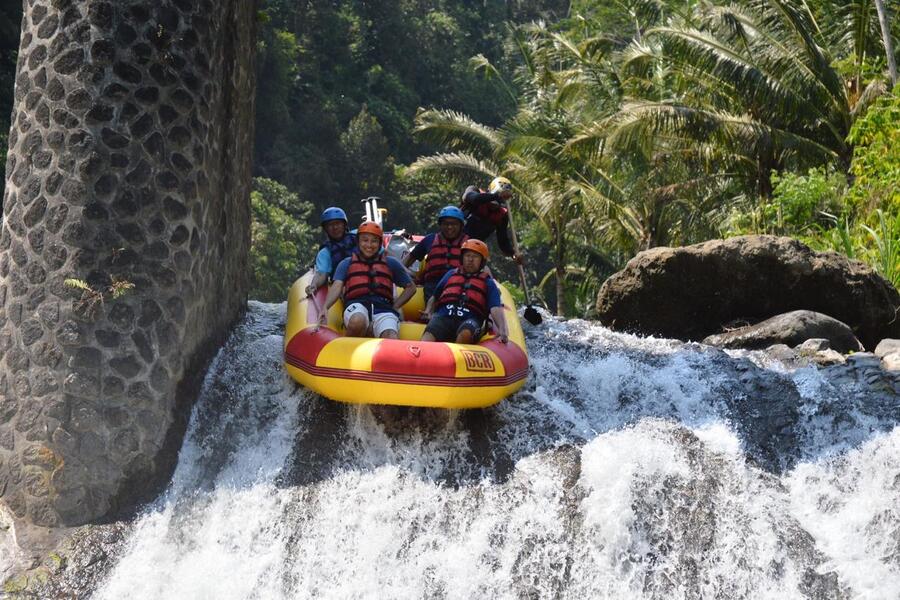
One feature associated with some Telaga Waja rafting routes is a drop over a river structure near the end of the journey. Some operators describe this as a dam drop of approximately four meters, although the exact feature and height may vary by route.
Passing this section can be an exciting part of the trip, but it should only be attempted under the direction of the rafting guide. Follow the safety briefing and the guide’s instructions, and confirm the route details with your chosen operator before booking.
2. Scenic Views Along the River
Rafting on the Telaga Waja River offers opportunities to appreciate the natural scenery of Karangasem. Depending on the route and visibility, participants may see Mount Agung, green rice fields, tropical vegetation, and hillsides along the riverbanks.
These views provide a contrast to the fast-moving sections of the river. Between rapids, participants can take in the surrounding landscape while remaining attentive to their guide’s instructions.
3. A Long Rafting Route
Telaga Waja is known for its relatively long commercial rafting route. Many operators offer journeys of approximately 14–16 kilometers, with around 2 to 2.5 hours spent on the water.
The route commonly passes through several sections of rapids, allowing participants to experience different river conditions during the trip. Starting and finishing points, however, can vary between operators. Confirm the actual route and total activity duration when making a reservation.
4. Fast-Flowing Water
The Telaga Waja River is known for its flowing water and energetic rapids. These conditions contribute to the excitement of the activity and require participants to work together, respond to paddling commands, and maintain their position in the raft.
Water speed and river levels can change with rainfall and other environmental conditions. The experience may therefore feel different from one day to another, making it important to follow the operator’s assessment of current conditions.
5. Challenging Rapids
Telaga Waja is commonly described by rafting operators as having Class III–IV rapids. These sections can involve stronger currents, irregular waves, rocks, and passages that require coordinated paddling.
Although some commercial operators accept beginners on guided trips, the river should not automatically be considered suitable for everyone. Participants should confirm age limits, physical requirements, and route suitability with the operator before booking.
Everything You Need to Know Before Bali Telaga Waja Rafting

Preparations Before Starting Bali Telaga Waja Rafting
Preparing before your rafting trip can help you feel more comfortable and understand what to expect. Before heading to the river, consider the following six steps.
1. Choose a Reliable Rafting Operator
Select a rafting operator that clearly explains its safety procedures, equipment, route, and booking conditions. Check recent customer reviews and ask about guide qualifications, emergency procedures, and insurance coverage.
Do not assume that every package includes the same facilities or benefits. Confirm what is included in the price, such as hotel transfers, meals, showers, changing facilities, and insurance, before making your reservation.
2. Wear Comfortable Clothing
Choose lightweight clothing that dries relatively quickly and allows you to move freely. Swimwear, quick-drying shorts, and a lightweight sports shirt are practical options for a water-based activity.
Avoid heavy clothing that can become uncomfortable when wet. Wear secure water shoes or sandals with straps, and bring a change of dry clothes for after the trip.
3. Consider Your Physical Condition
Rafting involves paddling, maintaining balance, and following instructions during active sections of the river. Consider your fitness level and any medical or mobility concerns before participating.
If you have a medical condition, a recent injury, or concerns about whether the activity is appropriate for you, consult a healthcare professional and inform the operator before booking. Avoid participating if you feel unwell or cannot safely meet the activity’s requirements.
4. Check the Weather and River Conditions
Check the forecast before your activity, but remember that weather conditions in the surrounding highlands can affect river levels even when it is not raining at the rafting location.
Heavy rainfall can increase water flow and make rapids more challenging. A responsible operator should assess the river before departure and may postpone, reschedule, modify, or cancel a trip if conditions are considered unsafe.
Always follow the operator’s decision regarding weather-related safety. Do not assume that a trip will proceed simply because you have already booked it.
5. Use the Required Safety Equipment
Make sure you receive the essential safety equipment required for the trip, including a properly fitted helmet and life jacket. Check that the equipment feels secure and ask your guide for assistance if anything is loose, uncomfortable, or damaged.
Use the equipment according to the instructions provided. Do not remove your helmet or life jacket during the activity unless your guide specifically instructs you to do so.
6. Listen Carefully to the Safety Briefing
Before entering the river, your guide should explain basic paddling commands, raft positioning, and the procedures to follow if you fall into the water or encounter an unexpected situation.
Pay attention throughout the briefing and ask questions if you do not understand an instruction. During the trip, follow the guide’s directions promptly and cooperate with the other participants.
Best Time for Bali Telaga Waja Rafting
Rafting on the Telaga Waja River is offered throughout much of the year, but the experience can change depending on rainfall, weather, and river levels. Rather than choosing a date based on the season alone, consider the conditions that suit your preferences and always confirm whether the operator is running trips safely.
1. Dry Season: Generally April to October
Bali’s dry season generally runs from April to October. During this period, rainfall is often lower, and there may be more opportunities to enjoy outdoor activities in relatively dry weather.
For some visitors, the dry season is appealing because of the weather and surrounding scenery. However, river levels can still vary, and dry-season conditions do not guarantee a particular level of difficulty or safety.
If you prefer more predictable weather for your overall Bali itinerary, this period may be worth considering. Check availability and current river conditions with your chosen operator before departure.
2. Rainy Season: Generally November to March
During the rainy season, rainfall can increase river flow and make some rapids more powerful. The surrounding landscape may also appear greener, but changing water levels require careful monitoring.
Rafting is not automatically impossible during the rainy season. Whether a trip can proceed depends on the actual conditions, the operator’s safety assessment, and any relevant restrictions.
Beginners or travelers who are concerned about stronger currents should discuss the conditions with the operator before booking. If heavy rain or high water makes the route unsuitable, follow the operator’s recommendation to postpone or cancel the activity.
3. Choose Your Trip Date Based on Conditions
The best date is not necessarily the same for every participant. When planning your trip, consider your comfort level, preferred weather, and flexibility in your travel schedule.
For a more informed decision, ask the operator:
- What are the current river conditions?
- Is the planned route suitable for first-time rafters?
- What happens if heavy rain affects the trip?
- Can the booking be rescheduled or refunded if the river is closed?
- How much time should you allow for transfers, preparation, and changing after rafting?
Allow extra time in your itinerary for the journey to the rafting location and the activities before and after the river trip. This helps prevent you from having to rush to another scheduled activity.
Conclusion: Get Ready for Bali Telaga Waja Rafting
Bali Telaga Waja Rafting combines an active outdoor adventure with the natural scenery of East Bali. Its relatively long route, varied rapids, and distinctive river features make it an appealing option for travelers looking for a more energetic rafting experience.
To prepare, choose a responsible operator, wear suitable clothing, check your physical readiness, and listen carefully to the safety briefing. It is also important to understand how rainfall and changing river levels can affect the activity.
Whether you are considering rafting for the first time or have joined similar trips before, confirm the route, current conditions, participation requirements, and booking policies before making your decision. With realistic expectations and careful preparation, you can enjoy the adventure while giving safety the attention it deserves.
Frequently Asked Questions
1. How long is the Telaga Waja rafting route?
Many commercial routes cover approximately 14–16 kilometers, depending on the operator and starting and finishing points. The time spent on the water is commonly around 2 to 2.5 hours, excluding preparation and other activities.
2. Is Telaga Waja rafting suitable for first-time participants?
Some operators accept beginners on guided trips, but suitability depends on the river conditions, the operator’s requirements, and each participant’s physical condition. Ask whether the planned route is appropriate for first-time rafters before booking.
3. What makes Telaga Waja rafting different from other rafting experiences in Bali?
Telaga Waja is known for its relatively long rafting route, energetic rapids, and East Bali scenery. The experience may also include distinctive river features, such as a drop over a river structure, depending on the operator’s route.
4. Is the river drop included in every Telaga Waja rafting package?
Not necessarily. Routes and features can differ between operators. If experiencing a particular drop is important to you, confirm that it is included in your planned route and ask about the relevant safety procedures.
5. Does rafting in Telaga Waja become more difficult during the rainy season?
It can. Rainfall may raise river levels and strengthen currents, increasing the difficulty of some sections. However, conditions vary from day to day, so the operator’s assessment is more important than the season alone.
6. Should I cancel my rafting trip if it rains?
Light rain does not automatically mean that a trip must be canceled. The decision depends on river levels, weather conditions, and the operator’s safety assessment. Follow the operator’s instructions if the trip is postponed or canceled due to unsafe conditions.
7. What should I wear for Bali Telaga Waja rafting?
Wear lightweight, quick-drying clothing and secure water shoes or sandals with straps. Bring a change of dry clothes for afterward, and use the helmet and life jacket provided by the operator according to the safety briefing.
8. Do I need previous rafting experience before joining Telaga Waja rafting?
Previous experience is not required by every operator, but you should not assume that all routes are suitable for beginners. Confirm the operator’s participation requirements and disclose any relevant physical or medical concerns before booking.
9. What should I check before choosing a Telaga Waja rafting operator?
Check the operator’s safety procedures, guide qualifications, equipment, route details, insurance terms, and recent customer reviews. Also confirm what the package includes, whether transfers or meals are provided, and the rescheduling policy for unsuitable river conditions.
10. How much time should I allow for a Telaga Waja rafting trip?
In addition to approximately 2 to 2.5 hours on the river, allow time for transportation, check-in, the safety briefing, equipment fitting, showering, and changing. The total time required will depend on your departure point and the services included in your package.