
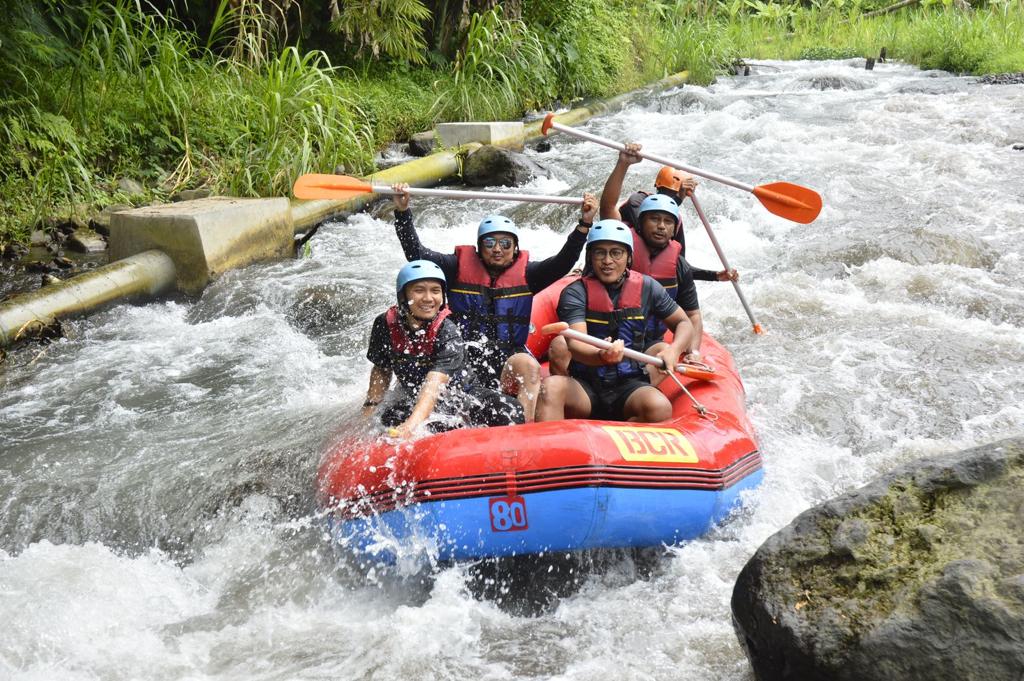
Rafting in Telaga Waja: Difficulty Level and Safety
Rafting in Telaga Waja is an exciting outdoor activity for travelers who enjoy adventure and exploring Bali’s natural landscapes. Located in Karangasem Regency, East Bali, the Telaga Waja River is known for its flowing water, challenging rapids, and scenic surroundings.
The rafting route is commonly around 14–16 kilometers, depending on the operator, and typically takes approximately 2 to 2.5 hours on the water. Along the way, participants can enjoy views of tropical vegetation, green rice fields, hills, and other natural features.
Before booking a trip, it is important to understand the river’s difficulty level and the safety measures involved. Knowing what to expect can help you decide whether Telaga Waja rafting is suitable for your experience, physical condition, and comfort level.
Exploring the Natural Beauty of Rafting in Telaga Waja
One of the attractions of a Telaga Waja rafting adventure is the opportunity to experience East Bali’s natural scenery from the river. Between sections of whitewater, participants may see green rice fields, tropical vegetation, hillsides, and waterfalls along parts of the route.
Several features make this rafting destination appealing to adventure enthusiasts:
- Tropical surroundings: Enjoy views of vegetation and natural landscapes along the river.
- Green rice fields: Observe Bali’s rural scenery from a different perspective while traveling downstream.
- Waterfalls and river features: Depending on the route, participants may encounter waterfalls or designated stops near the water.
- Varied rapids: Experience sections of moving water that require teamwork, attention, and coordinated paddling.
The exact scenery and stops can vary depending on the route and river conditions. Although the natural surroundings add to the experience, participants should remain attentive to their guide’s instructions throughout the trip.
Understanding Rafting Difficulty Levels
Whitewater rafting routes are commonly classified using a scale from Class I to Class VI. These classifications describe the technical difficulty and hazards of moving water, rather than guaranteeing that a river is safe or unsafe for a particular participant.
Understanding the scale helps you make a more informed decision before joining a rafting trip.
- Class I – Easy: Gentle moving water with small waves and few obstacles. Basic maneuvering is usually straightforward.
- Class II – Novice: Relatively easy rapids with small to moderate waves. Some maneuvering may be necessary.
- Class III – Intermediate: Faster water, irregular waves, and obstacles that require more coordinated maneuvering and attention.
- Class IV – Advanced: Powerful rapids, turbulent water, and more complex passages that require precise maneuvering.
- Class V – Expert: Very difficult rapids with sustained challenges, significant obstacles, and demanding rescue conditions.
- Class VI – Extreme: Exceptionally dangerous water that is generally considered extremely difficult or nearly impossible to navigate safely.
The classification of a particular rapid can vary with water levels, weather, and other river conditions. For this reason, the scale should be treated as a guide to difficulty rather than a guarantee of the experience you will encounter.

What Is the Difficulty Level of Telaga Waja Rafting?
Telaga Waja is commonly described by rafting operators as offering Class III–IV rapids. This means the route can include fast-moving water, irregular waves, and sections that require coordinated paddling and careful guidance. The actual difficulty can change with water levels and conditions on the day.
A Class III–IV rating does not mean that every section of the river has the same level of difficulty. Some parts may be less demanding, while others require more attention and precise maneuvering.
Previous rafting experience may be helpful, but it is not always a requirement for a guided commercial trip. Whether beginners can participate depends on the operator’s rules, the current river conditions, age requirements, physical considerations, and the guide’s assessment.
Rather than assuming that the river is safe for everyone, contact your chosen operator before booking and ask whether the planned route is suitable for your group.
For more preparation advice, read Equipment to Bring for Your Telaga Waja Rafting Adventure.
What to Expect During a Telaga Waja Rafting Experience
A rafting experience at Telaga Waja combines active participation with opportunities to appreciate Bali’s natural surroundings. The route commonly covers around 14–16 kilometers, although the distance depends on the operator’s starting and finishing points.
The time on the river is generally around 2 to 2.5 hours, excluding check-in, preparation, the safety briefing, and any post-rafting activities.
During the trip, participants may encounter several features:
- Fast-flowing rapids: These sections require participants to listen carefully and paddle according to the guide’s instructions.
- Team-based paddling: Coordinated movements help the group respond to instructions and navigate the river.
- Scenic stretches: Sections between rapids offer opportunities to appreciate the surrounding vegetation and countryside.
- Distinctive river features: Depending on the route, the trip may include a waterfall stop or a designated descent over a river structure. Follow the guide’s instructions carefully at these sections.
The experience can be physically active, as participants may need to paddle, maintain their balance, and follow directions for extended periods. If you have concerns about your fitness, mobility, or ability to participate, discuss them with the operator before booking.
Safety Measures During Rafting in Bali
Safety should be a priority throughout every rafting trip. Although professional guidance and appropriate equipment can help manage risks, whitewater rafting remains an outdoor activity with inherent hazards. River conditions can change, and no safety measure can eliminate every risk.
Before choosing a rafting operator, ask about its safety procedures and the equipment included in your package.
1. Proper Safety Equipment
Participants should receive appropriately fitted safety equipment, including a life jacket and helmet, according to the operator’s procedures. Check that your equipment fits securely and tell your guide if anything feels loose or uncomfortable.
Ask the operator which equipment is included in the package and whether any additional items are required.
2. A Safety Briefing Before Departure
A safety briefing helps participants understand basic paddling commands, how to position themselves in the raft, and what to do if they fall into the water or encounter an unexpected situation.
Listen carefully, ask questions if any instruction is unclear, and follow the guide’s directions throughout the trip.
3. Monitoring River and Weather Conditions
Water levels and currents can change after rainfall and may affect the difficulty of the route. A responsible operator should assess conditions before departure and adjust, postpone, or cancel a trip when necessary.
Do not assume that a trip will proceed simply because it has been booked. Follow the operator’s decision if conditions are considered unsuitable.
4. Trained Guides and Emergency Procedures
A qualified rafting guide helps lead the raft, gives paddling instructions, and responds to changing conditions. Before booking, ask about guide qualifications, group arrangements, and the operator’s emergency response procedures.
The availability and organization of rescue support can vary, so it is best to confirm these details with the operator rather than assume that every trip follows identical procedures.
5. Following Instructions Throughout the Trip
Participants play an important role in their own safety. Follow the guide’s instructions, remain in the position they recommend, and avoid standing or moving around in the raft unless instructed to do so.
Do not attempt to navigate rapids independently or ignore a safety command to take photographs. If you feel unwell, uncomfortable, or unable to continue, tell your guide as soon as possible.
The Role of Professional Guides in Telaga Waja Rafting
Professional guides are an important part of a guided rafting experience. Their knowledge of the route, ability to communicate instructions, and response to changing conditions can help participants navigate the river more effectively.
Here are some ways a rafting guide supports the group:
- Route guidance: Guides lead the raft through the planned route and provide directions for approaching rapids.
- Safety instructions: They explain paddling commands, raft positioning, and the procedures participants should follow.
- Awareness of river conditions: Guides use their knowledge of the route and current conditions to help the group respond appropriately.
- Participant support: They help participants understand what to do during challenging sections and provide instructions when someone needs assistance.
- Local information: Depending on the guide and operator, participants may also learn about the surrounding landscape and local environment.
Even with a professional guide, participants must remain alert and cooperate with the group. Following instructions is especially important in faster-moving water, where reactions may need to be prompt.
Is Telaga Waja Rafting Suitable for Beginners?
Beginners may be able to join a guided Telaga Waja rafting trip, but suitability depends on several factors. These include the river conditions on the day, the operator’s participation requirements, the participant’s physical condition, and their willingness to follow safety instructions.
The river’s commonly reported Class III–IV rating means that some sections can be demanding. First-time rafters should ask the operator whether the planned route is appropriate for people without previous experience.
Before booking, consider these questions:
- Does the operator accept first-time rafters under the current conditions?
- What are the minimum age and other participation requirements?
- Is the route suitable for your group’s physical abilities?
- What happens if river conditions change before or during the activity?
- What safety equipment, briefing, and emergency procedures are provided?
If you have a medical condition, mobility limitation, or other concern that may affect participation, discuss it with the operator beforehand and seek medical advice when appropriate. Do not participate if you cannot safely meet the activity’s requirements.
Conclusion: Enjoy Telaga Waja Rafting with the Right Preparation
Rafting in Telaga Waja offers an active way to explore East Bali’s natural scenery while navigating exciting sections of whitewater. With rapids commonly described as Class III–IV, the river can provide a demanding experience that calls for teamwork, attention, and clear communication with your guide.
Understanding the difficulty rating is only one part of preparing for the trip. It is equally important to choose a responsible operator, wear properly fitted safety equipment, attend the safety briefing, and follow instructions throughout the activity.
River conditions can change, so always confirm the current route and participation requirements before booking. With realistic expectations and careful preparation, you can make a more informed decision about whether Telaga Waja rafting is the right adventure for you.
Frequently Asked Questions
1. What difficulty level is Telaga Waja rafting?
Telaga Waja rafting is commonly described as Class III–IV whitewater. This indicates that the route may include fast currents, irregular waves, and sections requiring coordinated paddling. Actual difficulty depends on river conditions and the specific route used by the operator.
2. Can beginners join Telaga Waja rafting without previous experience?
Some operators accept beginners on guided trips, but participation depends on current conditions and the operator’s requirements. Because the route can include challenging rapids, beginners should confirm suitability before booking and follow the safety briefing carefully.
3. Does a Class III–IV rating mean Telaga Waja rafting is unsafe?
Not necessarily. The rating describes the technical difficulty of the whitewater, not a simple safe-or-unsafe judgment. However, Class III–IV rapids can present significant challenges, and risk depends on water levels, weather, the route, operator procedures, and participant behavior.
4. Can the difficulty of Telaga Waja River change after rain?
Yes. Rainfall can affect water levels, current speed, and river hazards. These changes may make sections more challenging, which is why operators should assess conditions before departure and modify or cancel trips when necessary.
5. How long does a Telaga Waja rafting trip usually take?
The rafting section commonly takes around 2 to 2.5 hours on the water, depending on the route and river conditions. Allow additional time for check-in, equipment fitting, the safety briefing, changing, and other activities included in your package.
6. What safety equipment should be provided for Telaga Waja rafting?
Essential equipment for a guided rafting trip generally includes a properly fitted life jacket and helmet. Ask your operator about the equipment provided, how it is checked, and whether any additional safety items are required for the route.
7. What should I do if I fall out of the raft?
Follow the procedures explained during your safety briefing and respond to your guide’s instructions. Do not rely on general online advice as a substitute for the operator’s specific safety training, because the appropriate response can depend on the river and the situation.
8. How can I tell whether a rafting operator takes safety seriously?
Ask about guide training, equipment fitting and checks, safety briefings, river-condition assessments, emergency procedures, and circumstances in which trips are postponed or canceled. Clear answers and a willingness to prioritize safety are important when comparing operators.
9. Are children allowed to join Telaga Waja rafting?
Age limits and other participation requirements vary by operator and may depend on river conditions. Parents or guardians should confirm the minimum age, current suitability, and any additional requirements directly with the operator before making a booking.
10. What should I do if I am unsure whether I am physically fit enough for the trip?
Discuss your concerns with the operator before booking, particularly if you have a medical condition, mobility limitation, or difficulty with strenuous activity. Seek medical advice when appropriate, and do not participate if you cannot safely meet the activity’s requirements.