
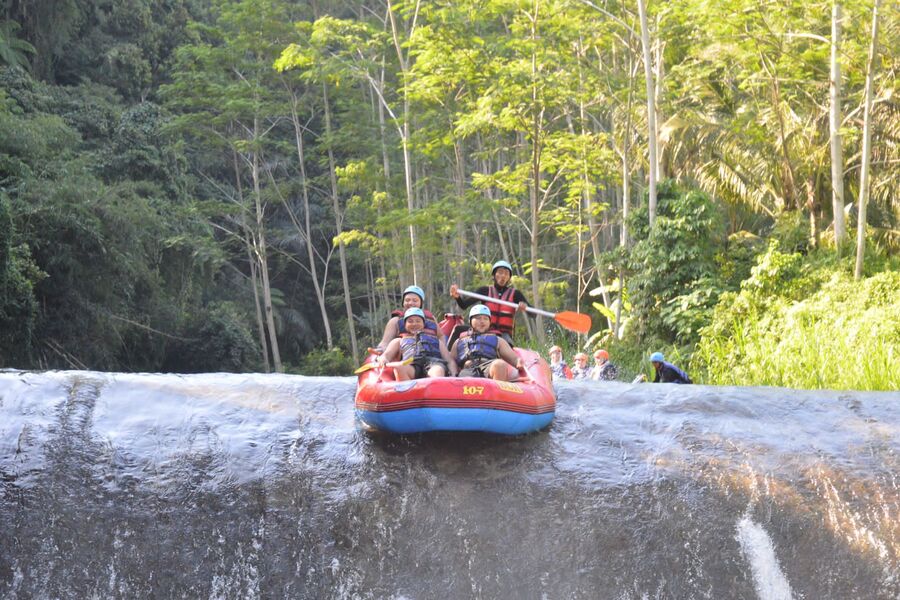
Enjoy the Rapids During Telaga Waja Rafting in Karangasem
Telaga Waja Rafting in Karangasem offers an exciting rafting adventure in Bali for travelers who want to experience the thrill of navigating river rapids. Located in the beautiful region of Karangasem, the Telaga Waja River features flowing currents, varied river sections, and natural landscapes that make the journey an enjoyable outdoor experience.
The river’s rapids provide moments of excitement as participants navigate different water conditions under the direction of an experienced rafting guide. Rather than relying on individual skill alone, the activity involves listening to instructions, coordinating paddling movements, and responding to the guide’s commands. These elements make the Telaga Waja River rafting experience appealing to both first-time participants and those who have tried rafting before, provided they meet the operator’s requirements.
Beyond the excitement of the rapids, participants can appreciate the natural surroundings along the route. Green rice fields, tropical vegetation, rocky riverbanks, and views of the surrounding landscape create a refreshing contrast to the more challenging sections. This combination makes rafting in Telaga Waja an opportunity to enjoy both adventure and the natural beauty of Bali.
Read More: Telaga Waja Rafting: The Right Choice For Team Building
Know More About Telaga Waja River in Karangasem
Telaga Waja River is located in Karangasem, East Bali, and is a popular destination for rafting activities in Bali. Its water flows from the mountainous area of East Bali through rural landscapes, creating a river environment with different sections and changing water conditions.
Some rafting operators advertise routes of approximately 14–16 kilometers, although the actual distance depends on the starting and finishing points and the package selected. Along the journey, participants encounter a variety of rapids and river features that make the experience engaging.
The current can become stronger depending on rainfall and water levels, particularly during periods of heavier rain. For this reason, river conditions should always be assessed by the rafting operator before the activity begins.
Besides being a challenging rafting spot in Bali, Telaga Waja River offers attractive natural scenery. Participants may pass sections surrounded by rocky riverbanks, tropical vegetation, and green rice fields. Some parts of the route may also provide quieter moments to appreciate the landscape between the rapids.
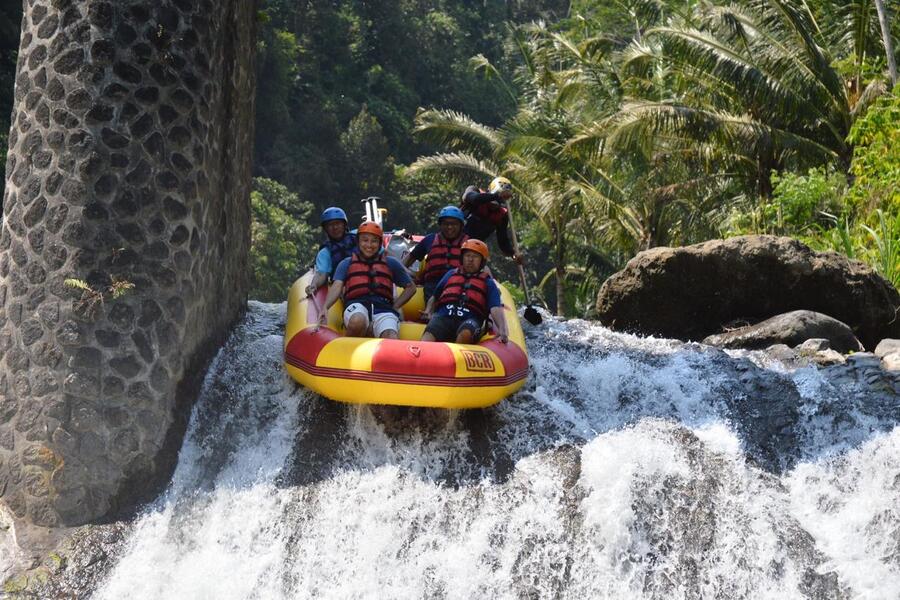
Characteristics of Rapids and Currents During Telaga Waja Rafting in Karangasem
Rafting on Telaga Waja River is known for its varied river conditions. The experience can include faster currents, different types of rapids, and calmer sections along the route. Understanding these characteristics helps participants know what to expect during the activity.
1. Powerful and Challenging Rapids
Some sections of Telaga Waja River feature stronger rapids that create exciting moments during the journey. The movement of the water can require participants to follow paddling commands carefully and maintain their attention throughout the route.
The intensity of each rapid can vary depending on water levels, rainfall, and the route selected. Participants should rely on the guide’s instructions rather than attempting to navigate challenging sections independently.
2. Changing Current Speeds
The current does not necessarily remain equally strong throughout the entire trip. Faster sections may be followed by stretches with a relatively calmer flow, giving participants different experiences along the route.
These changes make it important to stay alert and listen to the guide. Participants may be instructed to paddle, stop paddling, or adjust their position depending on the conditions ahead.
3. River Drops and Changes in Elevation
Certain sections of Telaga Waja rafting routes may include noticeable drops or changes in water level. These features can create some of the most memorable moments of the trip.
However, the availability and characteristics of particular drops depend on the route and operator. They should not be assumed to be included in every rafting package. Participants should ask the operator about the route details before booking.
4. Calmer Sections and Natural Scenery
Although Telaga Waja is known for its exciting rapids, some sections have a relatively calmer current. These moments allow participants to catch their breath, appreciate the surrounding scenery, and enjoy the natural atmosphere.
The contrast between faster and calmer sections is part of what makes the rafting journey varied rather than a continuous sequence of intense rapids.
Enjoy the Rapids during Telaga Waja Rafting in Karangasem

Basic Techniques to Deal with Big Rapids While Rafting in Telaga Waja
Rafting Telaga Waja River requires participants to pay attention to basic techniques and safety instructions, especially when navigating stronger currents. These techniques are explained during the pre-rafting briefing and reinforced by the guide throughout the journey.
Here are some important points to understand before entering the river:
1. Maintain a Stable Body Position
A stable position helps participants remain balanced as the raft moves through the water. Sit in the position instructed by the guide, keep your feet properly secured according to the operator’s instructions, and avoid standing or changing seats while the raft is moving.
The correct foot position can depend on the raft design and the guide’s safety briefing. Do not place your feet in positions that could trap them or make it difficult to move when necessary.
2. Follow the Guide’s Instructions
The rafting guide is responsible for directing the raft and providing instructions throughout the journey. Participants should pay close attention to commands such as when to paddle, stop paddling, or adjust their position.
Understanding these instructions before starting is important because there may be little time to react when approaching a rapid. If a command is unclear, ask the guide during the briefing.
3. Work Together as a Team
Bali Rafting Adventure involves cooperation between everyone in the raft. Participants may need to paddle together according to the guide’s directions to help the raft move through certain sections.
Good coordination does not mean paddling as hard or as fast as possible. It means responding to instructions at the right time and working together rather than acting independently.
4. Stay Calm and Focused
The movement of the raft and splashing water can feel intense, especially for first-time participants. Staying attentive helps participants hear the guide’s instructions and respond appropriately.
If you feel nervous, focus on the guide’s commands rather than trying to anticipate every movement of the river. Communicate any discomfort or difficulty to the guide whenever possible.
5. Maintain the Correct Paddle Grip
Participants should follow the guide’s instructions on how to hold the paddle correctly. Keep control of the paddle and its T-grip, which helps prevent the handle from striking another participant.
Do not independently release the paddle or change your grip when approaching a rapid. If the guide gives a specific command about paddle positioning, follow that instruction carefully.
What to Train Before a Telaga Waja Rafting Tour in Karangasem
Preparing before a Telaga Waja Rafting tour in Karangasem can help participants feel more comfortable during the activity. Although advanced rafting skills are not necessarily required for every package, basic physical readiness and an understanding of safety procedures are important.
Here are several aspects to consider before joining the trip:
1. Physical Fitness
Rafting involves physical activity, including paddling, maintaining balance, and responding to instructions. General fitness can help participants manage the activity more comfortably.
Light exercises such as walking, cycling, or swimming may help improve general endurance before the trip. However, participants should not attempt strenuous training immediately before rafting. Anyone with a medical condition or physical limitation should discuss their suitability with a healthcare professional and inform the operator.
2. Coordination and Teamwork Skills
Bali Rafting Tour involves coordinated movements between participants. Being willing to listen, follow directions, and cooperate with others can make the experience more manageable.
There is no need to master paddling techniques before arriving, as the guide will explain the basic movements during the briefing. The most important preparation is being ready to communicate and work together.
3. Understanding Water Safety
Swimming ability and water confidence can be relevant when choosing a rafting activity, but the requirements may vary between operators and packages. Participants should ask about the operator’s swimming requirements before booking.
It is also important to understand the safety briefing, including how to use the life jacket, what to do if you fall out of the raft, and how to respond to the guide’s rescue instructions. Never assume that wearing a life jacket removes the risks associated with river conditions.
4. Mental Readiness
Rafting through rapids can feel unfamiliar or intimidating, especially for people who have never participated before. Being mentally prepared means understanding that the raft may move unexpectedly, water may splash into the boat, and participants will need to follow instructions carefully.
You do not need to eliminate every feeling of nervousness before joining. However, you should feel comfortable participating and be willing to communicate your concerns to the guide.
5. Understanding Safety Equipment and Procedures
Before rafting, participants should learn how to wear their helmets and life jackets correctly. The guide will also explain basic commands, proper seating positions, paddle handling, and what to do in an emergency.
Pay attention during the briefing rather than treating it as a routine introduction. Understanding these procedures is an important part of preparing for the activity.
Is Telaga Waja Rafting in Karangasem Suitable for Brave Beginners?
Telaga Waja Rafting in Karangasem can be an exciting option for beginners who are interested in experiencing a more adventurous river activity. Its varied rapids and changing current conditions offer a different experience from simply enjoying a calm river.
However, being a beginner does not automatically mean that every rafting route is suitable. Participants must meet the operator’s minimum age, health, and physical requirements. The operator should also assess the river conditions and determine whether the scheduled activity is appropriate.
First-time participants do not necessarily need previous rafting experience, as basic paddling techniques and safety procedures are generally explained before the trip. During the journey, the guide provides directions and manages the raft through the river sections.
If you are a beginner who enjoys outdoor challenges, Telaga Waja may be worth considering. Before booking, ask about the route’s difficulty, current conditions, estimated duration, and any participation restrictions. Choosing an appropriate package and following the guide’s instructions are essential for a more comfortable rafting experience.
Conclusion
Telaga Waja River in Karangasem offers an exciting rafting experience through a combination of changing currents, challenging rapids, and beautiful natural surroundings. The different river sections create an adventure that can be enjoyed by participants who want to experience the outdoor side of Bali.
Understanding the characteristics of the rapids, learning basic rafting techniques, and preparing physically and mentally can help participants approach the activity with greater confidence. It is equally important to pay attention to the safety briefing, use the provided equipment correctly, and follow the guide’s instructions throughout the journey.
For beginners who are interested in a more adventurous rafting experience, Telaga Waja can be an option worth exploring, provided they meet the operator’s requirements and the river conditions are suitable. With the right preparation and guidance, the journey can become a memorable part of a Bali holiday.
Frequently Asked Questions
1. Do all rapids on Telaga Waja River feel the same?
No. The river has different sections, and the intensity can vary along the route. Some areas may have faster currents and more noticeable rapids, while others are relatively calmer. The experience also depends on water levels, rainfall, and the route selected by the operator.
2. How can participants recognize when a rapid is approaching?
Participants should not rely on their own judgment to identify or navigate rapids. The guide is responsible for reading the river conditions and giving instructions before the raft reaches a challenging section. Listening carefully to these commands is more important than trying to anticipate the route independently.
3. Should participants keep paddling when the raft enters a rapid?
Not necessarily. The correct action depends on the river section and the guide’s instructions. Participants may be asked to paddle, stop paddling, or adjust their position. Always follow the guide’s commands rather than continuing to paddle automatically.
4. What should participants do if they cannot keep up with the paddling rhythm?
Try to remain attentive and follow the guide’s directions. If you are confused, tired, or having difficulty using the paddle, communicate this to the guide when it is safe to do so. Coordinated paddling is more useful than forcing yourself to paddle harder without understanding the instructions.
5. Can participants wear gloves while rafting?
This depends on the operator’s equipment policy and the type of gloves. If you are considering wearing gloves for comfort or grip, ask the operator beforehand. Any additional equipment should not interfere with holding the paddle securely or following safety instructions.
6. What should someone do if they feel exhausted during the rafting trip?
Tell the guide about your condition as soon as it is safe to communicate. Do not leave your position, stop following instructions, or attempt to manage the situation independently. Participants should also be honest about their physical condition before starting the activity.
7. Does rainfall always make Telaga Waja rapids more difficult?
Not necessarily in the same way every time. Rainfall can affect water volume, current speed, and river conditions, but the impact varies depending on the amount and location of rainfall. The operator should assess the river before the trip and decide whether conditions are suitable for rafting.
8. What is the difference between rafting on a calm river section and a rapid section?
On calmer sections, the raft generally moves through less turbulent water, allowing participants to enjoy the scenery and follow the guide’s directions at a more relaxed pace. Rapid sections involve more active water movement and may require closer attention to paddling and positioning instructions. Both are part of the changing experience along the river.