
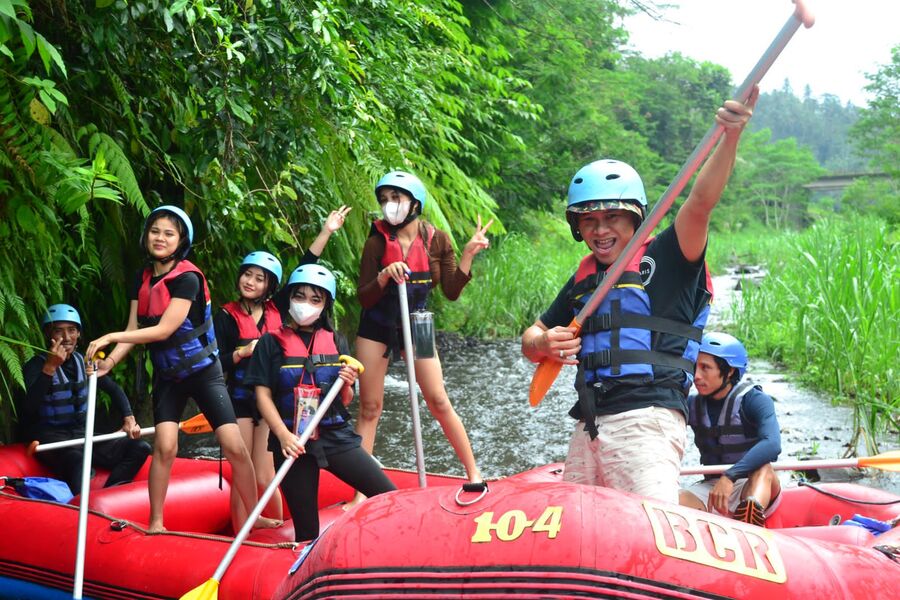
Telaga Waja in Karangasem: The Best Rafting Trail In Bali
Telaga Waja in Karangasem is a popular rafting destination in Bali, known for its relatively long route, varied river conditions, and beautiful natural surroundings. Located in East Bali, the river offers an exciting outdoor adventure for visitors who want to experience the island beyond its beaches and cultural attractions.
Flowing through the landscapes of Karangasem, Telaga Waja River provides a combination of flowing currents, exciting rapids, and scenic views. Along the journey, participants may encounter green rice fields, tropical vegetation, rocky riverbanks, and elements of the surrounding countryside. These natural features make rafting here an opportunity to enjoy both adventure and the landscape of East Bali.
With some operators offering routes of approximately 14 kilometers or more and rafting durations of around two to two and a half hours, rafting in Telaga Waja can provide an extended river experience. The actual distance and duration depend on the operator, route, and river conditions. Beginners and experienced participants may be able to join, provided they meet the operator’s requirements and follow the guide’s instructions.
Read More: Enjoy the Rapids during Telaga Waja Rafting in Karangasem
Length of Trail and Duration of Rafting Tour in Telaga Waja
Telaga Waja River is known for offering one of the longer rafting experiences in Bali. Some operators advertise routes of approximately 14 kilometers, while the distance may vary depending on the starting and finishing points. A typical rafting session may take around two to two and a half hours on the river.
The extended route gives participants time to experience different river sections, from faster rapids to relatively calmer stretches. This variety makes the Bali Rafting Adventure more than just a physical activity. Participants can also appreciate the surrounding countryside and enjoy moments between the more challenging sections.
Some rafting packages may include short stops along the route, depending on the operator’s arrangements and river conditions. These breaks can provide opportunities to rest, enjoy the scenery, or take photographs when permitted by the guide.
It is worth remembering that the total activity time is usually longer than the time spent on the river. Preparation, safety briefings, transfers, and post-rafting arrangements may add to the overall schedule. Participants should confirm the estimated duration with the operator when booking.
Scenery Encountered Along Telaga Waja in Karangasem
One of the attractions of rafting in Telaga Waja is the natural scenery along the river. The landscape changes throughout the journey, offering views of rural surroundings, green vegetation, and the characteristic countryside of East Bali.
Here are some natural features participants may encounter along certain sections of the route:
A. Terraced Rice Fields
Green rice fields are part of the rural landscape surrounding Telaga Waja River. Depending on the route, participants may see cultivated fields along the riverbanks, offering a glimpse of agricultural life in Karangasem.
The landscape can look different depending on the planting season and local farming activities, making the journey an opportunity to appreciate Bali’s countryside.
B. Small Waterfalls
Some sections of the river route may feature small waterfalls or streams flowing from the surrounding landscape. Their presence adds to the natural atmosphere and creates refreshing scenery along the journey.
However, the number and accessibility of these features can vary. Participants should follow the guide’s instructions and avoid approaching waterfalls or riverbank areas independently.
C. Bamboo Bridges and Traditional Houses
Elements of local village life may be visible along parts of the river, including bridges, houses, and other structures used by residents. These views provide a different perspective on the countryside beyond the usual tourist areas.
The exact structures visible depend on the selected route and surrounding conditions.
D. Shady Forests and Rocky Riverbanks
Tropical vegetation and rocky riverbanks contribute to the natural character of Telaga Waja River. In some sections, trees provide shade and create a cooler atmosphere around the water.
The combination of vegetation, rocks, and flowing water gives participants a chance to enjoy the natural environment while navigating the river.
Telaga Waja in Karangasem: The Best Rafting Trail In Bali

Iconic Rapids at Telaga Waja in Karangasem: Which Is the Hardest?
Rafting in Telaga Waja is known for its varied rapids and changing water conditions. Participants may encounter sections with faster currents, bends, rocky passages, and noticeable changes in water level. The difficulty of each section depends on factors such as rainfall, water volume, and the route used by the operator.
Some descriptions of rafting routes use names such as drops, S-curves, stepping stones, or zig-zag sections to explain particular river features. These names may differ between operators and should not be treated as official names used throughout the river.
Here are some types of river features that may be encountered during the journey:
A. River Drops and Descents
Certain routes may include a noticeable descent where the raft moves down a change in river elevation. Some operators highlight a drop of approximately four meters as one of the memorable features of their Telaga Waja rafting experience.
The actual drop and whether it is included depend on the selected route and current conditions. Participants should ask the operator for details rather than assuming every package includes the same descent.
B. S-Shaped River Bends
Some river sections have winding passages that resemble the letter S. These bends can create changes in the direction of the current and require participants to follow the guide’s paddling instructions carefully.
C. Rocky Rapids
Rocks along the riverbed can influence the movement of water and contribute to the formation of rapids. These sections may require the guide to choose an appropriate passage based on the river conditions.
Participants should remain seated in the instructed position and avoid attempting to steer or navigate around rocks independently.
D. Zig-Zag Sections
Some parts of the river may feature a series of bends and changing currents. These sections create variety throughout the journey and require participants to remain attentive to the guide’s commands.
The intensity of these features is not always the same. Water levels and rainfall can affect how a particular section feels on different days.
Telaga Waja Rafting Resting Spots and Checkpoints
During Telaga Waja River Rafting, participants may have opportunities to pause at selected points along the route, depending on the operator’s arrangements and river conditions. These stops can provide a chance to rest, appreciate the scenery, and take photographs when it is safe to do so.
Some possible natural features or stopping areas along rafting routes include:
A. Waterfall Areas
Waterfalls and small streams may be visible along certain sections of the river. These areas can create attractive scenery and a refreshing atmosphere.
Whether participants can stop near a waterfall depends on accessibility, water conditions, and the guide’s safety assessment. Do not assume that swimming or playing beneath a waterfall is permitted.
B. Bamboo Bridge Areas
Some routes pass beneath or near bridges that connect areas around the river. These structures offer a glimpse of the local surroundings and village infrastructure.
Participants may be able to appreciate the view while passing through the area. Any actual stop must follow the operator’s arrangements.
C. Relatively Calm River Sections
After navigating faster rapids, participants may reach sections where the current is relatively calmer. These areas can provide a more relaxed part of the journey and an opportunity to enjoy the surrounding landscape.
Guides may use suitable sections to give instructions or allow participants to pause, depending on the conditions. However, not every calm section is a designated resting checkpoint.
Interaction with Nature at Telaga Waja in Karangasem: Waterfalls and Big Rocks
During a rafting adventure in Telaga Waja, natural features such as waterfalls, streams, and large rocks contribute to the overall experience. These elements are part of the river landscape and help create the changing water conditions that participants encounter along the route.
Waterfalls and small streams may appear along certain sections of the rafting route in Telaga Waja. The sound of flowing water and the surrounding vegetation add to the atmosphere of the journey. Depending on their location and accessibility, these features may be viewed from the raft or from an approved stopping point.
Large rocks are another characteristic of the river environment. They influence the flow of water and can contribute to the formation of rapids. The guide assesses the route and directs the raft through suitable passages based on the conditions at the time.
Participants should avoid touching or climbing onto rocks, approaching waterfalls, or entering the water without the guide’s permission. Enjoying the natural surroundings is an important part of the adventure, but following safety instructions must always come first.
Participant Experience: Does the Telaga Waja Rafting Route Feel Too Long?
For travelers considering a longer rafting route, one question is whether spending around two to two and a half hours on the river might feel tiring or repetitive. The answer can vary depending on individual fitness, expectations, river conditions, and the route offered by the operator.
The variety of river sections is one factor that can make the journey engaging. Participants may experience faster rapids, winding passages, relatively calm water, and changing natural scenery along the way. These different elements create a varied experience rather than one continuous type of activity.
The longer duration can also give participants more time to enjoy the surroundings and experience the river at a pace that differs from shorter rafting routes. However, rafting involves physical effort, and some participants may feel tired after paddling and maintaining their position in the raft.
For a more comfortable experience, participants should prepare physically, follow the guide’s instructions, and communicate if they feel uncomfortable or exhausted. It is also useful to confirm the estimated time on the river and the availability of rest stops before booking.
Conclusion
Telaga Waja in Karangasem offers a memorable rafting experience through its relatively long routes, varied rapids, and natural scenery. From green rice fields and tropical vegetation to rocky river sections and possible waterfall views, the journey provides more than just an adrenaline-filled activity.
The length of the route gives participants an opportunity to experience different parts of the river, while the changing currents and natural features make each section distinct. However, the actual distance, duration, stopping points, and specific rapids can vary depending on the operator and river conditions.
For travelers who want to explore Bali through an outdoor adventure, Telaga Waja Rafting is worth considering. Before booking, confirm the route details, estimated duration, available facilities, and safety requirements with the operator. With appropriate preparation and guidance, the journey can become a rewarding way to discover the natural side of Karangasem.
Frequently Asked Questions About Telaga Waja Rafting Routes
1. Does the rafting route pass through the same landscape from start to finish?
No. The scenery can change along the river. Participants may see different combinations of rice fields, vegetation, rocky riverbanks, bridges, and other countryside features depending on the route.
2. Are the rapids given official names by the rafting operators?
Not necessarily. Names such as S-curve, stepping stone, or zig-zag may be used informally to describe certain river features. Naming conventions can differ between operators, so it is best to ask the provider how they describe the sections on their route.
3. Can participants see Mount Agung during the rafting trip?
Views of the surrounding mountainous landscape may be possible from certain areas, depending on the route, weather, and visibility. However, a clear view of Mount Agung is not guaranteed throughout the rafting journey.
4. Does the rafting route change between the dry and rainy seasons?
River conditions can change with rainfall and water levels. These changes may affect the route conditions and the operator’s decisions about which sections are suitable for rafting. The operator should provide the latest information before the activity.
5. Are resting checkpoints included in every Telaga Waja rafting package?
Not always. Some operators may arrange short stops at suitable locations, while others may follow a different schedule depending on the route and river conditions. Ask the operator whether planned stops are included in the package.
6. Can participants take photographs at waterfall or bridge areas?
Photography may be possible at suitable locations, but it depends on the guide’s instructions and the safety of the stopping point. Participants should not use cameras or mobile phones while navigating challenging sections unless the guide confirms that doing so is safe.
7. What makes a longer rafting route different from a shorter one?
A longer route generally provides more time on the river and may include a wider variety of river sections and scenery. However, route length alone does not determine the quality or difficulty of the experience. Water conditions, rapids, operator arrangements, and participant preferences also matter.
8. What should participants confirm before booking a Telaga Waja rafting package?
Participants should check the route distance, estimated time on the river, starting and finishing points, minimum age and health requirements, safety equipment, package inclusions, and any planned stops. It is also useful to ask whether the advertised route features are available under the expected river conditions.