

Try the Best Challenge Only at Telaga Waja River Rafting!
Telaga Waja River Rafting is one of the most exciting rafting experiences in Bali, especially for travelers who enjoy outdoor adventures and challenging river conditions. Located in Karangasem Regency, East Bali, Telaga Waja River is known for its flowing currents, varied rapids, and relatively long rafting route. These characteristics make it an attractive destination for visitors looking for an active and memorable holiday experience.
The appeal of Telaga Waja River lies not only in its rapids but also in the natural environment surrounding the route. During the rafting trip, participants can enjoy views of green rice fields, tropical vegetation, rocky riverbanks, and, when visibility allows, the impressive landscape around Mount Agung. This combination of adventure and scenery makes the journey enjoyable beyond the excitement of paddling through the rapids.
Telaga Waja Rafting can also be an option for travelers with different levels of experience, provided they meet the operator’s participation requirements. Beginners receive basic instructions before entering the river, while the guide provides directions throughout the journey. Understanding the river conditions and following safety procedures are important parts of enjoying this adventure.
Rafting Difficulty Level in Telaga Waja
Telaga Waja River Rafting is often considered more challenging than rafting on the Ayung River in Ubud because of its longer route and some faster-moving sections. Participants may encounter different types of rapids, bends, and river obstacles along the journey. Certain routes also feature a notable descent of approximately 4 meters, although its availability depends on the operator and current river conditions.
Rafting difficulty can vary according to water levels, rainfall, and the specific section being navigated. River classifications such as Grade II, III, or IV describe different levels of rapids, but they should not be treated as a fixed classification for every section of Telaga Waja River.
Understanding the Difficulty of Telaga Waja Rafting
- Grade II: Generally features relatively straightforward rapids with manageable obstacles and moderate water movement.
- Grade III: Involves more noticeable waves, stronger currents, and sections that require coordinated paddling.
- Grade IV: Can involve powerful and complex rapids that require more precise navigation and experienced guidance.
- River Descent: Some routes include a drop of approximately 4 meters, creating an additional challenge for participants.
The overall rafting experience may include a combination of different river conditions. Participants should ask their operator about the route’s current difficulty and follow the guide’s assessment before approaching challenging sections.
Read More: Telaga Waja Rafting: A Must-Try Rafting Challenge in Bali
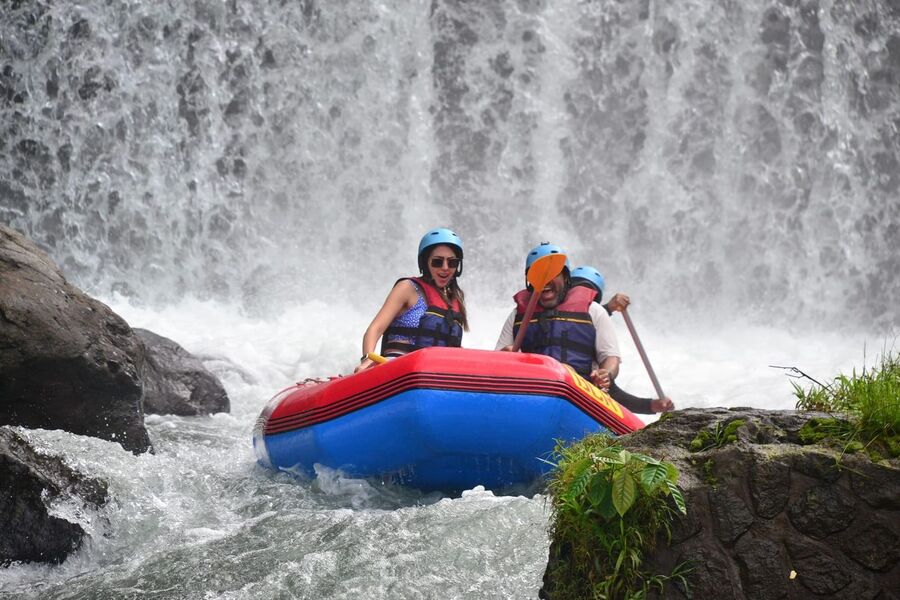
Rafting Attractions at Telaga Waja River
Beyond its challenging rapids, rafting in Telaga Waja offers several attractions that make the journey memorable. The river passes through a countryside landscape with green rice fields, hills, tropical vegetation, and natural rock formations. Participants can enjoy these surroundings while experiencing different sections of the river.
The relatively long route also gives visitors more time on the water compared with shorter rafting trips. One of the notable features offered on certain routes is a river descent that adds another element of excitement to the adventure.
Main Attractions of Telaga Waja River Rafting
- Views of green rice fields and the surrounding mountain landscape.
- Flowing currents and varied rapids along the route.
- An approximately 4-meter descent on selected routes.
- A relatively long rafting journey of around 16 kilometers, depending on the operator.
- Natural scenery featuring tropical vegetation and rocky riverbanks.
- An outdoor adventure that encourages teamwork and coordination.
Water clarity and scenery can change depending on rainfall and natural conditions. Rather than assuming that every trip offers identical views or river features, participants should check the current route details with their chosen operator.
Rafting Route and Duration on Telaga Waja River
Rafting in Telaga Waja is commonly offered along a route of approximately 16 kilometers. Some operators use starting points around Muncan Village in Karangasem, with finishing locations that may include areas near Pakel Village. However, exact meeting points, launch locations, and finish points can vary between providers.
A typical trip may take approximately 2.5 to 3 hours on the water, depending on the route, river conditions, and group pace. Along the journey, participants may encounter flowing rapids, winding passages, and sections that require coordinated paddling. Some routes also include a notable descent.
The surrounding landscape adds another dimension to the experience. Participants may pass rice fields, tropical vegetation, and natural rock formations while navigating the river.
Telaga Waja Rafting Route and Duration Details
- Approximate Route Length: Around 16 kilometers, depending on the operator.
- Estimated Time on the River: Approximately 2.5–3 hours.
- Starting Area: Muncan Village, Karangasem, for selected operators.
- Finishing Area: May include locations near Pakel Village, depending on the provider.
- Main River Features: Rapids, flowing currents, winding passages, and selected routes with a river descent.
- Natural Surroundings: Rice fields, tropical vegetation, and rocky riverbanks.
Before booking, confirm the actual starting and finishing locations with the operator, especially if you are arranging your own transportation.
Preparation and Safety When Rafting in Telaga Waja
Safety is an essential part of rafting in Telaga Waja. Before the activity begins, participants should receive a safety briefing covering basic paddling techniques, guide commands, and procedures to follow if someone falls into the water or the raft encounters difficulties.
Participants are generally provided with essential equipment such as helmets and life jackets. These items must fit correctly and be worn throughout the activity. Each raft is accompanied by a guide who gives directions and helps the group navigate the river.
Preparation and Safety Tips for Telaga Waja Rafting
- Wear comfortable, quick-drying clothing and avoid heavy fabrics such as jeans.
- Choose secure footwear, such as water shoes or sandals with firm straps.
- Wear the helmet and life jacket provided by the operator.
- Listen carefully to the safety briefing before entering the river.
- Follow the guide’s paddling commands when approaching rapids.
- If you fall into the water, remain calm and follow the rescue instructions explained during the briefing.
- Avoid standing in fast-moving water.
- Inform the operator about relevant health concerns before participating.
- Leave valuables and unprotected electronic devices in a secure place.
Participants should also avoid rafting when they feel unwell or are unable to meet the operator’s health and participation requirements. A life jacket and helmet help reduce certain risks, but they do not eliminate the natural hazards associated with river activities.
Best Season for Telaga Waja River Rafting
Telaga Waja River Rafting is offered throughout much of the year, but the experience can change with the seasons. Rainfall influences river levels and current intensity, which may affect the difficulty of certain sections. For this reason, the most suitable time depends on the type of experience participants prefer and the operator’s assessment of current conditions.
During the rainy season, generally around October to March in Bali, rainfall may increase the river’s water level and create stronger currents. This can make some sections more challenging. However, heavy rain can also lead operators to adjust routes or suspend trips when conditions are unsuitable.
During the drier months, generally around April to September, rainfall is often lower. Some visitors may prefer this period for outdoor activities because of the generally sunnier weather. Nevertheless, river conditions can still vary, so a dry-season trip should not automatically be assumed to have calm or identical currents.
Best Seasonal and Daily Timing Considerations
- October–March: Rainfall may increase water levels and current intensity. Check the operator’s assessment before booking.
- April–September: Often offers more opportunities for outdoor activities in sunnier weather, although river conditions still vary.
- Morning Departures: Trips around 08:00–10:00 AM may be convenient for visitors who prefer starting their activity earlier in the day.
- Late-Morning Departures: Some operators may offer departures around 11:00 AM, subject to their schedule and daily conditions.
The best departure time depends on the operator’s availability, transportation arrangements, and weather conditions. Contact the provider to confirm the schedule rather than assuming every time slot is available.
Conclusion: Is Telaga Waja River Rafting Right for You?
Telaga Waja River Rafting is an appealing choice for travelers looking for an adventurous outdoor activity in Bali. Its relatively long route, flowing currents, varied rapids, and natural surroundings create an experience that combines physical activity with beautiful countryside scenery.
Whether you are an experienced adventure enthusiast or a beginner interested in trying rafting, choosing a suitable trip is important. Consider your physical condition, understand the route’s difficulty, and follow the guide’s instructions throughout the activity. Since river conditions can change with rainfall, always check the latest information with the operator before your visit.
If you enjoy outdoor challenges and want to discover another side of East Bali, Telaga Waja River Rafting is worth considering for your next holiday itinerary.
Frequently Asked Questions
1. What do Grade II, III, and IV rapids mean during a rafting trip?
These grades describe the technical difficulty of river rapids. Grade II generally involves manageable obstacles, Grade III requires more active navigation, and Grade IV features more complex and powerful rapids. The actual difficulty of a trip depends on the river sections and current water conditions.
2. Does the rafting route follow the same line through every rapid?
Not necessarily. Guides may adjust the route or navigation approach according to water levels, obstacles, and safety considerations. This means the exact experience can differ between trips, even when participants book with the same operator.
3. Why is teamwork important when navigating Telaga Waja River?
The guide relies on coordinated paddling to help control the raft through certain river sections. When participants respond to commands together, the group can move more effectively and avoid unnecessary confusion during challenging passages.
4. Can participants watch Mount Agung throughout the rafting journey?
Not throughout the entire journey. Visibility depends on the route, surrounding vegetation, weather, and cloud cover. Participants may see the mountain from certain sections when conditions provide a clear view.
5. What happens if river conditions change shortly before the rafting departure?
The operator should assess the river and weather conditions before the activity. Depending on the situation, the provider may adjust the route, reschedule the trip, or cancel the activity if conditions are unsuitable. Ask about the operator’s weather and cancellation policy before booking.
6. Is the rafting difficulty identical during morning and late-morning departures?
No. Departure time alone does not determine the difficulty of the rapids. Water levels, rainfall, and other natural conditions have a greater influence on the river’s behavior. The guide will assess the conditions during the trip.
7. Should participants book transportation separately from the rafting activity?
That depends on the package selected. Some providers offer transportation as an additional service, while others may sell rafting tickets without hotel transfers. Confirm pickup availability, meeting locations, and transportation costs before completing your booking.
8. How can visitors plan their schedule after finishing a Telaga Waja rafting trip?
Allow extra time after rafting for changing clothes, resting, and traveling to your next destination. If you plan to visit attractions around Karangasem, check their opening hours and travel distances first so your itinerary remains practical.