

The Guide for True Adventurers in Telaga Waja Rafting Bali
Telaga Waja Rafting Bali is an exciting outdoor activity for travelers who enjoy nature, physical challenges, and adventure. Located in Karangasem Regency in eastern Bali, the Telaga Waja River is known for its flowing water, varied rapids, and scenic surroundings. Some rafting operators advertise routes of approximately 14 km, with around 2–2.5 hours spent on the river, although the actual distance and duration depend on the selected package and river conditions.
Unlike a typical sightseeing activity, Bali Rafting Adventure on the Telaga Waja River combines teamwork with the excitement of navigating changing water conditions. Participants may encounter rocky sections, bends, and drops along the route. Certain packages or routes may also feature a descent near a small drop, but the exact experience should be confirmed with the operator before booking.
Beyond the rapids, rafting in Telaga Waja offers opportunities to appreciate Bali’s natural landscape. Green rice fields, bamboo vegetation, tropical trees, and views of the surrounding mountains create a beautiful setting for an outdoor adventure. It is an opportunity to discover a different side of Bali while enjoying an active experience on the river.
Location and How to Get to Telaga Waja Rafting Bali
The Telaga Waja River is located in the Karangasem area of eastern Bali. Muncan Village and its surrounding areas are commonly associated with rafting activities on this river. From popular tourist destinations such as Kuta, Seminyak, and Sanur, the journey can take approximately 2–2.5 hours by car, depending on traffic, departure point, and the rafting operator’s starting location.
Here are some common ways to reach the rafting area:
- Using a Shuttle Service from a Rafting Operator: Some rafting operators in Telaga Waja offer hotel transfers as part of selected packages or for an additional fee. Check the pickup area and schedule before making a reservation.
- Renting a Car or Motorcycle: Renting a vehicle provides flexibility for travelers who prefer to arrange their own journey. A navigation application can help with directions, but allow extra time for rural roads and changing traffic conditions.
- Hiring a Private Driver or Joining a Daily Tour: A private driver or customized tour can make it easier to combine rafting with other destinations in Karangasem, such as Tirta Gangga or Lempuyang Temple. Make sure the schedule allows enough time for the rafting activity and travel between locations.
Read More: Review Of Rafting Experience Telaga Waja: Amazing Trip!
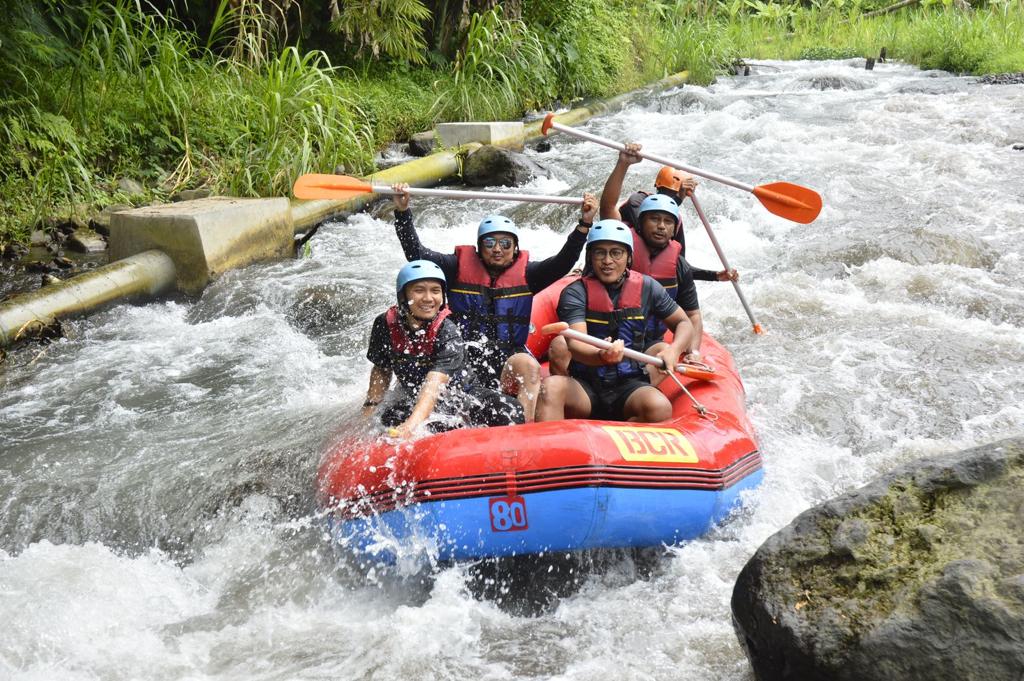
Natural Beauty Along the Telaga Waja River
One of the appealing aspects of rafting on the Telaga Waja River is the opportunity to experience Bali’s countryside from a different perspective. Instead of viewing the landscape from a road or sightseeing platform, participants can enjoy the scenery while traveling along the river.
Here are some natural features that may be seen along the rafting route, depending on the selected section and conditions:
- Views of Mount Agung: On clear days, parts of the surrounding landscape may offer views of Mount Agung. Visibility depends on weather, cloud cover, and the direction of the route.
- Terraced Rice Fields: Green rice fields and agricultural landscapes contribute to the peaceful atmosphere along parts of the river.
- Bamboo Forests and Tropical Trees: Vegetation along the riverbanks creates shaded sections and a natural setting throughout the journey.
- Waterfalls and Flowing Streams: Some sections of the river may feature small cascades or natural water features. Their appearance and accessibility can vary with rainfall and river conditions.
- Fresh Countryside Atmosphere: Away from Bali’s busier tourist areas, the river surroundings offer a more natural environment, with flowing water and the sounds of the countryside.
The combination of natural scenery and changing river conditions makes the journey interesting even during calmer sections between the rapids.
What Makes Telaga Waja Different from Ayung Rafting?
The main difference between Telaga Waja Rafting Bali and Ayung Rafting lies in their river characteristics, route experiences, and surrounding landscapes.
Telaga Waja is often chosen by travelers looking for a longer rafting route and varied rapids. Some sections can feel more challenging, depending on water levels, rainfall, and the operator’s route. Ayung River, meanwhile, is widely known for its rafting activities around Ubud, where participants can enjoy tropical scenery and distinctive stone carvings along parts of the riverbanks.
The two rivers also offer different visual experiences. Ayung River is associated with Ubud’s forest landscape and cultural features, while Telaga Waja offers views of the Karangasem countryside, including rice fields, bamboo vegetation, and mountain surroundings.
Route length is another point worth considering. Some Telaga Waja operators advertise routes of approximately 14 km, while Ayung rafting packages may advertise shorter routes, often around 10 km. These figures are not universal and can differ between operators and packages. The time spent on the river also varies, so travelers should compare the actual route details rather than relying only on advertised distances.
For travelers choosing between the two, the most suitable option depends on the type of scenery, river conditions, route length, and level of challenge they want to experience.
The Thrill of Intermediate to Advanced Obstacles and Rapids
The Telaga Waja River features changing water conditions along its rafting routes. Participants may encounter sections that require coordinated paddling, attention to the guide’s instructions, and teamwork.
Here are some river features that can contribute to the adventure:
- Cascading Rapids: Different sections of the river may contain sequences of rapids where participants need to paddle in coordination with the guide’s commands. The intensity can vary with water levels and weather conditions.
- Sharp Turns and River Bends: Some parts of the route include bends that require the guide to steer the raft carefully. Participants should maintain their positions and follow instructions throughout these sections.
- Boulders Along the River: Natural rocks and boulders form part of the river landscape. They influence the movement of water and contribute to the changing character of the route.
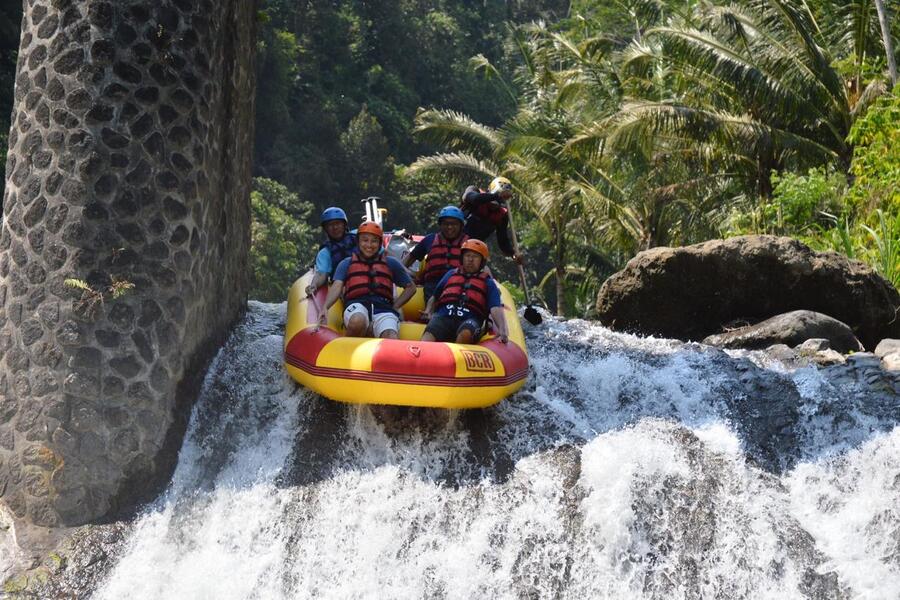
- Sections with Sudden Drops: Certain parts of the river may have drops or changes in elevation that create an exciting sensation as the raft moves downstream. These features are route-dependent and should not be assumed to appear in every package.
River difficulty is not fixed throughout the year. Rainfall, water levels, and local conditions can affect the intensity of individual sections. For this reason, the guide’s briefing and instructions are essential, regardless of previous rafting experience.
Experience the Descent at a Small River Drop
One feature often associated with the Telaga Waja rafting experience is a descent over a river drop near the end of certain routes. Some descriptions advertise a drop of approximately 4 meters, but the exact height, location, and availability should be confirmed with the rafting operator.
This section can become one of the most exciting moments of the trip because the raft moves through a noticeable change in elevation. Participants should pay close attention to the guide’s instructions and maintain the position recommended during the briefing.
It is important to understand that this feature is not necessarily a separate jump performed by participants. The experience involves navigating the river section in the raft under the guide’s direction. Its suitability and availability depend on the route and prevailing river conditions.
For travelers who are particularly interested in experiencing this feature, asking the operator about the specific route before booking is the best way to avoid misunderstandings.
The Guide for True Adventurers in Telaga Waja Rafting Bali
Reviews of Telaga Waja Rafting Bali from Local and International Travelers
Travelers often consider several aspects when evaluating a rafting experience, including the river route, scenery, guide communication, equipment, and overall organization of the activity.
For local visitors, rafting on the Telaga Waja River can offer a different kind of holiday experience beyond Bali’s beaches, shopping areas, and popular sightseeing attractions. The combination of outdoor activity and countryside scenery is one reason the river appeals to people looking for something more active during their visit.
International travelers may also be interested in the contrast between the river adventure and Bali’s more familiar tourist experiences. The changing rapids, natural surroundings, and opportunity to work together in a raft can make the activity a memorable part of a holiday.
When reading online reviews on platforms such as Google Reviews or TripAdvisor, it is useful to look beyond overall ratings. Pay attention to comments about the specific operator, guide communication, equipment condition, route information, and package inclusions. Facilities such as changing rooms, showers, meals, and photography services may differ between operators and should be checked before booking.
The river drop is another feature that may attract attention in traveler descriptions. However, not every route necessarily includes the same feature, so it is worth checking whether the experience mentioned in a review matches the package being considered.
Conclusion: Discover the Adventurous Side of Bali at Telaga Waja
Telaga Waja Rafting Bali offers an exciting combination of river adventure, natural scenery, and teamwork. From its varied rapids and changing river conditions to the surrounding rice fields, bamboo vegetation, and mountain views, the experience provides a different way to explore the natural side of Bali.
For true adventure lovers, the appeal lies not only in the challenging sections of the river but also in the journey as a whole. Each route can offer a different experience depending on water conditions, the selected package, and the guidance provided by the operator.
If you are planning to try Telaga Waja Rafting Bali, compare available packages, confirm the route details, and choose an operator that provides appropriate equipment and a clear safety briefing. With good preparation and attention to the guide’s instructions, you can enjoy a more informed and rewarding rafting adventure in Karangasem.
Frequently Asked Questions About Telaga Waja Rafting Bali
1. Why does the Telaga Waja River have different levels of intensity along the route?
The river’s intensity changes because of differences in water depth, riverbed shape, rocks, bends, and elevation. Rainfall and water levels can also influence how individual sections behave, so the experience may differ between visits.
2. Is the rafting route on Telaga Waja the same for every operator?
Not necessarily. Operators may use different starting points, finishing points, route sections, and activity arrangements. This is why advertised distances and durations can vary between packages.
3. Can visitors see Mount Agung throughout the rafting journey?
Not always. Views of Mount Agung depend on the direction of the route, surrounding vegetation, weather, and cloud cover. On clear days, parts of the landscape may provide views of the mountain, but visibility is not guaranteed.
4. What should travelers check before choosing a Telaga Waja rafting package?
Travelers should compare the route, estimated time on the river, starting and finishing locations, safety briefing, equipment, transfer arrangements, and package inclusions. It is also helpful to ask whether any specific river features mentioned in promotional material are included in the selected route.
5. Does the approximately 4-meter river drop appear in every Telaga Waja rafting package?
No. The drop is associated with certain route descriptions, but its availability depends on the operator’s route and river conditions. Confirm this detail directly with the operator before booking if it is an important part of the experience you want.
6. Why can the same rafting route feel different on separate visits?
River conditions are influenced by rainfall, water levels, and other environmental factors. These changes can affect the movement of water and the intensity of certain rapids, meaning that a familiar route may feel different on another day.
7. What details should travelers look for when comparing online rafting reviews?
Look for reviews that mention the operator and package used, the approximate date of the activity, guide communication, equipment, route experience, and facilities. Recent reviews with specific details are generally more useful than short comments that only describe the trip as exciting.
8. How can travelers compare Telaga Waja and Ayung rafting beyond the advertised distance?
Consider the overall character of each river, the surrounding landscape, the type of route offered, and the package arrangements. Telaga Waja is often associated with the Karangasem countryside and varied rapids, while Ayung offers a rafting experience around Ubud with tropical scenery and distinctive riverbank carvings.