

The Best Rafting Spots in Bali You Must Try
Still wondering where to find the best rafting spots in Bali? Bali is widely known for its beautiful beaches, but the island also offers exciting outdoor activities surrounded by rivers, forests, and tropical landscapes. White-water rafting is one of the most popular choices for visitors who want to explore a different side of the island.
The island has several rivers with different characteristics, from flowing routes suitable for a more relaxed adventure to sections with stronger currents and challenging rapids. Each location offers a different combination of scenery, river conditions, and adventure opportunities.
This guide introduces five rivers associated with rafting experiences in Bali: the Ayung River, Telaga Waja River, Petanu River, Melangit River, and Pakerisan River. Before choosing a destination, remember that commercial rafting availability, routes, and operating arrangements can vary. Always confirm the latest information with a local operator.
5 Recommended Rivers in Bali for Rafting
Bali offers several river environments worth exploring, particularly for visitors interested in outdoor activities. The following destinations have different characteristics, allowing you to compare the type of experience and scenery you may prefer.
Read More: Bali Telaga Waja Rafting – The Ultimate Challenge on Karangasem River
1. Ayung River
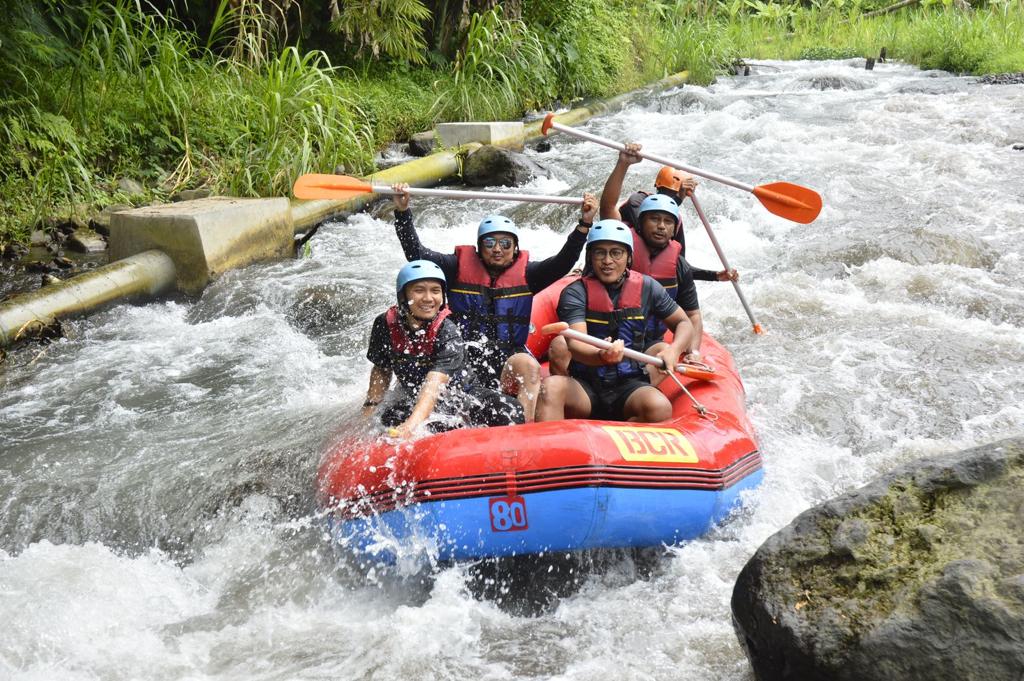
The Ayung River is one of the best-known rafting destinations in Bali. Located around the Ubud and Payangan areas, it attracts visitors who want to combine an outdoor adventure with views of Bali’s tropical landscapes.
Rafting routes on the Ayung River are commonly advertised at approximately 10–13 km, with time on the water often taking around two hours. Actual distances and durations depend on the operator and selected route.
The river features a variety of flowing sections and rapids, with difficulty commonly described within the Class II–III range. This makes some Ayung rafting packages suitable for beginners, provided participants meet the operator’s requirements and follow the guide’s safety instructions.
One of the highlights of the Ayung River is its natural scenery. Along certain routes, participants can see green cliffs, tropical vegetation, and distinctive stone carvings along the riverbanks. These features make the experience appealing to visitors who want to enjoy both rafting and the natural surroundings of Ubud.
Age restrictions and minimum participant requirements vary between operators. Families should check the specific package conditions before booking, especially when travelling with children.
2. Telaga Waja River
The Telaga Waja River is one of the well-known rafting destinations in Bali, located in Karangasem Regency in East Bali. It is recognised for its energetic currents, varied rapids, and longer rafting routes.
Many operators offer routes of approximately 14 km, with time on the water commonly taking around 2–3 hours. Some routes include steep river sections and drops, creating an exciting experience for visitors looking for more active challenges.
Certain sections of the river are commonly described as Class III–IV rapids. However, the actual difficulty can change depending on rainfall, water levels, and the route selected. Participants should check the current conditions and suitability of the activity with their chosen operator.
The natural scenery is another reason to consider Telaga Waja. Depending on the route, participants may see green hills, rice fields, tropical vegetation, and small waterfalls along the riverbanks. The combination of river challenges and the countryside landscape makes Telaga Waja an appealing choice for adventure seekers exploring East Bali.
3. Petanu River
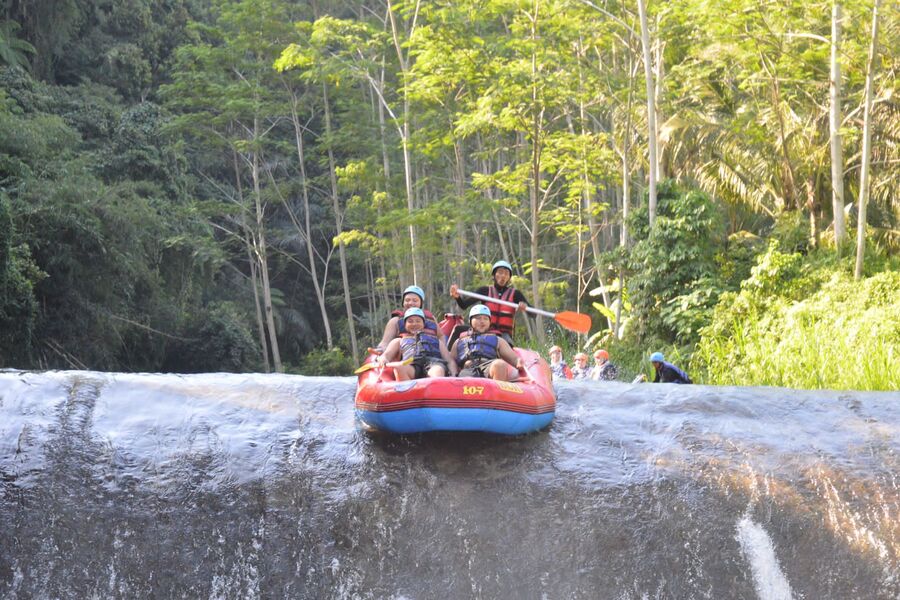
The Petanu River flows through the Gianyar area and is surrounded by a landscape of greenery, agricultural areas, and natural riverbanks. It offers a different setting from the more widely recognised rafting destinations in Bali.
The river environment may appeal to visitors interested in exploring Gianyar’s natural surroundings. Depending on the location, the landscape includes trees, rocky sections, and flowing water that contribute to the area’s rural atmosphere.
However, commercial rafting availability and established rafting routes on the Petanu River should be confirmed before planning a trip. Do not assume that every section of the river is open or suitable for organised rafting. Visitors interested in this destination should check whether a licensed or established local operator currently offers the activity, including the route, duration, and safety arrangements.
4. Melangit River
The Melangit River is located in the Klungkung area and is known as another river associated with rafting activities in Bali. Its natural surroundings and winding river sections provide a different atmosphere from the larger and more frequently visited rafting routes.
Some rafting experiences on the Melangit River feature narrower passages, flowing currents, and a series of smaller rapids. These characteristics can create an active journey that requires participants to coordinate their paddling and follow the guide’s directions.
The river is also surrounded by tropical vegetation and green landscapes. Depending on the route, participants may see rocky riverbanks, bridges, and other features of the surrounding countryside.
Route length, rapid counts, and difficulty can differ between operators and river conditions. Visitors should confirm the current route details before booking rather than relying on a fixed number of rapids or a particular feature being present on every trip.
5. Pakerisan River
The Pakerisan River flows through the Tampaksiring area of Gianyar and is closely associated with Bali’s cultural and historical landscape. The wider Pakerisan watershed includes important archaeological and cultural sites, making the surrounding area interesting for visitors who want to explore Bali beyond its beaches.
Unlike the island’s more established commercial rafting destinations, the Pakerisan River is better known for its cultural and natural surroundings. Visitors may explore nearby historical attractions, traditional landscapes, and sites connected with Bali’s heritage.
The river’s cultural significance makes it an interesting destination to consider alongside an outdoor itinerary. However, visitors should not assume that organised white-water rafting is available there. Confirm whether any current operator offers a suitable rafting activity before including it in your plans.
Prepare These Things Before Trying One of the Rafting Spots in Bali
Before choosing one of the rafting spots in Bali, prepare the essentials to make your trip more comfortable and help you follow the operator’s safety procedures.
- Wear quick-drying sports clothing: Choose lightweight clothing suitable for water activities. Quick-drying materials can be more comfortable than heavy fabrics when wet.
- Choose secure footwear: Wear water shoes or suitable sandals with straps and good grip. Avoid footwear that can easily come off in moving water.
- Bring a change of clothes and a towel: Pack dry clothing for after the activity. Check whether the operator provides changing rooms and showers.
- Use sunscreen: Apply water-resistant sunscreen before the activity and follow the operator’s recommendations for sun protection.
- Secure your valuables: Avoid bringing wallets, jewellery, or unnecessary electronic devices onto the raft. Ask the operator about available storage facilities.
- Check the route and river conditions: Ask about the expected route, duration, difficulty, and weather conditions before departure.
- Listen to the safety briefing: Pay attention to instructions about paddling, seating positions, and what to do if you fall into the water. Follow the guide’s directions throughout the trip.
With suitable preparation and a rafting destination that matches your preferences, your rafting experience in Bali can become a memorable part of your holiday.
Conclusion
Bali offers a variety of river landscapes for visitors interested in rafting and outdoor exploration. The Ayung River and Telaga Waja River are among the island’s established rafting destinations, each offering a different combination of scenery and river challenges. Melangit River is another option associated with rafting activities, while Petanu and Pakerisan are worth understanding in the context of their natural and cultural surroundings.
The best destination depends on the type of experience you want, your group’s needs, and the availability of suitable operators. Before booking, compare the route, difficulty, safety arrangements, and package details rather than relying only on promotional descriptions.
Whether you prefer the green surroundings of Ubud or the more challenging river sections of East Bali, exploring Bali’s rivers can add a memorable outdoor experience to your holiday.
Frequently Asked Questions About Rafting Spots in Bali
1. Which rafting destination is more convenient for visitors staying in Ubud?
The Ayung River is a popular choice for visitors staying in or around Ubud because several rafting operators serve the area. However, the most convenient option depends on your accommodation location and the operator’s pickup arrangements.
2. Can visitors explore more than one rafting river during a single Bali holiday?
Yes. Visitors with enough time can include different rafting destinations in separate day trips. It is useful to consider travel distances, activity duration, and recovery time when arranging the itinerary.
3. Are all five rivers listed in this guide established commercial rafting destinations?
No. Ayung and Telaga Waja are well-known commercial rafting destinations, and Melangit is also associated with rafting activities. Petanu and Pakerisan are included for their river landscapes and local significance, but current commercial rafting availability should be verified before planning a trip.
4. What should visitors compare when choosing between rafting operators?
Compare the route, estimated time on the water, safety briefing, equipment provided, guide arrangements, transportation, and package inclusions. These details help you understand what is actually offered rather than choosing based only on the advertised price.
5. Is it possible to combine rafting with sightseeing around the river areas?
Yes. Depending on the location, rafting can be combined with visits to nearby attractions, villages, or natural landscapes. Allow enough travel time between activities and check the rafting schedule before arranging additional stops.
6. Why can two rafting operators advertise different distances for the same river?
Operators may use different starting and finishing points or offer different route sections. River conditions and operational arrangements can also affect the route. Ask the operator to confirm the actual distance included in the package.
7. Are the cultural attractions around the Pakerisan River part of a rafting package?
Not necessarily. The Pakerisan area is known for its cultural and historical surroundings, but visits to nearby heritage sites are separate from rafting unless an operator specifically offers a combined itinerary.
8. How can visitors choose a rafting destination for a mixed-experience group?
Start by checking the operator’s minimum age, participant requirements, and route difficulty. Choose an activity that matches the group’s abilities and comfort levels, and inform the operator about any relevant limitations before booking.