
Telaga Waja Water Rafting: Playing on the Long River
Telaga Waja Water Rafting is an exciting option for adrenaline seekers who want to explore one of Bali’s well-known whitewater rafting destinations. Located in Karangasem Regency, East Bali, the Telaga Waja River is commonly associated with a rafting route of approximately 14 kilometers, featuring a combination of fast-moving currents, varied rapids, and scenic countryside.
Unlike the generally milder rafting experience often associated with the Ayung River in Ubud, some sections of Telaga Waja can offer a more demanding challenge. The actual difficulty depends on the selected route, rainfall, and water levels, making it important to follow the operator’s safety assessment before starting the activity.
The natural scenery is another attraction of rafting activities on Telaga Waja. Along the journey, participants may see green hills, rice fields, rocky riverbanks, and small waterfalls. The combination of active river sections and East Bali’s rural landscape creates an adventurous way to experience a different side of the island.
Read More: Bali Telaga Waja Rafting: Exciting Sensations on Bali River

Challenges of Navigating High Rapids and Sharp Turns at Telaga Waja Water Rafting
Telaga Waja water rafting offers a varied river journey rather than a uniform stretch of fast-moving water. Participants may encounter different types of rapids, changing currents, rocky sections, and turns that require coordination with the rest of the raft.
Here are some features that may be encountered along the route:
1. Rapids with Different Levels of Difficulty
Some sections of the river are described by rafting operators as Class III to IV. These grades indicate more demanding whitewater conditions, but they should not be understood as a fixed classification for the entire river. Difficulty can change with water levels, rainfall, and the route being operated.
Participants should listen to the guide’s instructions and coordinate their paddling when approaching challenging sections.
2. Rocky Sections and Changing Currents
Parts of the route pass through rocky river sections and areas where the current changes direction or speed. These features require attention and teamwork, especially when the raft approaches narrower passages or stronger currents.
The experience can feel like a natural roller coaster, but participants should remain seated as instructed and avoid making sudden movements.
3. Fast-Moving River Sections
The Telaga Waja River can move quickly in certain sections, creating an energetic rafting experience. However, the current is not equally strong throughout the route or consistent throughout the year. Rainfall and changing river conditions can affect the speed and volume of the water.
4. Bamboo Bridges Along the River
Depending on the selected route, participants may pass beneath traditional bridges or see bamboo structures near the river. These features add to the rural atmosphere and provide a glimpse of the landscape around the rafting course.
5. The Final Challenge: A Drop of Approximately 4 Meters
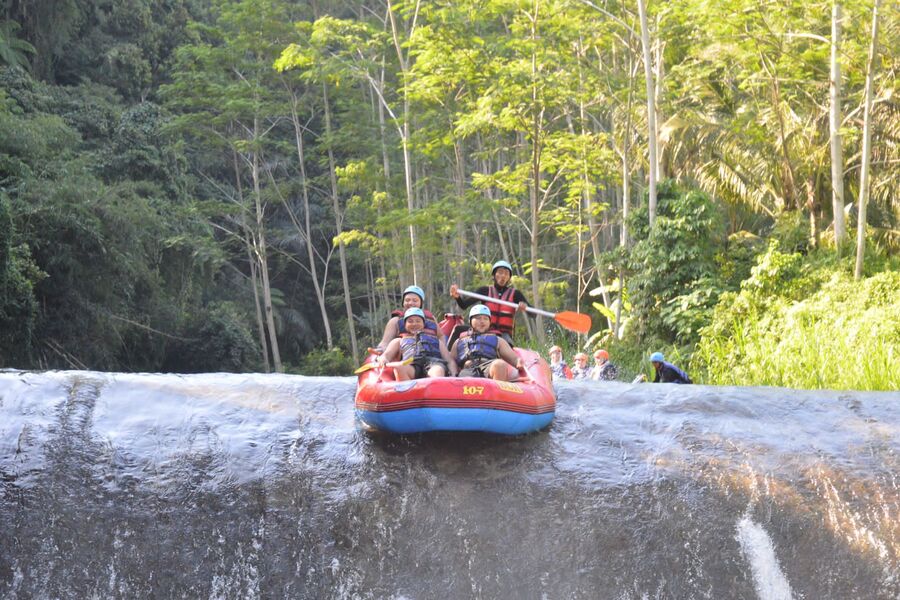
A drop of around 4 meters is one of the features commonly highlighted in descriptions of Telaga Waja rafting. It can provide an exciting moment near the end of certain routes.
However, this feature is not necessarily included in every package or available under all river conditions. The operator and guide determine whether the section can be navigated safely on the day. Participants should follow their instructions rather than assuming that every trip will include the same descent.
A 14-Kilometer Rafting Journey: What You Will Encounter
Rafting down the Telaga Waja River is more than a water sport. It is also an opportunity to explore the natural surroundings of East Bali while experiencing different river conditions.
A route commonly advertised at approximately 14 kilometers may include the following features, depending on the operator and current conditions:
- Varied Rapids Along the Route: The journey may include calmer stretches, smaller waves, and more demanding rapids. The changing river conditions give each section a different character.
- Rice Fields and Mountain Views: Green rice fields, hills, and views toward the Mount Agung area contribute to the scenery. Visibility depends on weather and cloud conditions.
- Natural Waterfalls and Streams: Small waterfalls or streams may be visible along certain sections of the river. Their presence and appearance can vary with rainfall and the selected route.
- Traditional Bridges and Village Surroundings: Participants may pass beneath bridges and observe parts of the rural landscape around the river. These views offer a glimpse of everyday life in East Bali.
- A Memorable River Descent: Some rafting routes feature a final drop of approximately 4 meters. Ask the operator whether this section is included in your selected package and whether it is available under the current conditions.
The combination of river challenges and changing scenery makes the journey engaging from the starting point to the finish.
Who Is Suitable for Telaga Waja Water Rafting?
Telaga Waja rafting may appeal to different types of travelers, provided they meet the operator’s participation requirements and are comfortable with the activity’s physical demands. The river’s changing conditions mean that suitability should be assessed individually rather than assumed for every visitor.
Here are some groups who may enjoy this activity:
- Adults in Suitable Physical Condition: Rafting involves paddling, maintaining balance, and responding to guide instructions. Participants should be comfortable with these physical demands and disclose relevant health concerns to the operator before booking.
- Adventure and Adrenaline Enthusiasts: Travelers who enjoy outdoor activities and changing river conditions may appreciate the combination of rapids, turns, and calmer stretches.
- Couples and Groups of Friends: Rafting offers an opportunity to share an outdoor adventure. Participants need to communicate and coordinate their paddling to help the raft navigate the river.
- Small Groups and Company Outings: The activity can be considered for group outings because it involves cooperation, communication, and shared decision-making. Companies should confirm participant requirements and group arrangements with the operator in advance.
The final decision about participation should take into account the operator’s age, health, and safety requirements, as well as the river conditions on the day.
Safety Procedures and Briefing Before the Tour Begins
Before starting the rafting activity, participants should attend the safety briefing provided by the operator. The briefing explains basic paddling techniques, proper seating positions, guide commands, and how to respond to unexpected situations.
Important safety preparations generally include:
1. Briefing by the Rafting Guide
The guide explains how to paddle, where to sit, and how to respond to instructions during the journey. Participants should pay attention and ask questions if they do not understand any part of the briefing.
2. Fitting and Checking the Equipment
Participants are generally provided with a helmet and life jacket, along with a paddle for the activity. Make sure the equipment fits properly and is secured before entering the river. Safety equipment helps reduce risks but does not eliminate them.
3. Understanding Participant Requirements
Participants should provide accurate information about relevant health conditions, physical limitations, or other concerns that could affect their ability to raft. The operator can explain its participation requirements and determine whether the activity is appropriate under the current conditions.
4. Following Instructions in Unexpected Situations
The guide should explain the procedures to follow if someone falls into the water or the raft encounters an unexpected situation. Remember the instructions and follow the guide’s directions throughout the activity. Do not attempt to navigate a fast current independently.
Lunch Facilities and Changing Rooms After Rafting
After completing the rafting journey, participants generally return to the operator’s finish area or base facilities. The time spent on the river is often advertised at around 2 to 2.5 hours, although the actual duration may vary according to the route, river conditions, and group pace.
Some rafting packages include lunch at a restaurant near the rafting base or finish area. Meals may feature Indonesian or Balinese dishes, with the menu and serving arrangement depending on the operator. Buffet-style dining may be available at selected locations, but it should not be assumed to be included in every package.
Changing rooms, bathrooms, and showers may also be available so participants can clean up and change clothes after the activity. Some operators provide additional conveniences, such as towels, hot drinks, or relaxation areas. These services vary, so check the package details before booking.
Knowing what is included in your rafting package helps you prepare for the activity and plan the time needed before returning to your hotel.
Conclusion
Telaga Waja Water Rafting offers an adventurous way to explore the river landscape of Karangasem, East Bali. Its commonly advertised 14-kilometer route, changing rapids, rocky sections, and scenic surroundings create a varied experience for travelers who enjoy outdoor activities.
The river’s features, including the approximately 4-meter drop, depend on the selected route and current conditions. Participants should also check the operator’s safety requirements, available facilities, and package inclusions before making a reservation.
Whether you are planning an outing with friends, a couple’s adventure, or a company group activity, rafting in Telaga Waja offers an opportunity to enjoy the river while practicing teamwork and following the guidance of experienced rafting personnel.
Frequently Asked Questions
1. How many people usually share one rafting boat?
The number of participants per boat depends on the raft capacity and the operator’s arrangements. Ask the provider about its group size and seating configuration when booking, especially if you are organizing a larger group.
2. Can a company divide employees into different rafting boats?
Yes, group arrangements can often be discussed with the operator. The final distribution depends on the number of participants, available boats, guide arrangements, and safety requirements. Companies should provide their group size in advance.
3. Is Telaga Waja rafting suitable for a company team-building activity?
It can be a suitable outdoor group activity because participants need to communicate, coordinate paddling, and respond to shared instructions. However, rafting is primarily an adventure activity, so companies should confirm whether the operator offers any additional team-building arrangements.
4. Do participants need previous rafting experience to understand the guide’s instructions?
Previous experience is not necessarily required for every package. The operator generally provides a briefing before the trip, explaining basic techniques and commands. Participants should make sure they understand the instructions before entering the river.
5. Can participants with different fitness levels join the same group?
This depends on the operator’s participation requirements and the individual’s physical condition. Because rafting involves paddling and responding to river conditions, discuss any physical limitations with the operator before booking rather than assuming everyone can participate.
6. Can we arrange a private rafting group for friends or colleagues?
Ask the operator whether private group arrangements are available. Availability may depend on the requested date, group size, boat capacity, and guide scheduling.
7. Can I request a vegetarian meal after rafting?
Meal options depend on the restaurant and package selected. If you have dietary preferences or restrictions, inform the operator when booking and confirm whether a suitable meal can be arranged.
8. Are photographs of the final river drop available after the activity?
Some operators may offer photography services or have designated photo opportunities along the route. Availability, pricing, and the locations where photographs can be taken vary. Confirm these details before the trip, and never use a camera during a challenging section unless the guide says it is safe.