

Telaga Waja Rafting Guide for Beginners
Why Choose Telaga Waja Rafting? Rafting is more than just a water sport; it is an outdoor adventure that offers excitement, teamwork, and unforgettable experiences. Navigating river rapids, paddling together as a team, and enjoying Bali’s beautiful natural scenery are some of the reasons why Telaga Waja rafting attracts adventure enthusiasts.
In addition to providing an exciting outdoor experience, rafting can offer several benefits:
- Improve physical fitness: Paddling through river currents engages different muscle groups and helps develop strength and endurance.
- Relieve stress and improve mood: Spending time outdoors and enjoying an exciting activity can help reduce everyday stress and promote a more positive mood.
- Build teamwork: Telaga Waja rafting requires participants to coordinate their movements and follow the guide’s instructions to navigate the river together.
- Develop confidence: Learning new skills and navigating challenging rapids can help participants build confidence and courage.
- Create lasting memories: Every rafting trip offers opportunities to experience new challenges, appreciate nature, and share memorable moments with friends or family.
4 Essential Telaga Waja Rafting Equipment for Safety and Comfort
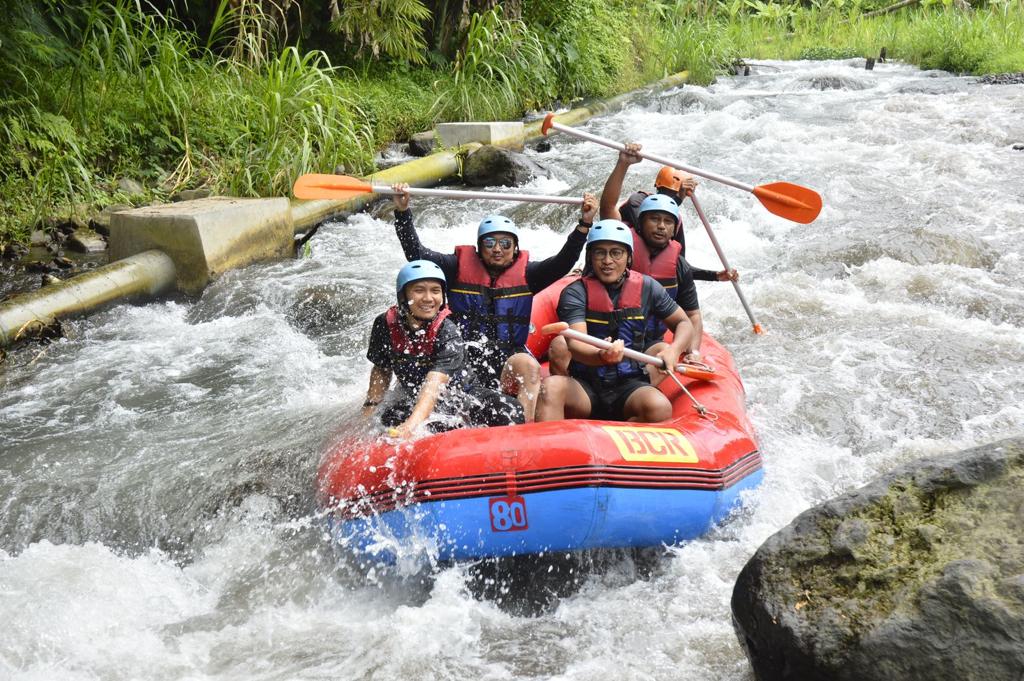
Before starting your Telaga Waja rafting adventure, it is important to understand the equipment used during the activity. Appropriate rafting equipment helps protect participants and makes the experience more comfortable. Here are four essential pieces of equipment that beginners should know about.
1. Rubber Raft (Inflatable Raft)
A rubber raft is specially designed for navigating river currents and white-water conditions. Its construction provides buoyancy and flexibility, allowing it to move through different sections of the river.
The main parts of a rafting boat include:
- Bow and stern: The front and rear ends of the raft.
- Chamber or tube: The inflatable sections surrounding the raft that provide buoyancy.
- Boat floor: The area where participants position their feet while seated.
- Thwart: An inflatable cross-tube that provides structural support and may also serve as a foot brace or seat, depending on the raft design.
- Perimeter line: A rope running around the outside of the raft that can provide a handhold.
- D-rings: Attachment points used to secure compatible equipment or ropes.
- Carrying handles: Handles that help guides and crew lift or move the raft.
- Self-bailing floor: A drainage system that allows water entering the raft to flow out.
- Inflation valves: Valves used to inflate and deflate the raft’s air chambers.
Proper seating position
When participating in Telaga Waja rafting, participants generally sit along the sides of the raft and position their feet according to the guide’s instructions. Maintaining a stable seating position helps participants balance themselves while paddling through river currents.
Avoid wrapping your feet or other body parts around ropes or equipment. If the raft overturns or you fall into the water, follow the safety instructions provided during the briefing and listen to your guide’s directions.
2. Life Jacket (PFD – Personal Flotation Device)
A life jacket, also known as a personal flotation device (PFD), is essential safety equipment that every rafting participant must wear. It provides buoyancy and helps keep the wearer afloat if they enter the water.
For Telaga Waja rafting, the operator should provide a suitable life jacket that fits each participant properly. The specific type may vary depending on the equipment supplied by the operator.
How to wear a life jacket correctly:
- Choose a suitable size and check the life jacket for visible damage.
- Put it on according to the manufacturer’s instructions.
- Fasten all buckles and straps securely.
- Adjust the straps so the jacket fits snugly without restricting breathing or movement.
- Ask the rafting guide to check the fit before entering the river.
A properly fitted life jacket should remain securely in place during the activity. Do not rely on your own assessment alone; ask the guide to confirm that the equipment is fitted correctly.
3. Paddle
A paddle is used to move and steer the raft. During Telaga Waja rafting, participants work together and follow the guide’s commands to help navigate the river safely.
A typical rafting paddle consists of three main parts:
- T-grip: The T-shaped handle at the top of the paddle.
- Shaft: The long middle section used to hold and control the paddle.
- Blade: The wider end that enters the water to generate movement.
How to hold a paddle correctly
Hold the T-grip securely with one hand while placing your other hand on the shaft. Follow the guide’s demonstration to learn the correct hand position and paddling technique.
Keep a firm grip on the paddle and pay attention to the guide’s commands. Coordinated paddling helps the group move in the intended direction and respond to changing river conditions. Beginners should avoid making sudden movements or changing their grip without following the guide’s instructions.
4. Helmet
A helmet helps protect the head from impacts during rafting. It is an essential piece of safety equipment, especially when navigating sections of a river where contact with rocks or other obstacles may occur.
Before starting your Telaga Waja rafting adventure, make sure your helmet fits correctly.
How to wear a rafting helmet:
- Choose a helmet that fits your head comfortably.
- Check the helmet for visible cracks or other damage.
- Adjust the chin strap so the helmet remains secure.
- Make sure the helmet does not move excessively when you move your head.
- Ask the guide to check the fit before entering the river.
A helmet can help reduce the risk of certain head injuries, but it cannot eliminate every risk. Always follow the safety briefing, wear the required equipment, and listen carefully to your rafting guide throughout the activity.
Conclusion
Telaga Waja rafting is an exciting way to explore Bali’s natural surroundings while enjoying an outdoor adventure. For beginners, understanding the essential rafting equipment is an important step toward preparing for the experience.
A rubber raft, a properly fitted life jacket, a paddle, and a helmet all play important roles during the activity. However, equipment alone does not guarantee safety. Participants should also listen to the guide’s instructions, follow the safety briefing, and use the equipment correctly.
With proper preparation and guidance from the rafting operator, beginners can approach their Telaga Waja rafting adventure with greater confidence and enjoy a memorable experience on the river.
Frequently Asked Questions (FAQ)
1. Is Telaga Waja rafting suitable for beginners?
Telaga Waja rafting may be suitable for beginners, depending on river conditions, the operator’s requirements, and each participant’s abilities. Beginners should choose a reputable operator, attend the safety briefing, and follow the guide’s instructions.
2. What equipment is needed for Telaga Waja rafting?
Essential equipment generally includes a rafting boat, a life jacket, a paddle, and a helmet. The operator should provide the required safety equipment and explain how to use it before the trip.
3. Do I need to bring my own life jacket?
Most organized rafting operators provide life jackets for participants. Confirm the equipment included in your selected package before booking.
4. Why is a life jacket important during rafting?
A life jacket provides buoyancy and helps keep a participant afloat if they enter the water. It must fit properly and be worn according to the operator’s safety instructions.
5. Why do rafting participants need to wear helmets?
Helmets help protect the head from impacts with rocks, equipment, or other obstacles. Participants should wear a properly fitted helmet throughout the activity whenever required by the operator.
6. How should I hold a rafting paddle?
Hold the T-grip securely with one hand and the shaft with the other. Follow your guide’s demonstration for the correct grip and paddling technique before entering the river.
7. How should I sit in a rafting boat?
Participants generally sit along the sides of the raft and position their feet as instructed by the guide. The correct position depends on the raft design and the operator’s procedures.
8. What should I do if the raft overturns?
Follow the safety instructions provided during the briefing and the guide’s directions. Avoid panicking, keep your life jacket on, and use the river safety techniques explained by your guide.
9. Do I need previous rafting experience to join Telaga Waja rafting?
Previous rafting experience is not always necessary. Many operators accept first-time participants, subject to their safety requirements and the prevailing river conditions. Always inform the operator if you have concerns about your ability to participate.
10. What should I check before starting Telaga Waja rafting?
Check that your life jacket and helmet fit properly, listen carefully to the safety briefing, learn the basic paddle commands, and follow your guide’s instructions. You should also confirm the operator’s participation requirements and the equipment included in your package.