

Join Telaga Waja Rafting Now to Discover Extreme Challenges!
Telaga Waja Rafting is a popular adventure activity in Bali, known for its flowing currents, challenging rapids, and scenic river route. Located in Karangasem Regency, the Telaga Waja River offers an exciting outdoor experience for travelers who want to explore Bali beyond its beaches and conventional sightseeing destinations.
Compared with the Ayung River, which is often chosen for its generally more accessible rafting experience, Telaga Waja is known for sections that can offer a more demanding ride. However, the actual difficulty depends on river conditions, rainfall, the route selected, and the operator’s assessment on the day.
One of the main attractions of Telaga Waja Rafting is its relatively long route, commonly covering approximately 14–16 kilometers. The journey generally takes around 2–3 hours on the water, depending on the operator and conditions. Along the way, participants can enjoy views of green rice terraces, tropical vegetation, rocky riverbanks, and mountainous scenery.
For travelers seeking an adventure that combines physical activity, teamwork, and natural beauty, Telaga Waja Rafting can be a memorable option. Understanding the challenges and preparing appropriately are important steps toward enjoying the experience responsibly.
The Most Challenging Sections of the Telaga Waja River
The Telaga Waja River features a variety of river conditions that make rafting an engaging activity for adventure enthusiasts. Participants may encounter faster currents, changing water patterns, bends, and natural obstacles along the route.
Here are some features that contribute to the challenge.
- River Drops and Rapids: Certain routes may include a noticeable drop or descent that adds excitement to the trip. The exact height and whether a particular drop is included depend on the route and operator.
- Fast-Moving Currents: Some sections have stronger currents than others. Rainfall and changing water levels can affect the river’s speed and difficulty.
- Large Rocks and River Obstacles: Natural rocks influence the movement of water and require guides to navigate carefully around potential hazards.
- Winding Sections: Bends and changing river conditions require participants to coordinate their paddling and respond promptly to the guide’s commands.
- Narrow Passages: Depending on the route, some sections may require careful navigation through more confined spaces.
These features make the river an appealing destination for people who enjoy active outdoor experiences. However, the challenge is not simply about courage or strength. Participants must pay attention, work with their group, and follow the guide’s instructions throughout the trip.
Read More: Best of Telaga Waja River Rafting With Challenging Rapids!
Rafting Techniques to Learn Before Facing Strong Currents
To enjoy Telaga Waja Rafting more confidently, participants should understand the basic techniques explained during the pre-trip safety briefing. Previous rafting experience can be helpful, but beginners can also learn the essential instructions provided by their guide if they meet the operator’s participation requirements.
1. Correct Paddling Technique
Paddling is a coordinated activity. Participants should follow the guide’s commands regarding when to paddle forward, paddle backward, or stop. Working together helps the guide control the raft’s movement through changing currents and bends.
2. Understanding River Conditions
Reading the river is primarily the guide’s responsibility. Participants should avoid attempting to interpret rapids independently or making sudden movements based on what they see. Instead, listen to instructions and follow the route guidance provided throughout the trip.
3. Maintaining Balance in the Raft
Participants need to maintain a stable position and avoid unnecessary movements, particularly when navigating uneven water. Follow the guide’s instructions about seating, foot placement, and how to respond when the raft moves through rapids.
4. Following the Correct Sitting Position
Sit in the position recommended by the guide and use the designated foot supports or other arrangements provided by the operator. Do not change seats or lean outside the raft without permission, as these movements can affect balance.
5. Responding to Rapids and Unexpected Situations
Listen for commands before entering challenging sections. If you fall into the water or the raft capsizes, follow the procedures explained during the safety briefing. Do not rely on a single technique for every situation, because the appropriate response depends on the current and your position in the river.
Learning these basic techniques helps participants understand their role in the raft. The goal is not to master advanced rafting skills independently, but to work with the guide and respond appropriately throughout the journey.

Risks to Watch Out for on Challenging Rafting Routes
Although rafting offers an exciting way to explore Bali’s rivers, it involves potential risks that participants should understand before joining the activity.
- Falling Out of the Raft: Strong currents, unexpected movements, or loss of balance may cause a participant to enter the water. A properly fitted life jacket helps provide buoyancy, but participants must still follow the guide’s instructions.
- Collisions With Rocks: Natural obstacles can cause impacts or injuries. Guides navigate the raft through the route, while participants should maintain their assigned positions and follow paddling commands.
- Raft Capsizing: A raft may overturn under certain conditions. Participants should learn the operator’s emergency procedures before departure and follow the guide’s directions if this happens.
- Physical Strain: Paddling for an extended period can lead to fatigue or muscle discomfort. Participants should consider their fitness level and tell the guide if they feel unwell or exhausted.
- Changing River Conditions: Rainfall and water levels can influence current strength and the difficulty of the route. Operators may change, postpone, or cancel a trip when conditions are considered unsafe.
To reduce these risks, wear the required helmet and life jacket, check that the equipment fits correctly, and take the safety briefing seriously. No rafting trip is entirely risk-free, so choosing a suitable activity and following the operator’s instructions are essential.
Mental and Physical Preparation Before Telaga Waja Rafting
Preparing for Telaga Waja Rafting involves more than bringing the right equipment. Participants should also consider their physical condition, mental readiness, clothing, and ability to follow instructions.
1. Prepare Your Physical Condition
Rafting can involve repeated paddling and sustained physical effort. Regular light exercise, such as walking, cycling, or swimming where appropriate, may help improve general fitness before your trip. Avoid strenuous activity if you are unwell or have been advised to restrict exercise.
2. Build Mental Readiness
The sound of rapids and the movement of the raft may feel unfamiliar, especially for first-time participants. Focus on the safety briefing, ask questions when necessary, and remember that following the guide’s instructions is more important than trying to appear brave.
3. Choose Suitable Clothing
Wear comfortable, quick-drying clothing and secure footwear suitable for water activities. Avoid loose accessories that could become caught on equipment. Ask the operator if there are any additional clothing recommendations for the selected route.
4. Protect Personal Belongings
Leave valuables in a secure location before entering the river. If you need to bring personal items, ask whether the operator provides suitable storage or permits a waterproof bag. Do not carry anything that could interfere with paddling or safety equipment.
5. Eat and Hydrate Appropriately
Have a suitable meal before the activity and drink enough water to stay hydrated. Avoid eating an excessively heavy meal immediately before rafting, and follow any specific instructions from the operator regarding arrival time and preparation.
6. Check Your Suitability Before Booking
Confirm the minimum age, weight, health, and other participation requirements with the operator. If you have a medical condition, injury, or other concern that could affect your ability to participate, seek appropriate medical advice and disclose relevant information before booking.
With thoughtful preparation, participants can approach the challenges of Telaga Waja Rafting with greater confidence and a clearer understanding of what the activity involves.
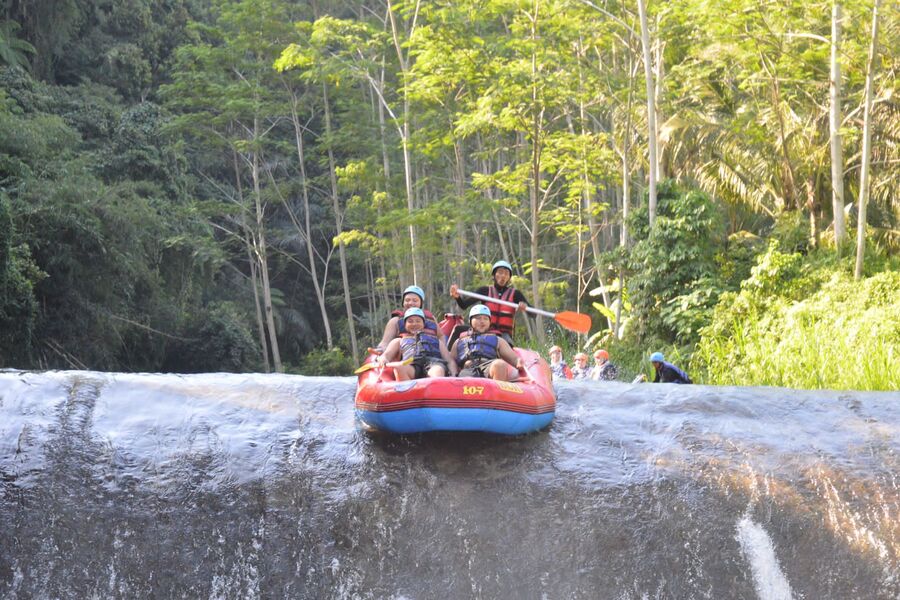
Advantages and Excitement of Telaga Waja Rafting
Telaga Waja Rafting offers more than the excitement of navigating rapids. The combination of outdoor activity, teamwork, and natural scenery creates several reasons why travelers choose this experience during their Bali holiday.
- An Exciting Adventure: Changing currents and challenging sections make the journey engaging for people who enjoy active outdoor experiences.
- Beautiful Natural Scenery: Green rice terraces, tropical vegetation, rocky riverbanks, and occasional waterfalls add to the appeal of the route.
- Teamwork and Coordination: Participants need to work together, respond to commands, and coordinate their paddling throughout the journey.
- Focus and Decision-Making: Following instructions in a changing environment encourages participants to stay attentive and respond appropriately to guidance.
- A Memorable Group Experience: Friends, families with eligible children, and corporate groups may enjoy sharing an outdoor activity that requires cooperation.
Rafting should not be viewed as a competition to prove courage or strength. The most rewarding experience comes from participating responsibly, respecting the river’s conditions, and working with the guide and other members of the group.
Conclusion
Telaga Waja Rafting is an exciting option for travelers who want to experience the challenges of Bali’s river landscape. Its relatively long route, changing currents, rapids, and natural scenery combine to create an adventure that requires attention, coordination, and preparation.
Before joining, check the operator’s requirements, understand the physical demands, and make sure you are comfortable with the activity. Learning basic paddling commands, wearing properly fitted safety equipment, and following the guide’s instructions can help you manage the challenges more responsibly.
If you are planning an adventure in Karangasem, consider exploring the available Telaga Waja Rafting packages and confirming the route features with your chosen operator. Choose an experience that matches your abilities and enjoy the river with a focus on teamwork, preparation, and safety.
Frequently Asked Questions
1. Do I need previous rafting experience to join Telaga Waja Rafting?
Not necessarily. Some operators accept beginners who meet their participation requirements. The important thing is to understand the safety briefing, follow the guide’s commands, and be comfortable with the physical demands of the activity. Confirm the route’s difficulty and eligibility requirements before booking.
2. What makes Telaga Waja challenging for first-time rafters?
The combination of moving water, changing currents, rapids, and the need to coordinate paddling can make the experience challenging for beginners. The level of difficulty varies with river conditions and the selected route, so first-time participants should discuss their experience level with the operator.
3. Is physical strength more important than teamwork during rafting?
Teamwork and following instructions are essential. Participants need enough physical ability to take part in paddling, but they do not need to compete with one another or paddle as hard as possible at all times. The guide determines when and how the group should paddle.
4. What happens if I find a rapid too intimidating while on the river?
Tell your guide about your concerns and follow their instructions. Do not stand up, change seats, or make sudden movements without guidance. The guide can explain what to expect and direct the group according to the conditions, although the trip may not always be able to stop immediately in a rapid.
5. Can rainfall make the Telaga Waja rafting route more difficult?
Yes. Rainfall can change water levels and current strength, potentially affecting the difficulty of the route. The effect depends on the amount of rainfall and conditions across the river system. Operators should assess the conditions and determine whether the trip can proceed safely.
6. How can I tell whether a rafting package matches my experience level?
Ask the operator about the route, expected river conditions, trip duration, minimum participant requirements, and physical demands. Explain whether you are a beginner or have previous rafting experience. Do not rely on promotional descriptions such as “extreme” alone to judge whether a route is suitable.
7. Should I continue rafting if I start feeling exhausted?
Tell your guide as soon as possible if you become unusually tired, feel dizzy, or experience pain or other concerning symptoms. Follow their instructions rather than forcing yourself to continue. Consider your physical condition before booking, especially if the route involves an extended period of paddling.
8. How can I prepare for a rafting trip that includes a steep descent?
First, confirm with the operator whether the selected route includes a descent and ask what participants should expect. Pay close attention to the safety briefing, wear the required equipment correctly, and follow the guide’s instructions when approaching the section. Do not attempt to navigate the descent independently.