

Exciting Challenges of Routes When Rafting in Telaga Waja!
Rafting in Telaga Waja is a popular adventure activity in Bali, offering an exciting journey through flowing rapids and beautiful natural surroundings. Located in Karangasem Regency, eastern Bali, the Telaga Waja River attracts visitors who want to experience the thrill of navigating a river while enjoying the island’s countryside scenery.
Along the route, participants may encounter rapids, rocky sections, changing currents, and small waterfalls, depending on the route and water conditions. The surrounding landscape may include terraced rice fields, green hills, tropical vegetation, and views toward Mount Agung when the weather is clear.
The experience combines physical activity, teamwork, and opportunities to appreciate Bali’s natural environment. Although guided rafting trips may accommodate beginners who meet the operator’s requirements, participants should understand the river conditions and follow the guide’s safety instructions throughout the journey.
With a route commonly advertised at approximately 14 kilometers, although distances vary by operator, and an estimated 2–3 hours on the water, Telaga Waja offers an extended river adventure for travelers looking for something beyond Bali’s beaches.
Read more: Know the Advantages of Telaga Waja Rafting Now!
Rafting Distance and Duration
One of the distinctive features of Telaga Waja Rafting is its relatively long route. Depending on the operator and river conditions, the trip may cover approximately 14–16 kilometers and take around 2–3 hours on the water.
The extended journey allows participants to experience different sections of the river, from flowing rapids to calmer stretches where they can appreciate the surrounding landscape. Rather than encountering the same conditions throughout the trip, participants may need to adjust their paddling and follow the guide’s instructions as the route changes.
Factors Affecting Trip Duration
Several factors can influence how long a rafting trip takes:
- River Current: Water levels and current strength can affect the pace of the raft.
- Team Coordination: Following the guide’s paddling commands helps the group navigate the route together.
- Weather Conditions: Rainfall can change the river’s flow and may affect the operator’s schedule or route decisions.
- Rest Stops: Some packages may include breaks, depending on the operator’s arrangements and conditions along the route.
For a more comfortable experience, allow additional time for transportation, registration, the safety briefing, changing clothes, and any meal included in your package.
Starting and Ending Points of the Trip
Rafting trips on Telaga Waja River commonly operate in the Muncan area of Karangasem, although exact starting and finishing points depend on the operator and selected route.
The starting point provides access to the river, where participants receive instructions and prepare for the journey. After entering the water, the group follows the guide through various sections of the river, navigating rapids and observing the surrounding countryside.
The trip finishes at the designated take-out point, where participants can leave the river and continue with the operator’s post-rafting arrangements. Some packages provide facilities for showering, changing clothes, or having lunch, but these services should be confirmed before booking.
Activities at the End Point
Depending on the facilities and inclusions offered by your operator, you may be able to:
- Rest after completing the rafting journey.
- Enjoy lunch if it is included in your package.
- Shower and change into dry clothes.
- Take photographs in designated areas around the rafting facility.
- Prepare for the return journey or continue exploring Karangasem.
Confirm the exact meeting point, finish location, and available facilities with your operator so you can plan your transportation and schedule accordingly.
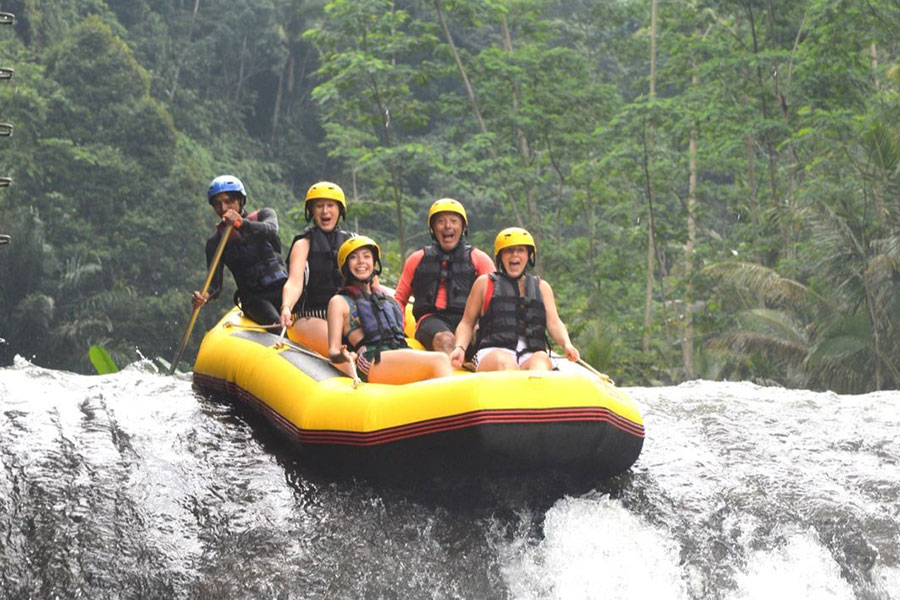
The Most Challenging Rapids on the Telaga Waja Route
Telaga Waja River features a variety of rapids and flowing sections that can make the journey exciting. The level of difficulty varies along the route and depends on water levels, rainfall, and other conditions.
Some rafting operators or local descriptions use names such as Welcome Drop, Broken Dam, Sliding Rock, and Last Rush for particular sections. These names and the features associated with them may differ between operators, so confirm the route details if you want to experience a specific rapid.
1. Welcome Drop
The opening section of a rafting trip can introduce participants to the river’s movement and the importance of coordinated paddling. Depending on the route, the early part of the journey may include flowing water or rapids that require participants to listen carefully to the guide.
The safety briefing before departure helps participants understand the commands they may hear and how to position themselves in the raft.
2. Broken Dam
Some descriptions of the Telaga Waja route refer to a section known as Broken Dam. Where this feature is included, participants may encounter a change in water flow that requires the group to follow the guide’s directions closely.
The exact characteristics of this section depend on the route and prevailing conditions. Participants should avoid making assumptions based on its name and rely on the guide’s instructions when approaching it.
3. Sliding Rock or a Steep River Drop
A steep descent is one of the features often associated with Telaga Waja Rafting. Some route descriptions refer to this feature as Sliding Rock, although the terminology may vary between providers.
The descent is sometimes described as being approximately four meters high, but the exact feature, height, and availability should be confirmed with the operator. Water levels and operating decisions may also affect how the section is navigated.
Approaching a steep drop can be an exciting part of the trip, but it requires participants to pay attention to the guide’s instructions and maintain the recommended position in the raft.
4. The Final Rapids
The later sections of a rafting route may include additional rapids before the group reaches the designated finish point. The water conditions can vary, so participants should remain attentive even after passing the most memorable features.
Continue following the guide’s commands until the trip has officially ended. Staying focused throughout the route helps the group navigate changing conditions together.
Areas With Beautiful Natural Views
The challenges of rafting are only part of the experience. Telaga Waja River also passes through natural surroundings that offer a different perspective on Bali’s countryside.
1. Terraced Rice Fields
Depending on the route, participants may see green rice fields along parts of the river valley. These agricultural landscapes reflect the rural character of eastern Bali and provide a contrast to the fast-moving water.
The appearance of the fields changes with the agricultural season, so the colors and views may differ between visits.
2. Views Toward Mount Agung
Mount Agung forms a prominent part of Bali’s landscape. On clear days, views toward the mountain may be visible from certain areas around the river, although visibility depends on clouds, weather, and the surrounding terrain.
These views can add another dimension to the rafting experience, particularly for visitors interested in Bali’s natural geography.
3. Tropical Vegetation
Vegetation along the riverbanks contributes to the natural atmosphere of the route. Participants may pass trees, shrubs, and other plants growing along the river corridor.
Rainfall and seasonal changes can affect the appearance of the landscape, making the scenery different at different times of the year.
4. Small Waterfalls and Streams
Some sections of the river route may feature small waterfalls or streams flowing toward the main channel. Their visibility and water flow depend on rainfall, season, and the precise route taken.
These natural features can make the journey more visually interesting, but they should not be expected at every point or on every trip.
The Excitement of Passing a Mini Waterfall or River Drop
One of the features often highlighted in descriptions of Telaga Waja Rafting is a steep river descent sometimes compared to a small waterfall. Depending on the route and conditions, passing this section can provide a memorable moment during the journey.
As the raft approaches the descent, the guide will explain how participants should position themselves and respond to instructions. Following these directions is particularly important when navigating a section where the water changes elevation or flows more forcefully.
The experience may feel different depending on the river’s water level and the way the section is operated on the day. Although some descriptions give a height of approximately four meters, participants should confirm the details with their rafting provider rather than assume that every package includes the same feature.
Photography and video opportunities may be available through the operator, but personal devices should not distract participants from the guide’s commands. Ask about safe photography arrangements before the trip.
View a Telaga Waja Rafting Route Photo

How to Handle Challenges Along the Rafting Route
Preparing for the river and understanding the guide’s instructions can help you enjoy the adventure more confidently. Consider these practical tips before and during the trip.
1. Listen to the Guide’s Instructions
Pay attention during the safety briefing and learn the basic paddling commands before entering the river. Follow the guide’s directions when approaching rapids, narrow passages, and steep descents.
2. Wear the Required Safety Equipment
Wear the helmet and properly fitted life jacket provided by the operator. Check that the equipment fits securely, and tell the guide if anything feels loose or uncomfortable before departure.
3. Stay Calm When the River Becomes Challenging
Rapids can feel intense, especially for first-time participants. Focus on the guide’s commands rather than trying to predict every movement of the raft.
If you fall into the water, follow the safety procedures explained during the briefing and respond to the guide’s instructions. Do not rely on a general technique alone, because the appropriate response depends on the river conditions and the guide’s directions.
4. Maintain the Recommended Position
Sit where the guide instructs you to sit, hold the raft securely as demonstrated, and paddle when directed. Coordinated movement can help the group navigate the river more effectively.
5. Prepare for Getting Wet
Wear lightweight clothing suitable for water activities and secure footwear that will stay on your feet. Bring a change of clothes and a towel for after the trip.
Store valuables in a safe place or use waterproof storage if the operator permits it.
6. Respect the River Environment
Avoid throwing rubbish into the water or disturbing wildlife along the riverbanks. Follow the operator’s guidance when approaching natural features, and do not enter restricted areas to take photographs.
By preparing properly and working with the guide, participants can focus on the river’s challenges while appreciating the scenery along the route.
Conclusion
Rafting in Telaga Waja combines a relatively long route, changing river conditions, exciting rapids, steep descents, and the natural beauty of Karangasem. From navigating flowing water to observing rice fields, tropical vegetation, and possible views toward Mount Agung, the journey offers several ways to experience Bali’s countryside.
The route and its challenges can vary depending on the operator, rainfall, water levels, and other conditions. Before booking, confirm the starting and finishing points, estimated duration, included facilities, and whether particular river features are part of your package.
If you are looking for an active outdoor adventure in Bali, Telaga Waja River Rafting is worth considering. Choose a reputable operator, follow the safety briefing, and prepare to enjoy the river responsibly.
Frequently Asked Questions (FAQ)
1. Does the Telaga Waja rafting route have the same difficulty from beginning to end?
No. The route can include both faster-moving rapids and calmer stretches. The level of challenge varies with the river section, water levels, and weather conditions, so participants should remain attentive throughout the trip.
2. Can I request a rafting route that includes a particular rapid or river drop?
You can ask the operator whether a named feature is included in its route. However, access to specific sections may depend on the package, current conditions, and operational safety decisions. No particular rapid or descent should be assumed to be available on every trip.
3. What happens if the river conditions change while the group is rafting?
The guide assesses the situation and provides instructions based on the conditions and the operator’s safety procedures. The group may need to adjust its approach or follow a different arrangement. Participants should listen carefully and avoid acting independently.
4. Are the starting and finishing points always the same for every Telaga Waja rafting operator?
Not necessarily. Operators may use different access points, take-out locations, and facilities. Confirm both locations before booking, especially if you are arranging your own transportation.
5. Can I take photos while navigating the most challenging rapids?
Your attention should remain on the guide’s commands and the activity, particularly in challenging sections. Ask the operator whether photography is available through a guide or designated photographer and how you can obtain photos after the trip.
6. How can I tell whether a rafting package includes the steep river descent?
Review the package description and ask the operator directly about the route and its features. Names such as Sliding Rock may not be used consistently by every provider, so describe the feature you want to experience rather than relying on its name alone.
7. What should I do if I feel tired before reaching the finish point?
Tell your guide as soon as possible and follow their instructions. Do not leave the raft or attempt to stop at an unapproved location independently. Before booking, discuss any relevant physical limitations with the operator so they can explain the participant requirements.
8. Why can the same rafting route feel different on different days?
Rainfall, water levels, current strength, and other environmental conditions can change the way a river behaves. These factors can influence the pace of the trip and how particular sections feel, even when the general route remains the same.