
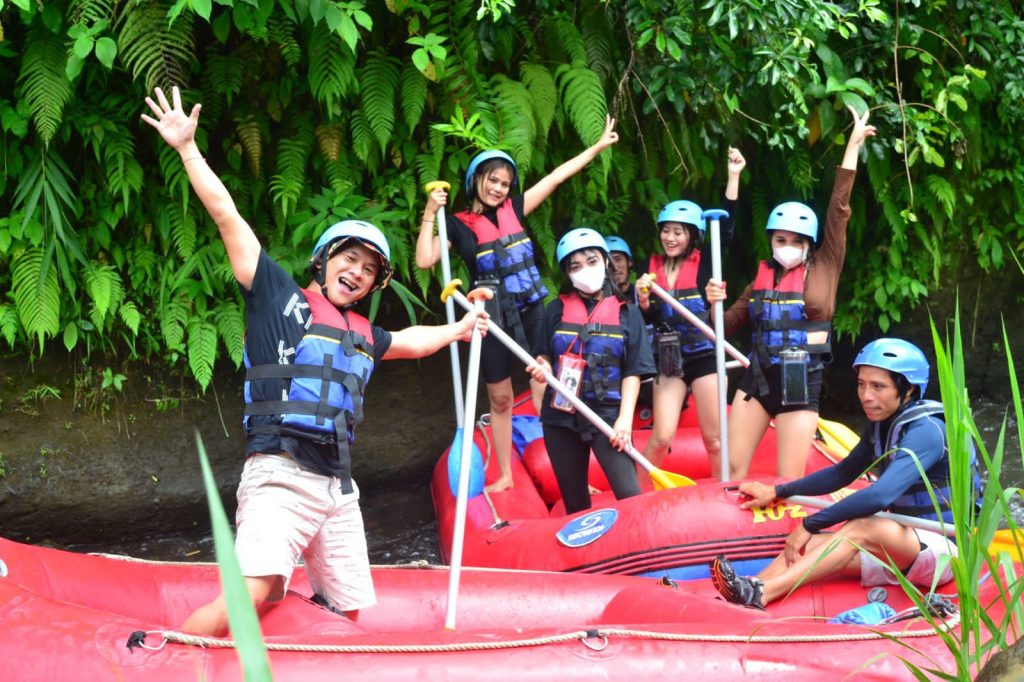
Bali Telaga Waja Rafting – Games on the Fastest River
Bali Telaga Waja Rafting is an exciting outdoor adventure in Karangasem Regency, in the eastern part of Bali. Known for its mountainous landscapes, green hills, and traditional rice terraces, this area offers a refreshing setting for white-water rafting. The Telaga Waja River flows from the Mount Agung area and is one of Bali’s well-known rafting destinations.
The rafting location can generally be reached in approximately 2–2.5 hours by car from popular tourist areas such as Ubud, Sanur, and Kuta, depending on traffic and the specific starting point. Some rafting operators in Telaga Waja offer hotel transfers, making it easier for visitors to arrange a full-day adventure.
Beyond enjoying the scenery, rafting here involves navigating changing river currents, rocky sections, and exciting rapids. The experience combines physical activity, teamwork, and the thrill of tackling natural river challenges.
Class III–IV Rapids Challenge: An Adventure for Adrenaline Seekers
The Telaga Waja River is known for its energetic currents and varied rapids. Some sections are commonly described as Class III–IV, although the actual difficulty can change depending on water levels, rainfall, the selected route, and local river conditions. These characteristics make Telaga Waja rafting activities appealing to visitors looking for an active river adventure.
Many rafting packages feature a route of approximately 14 km, although the distance and duration may differ between operators. Along the journey, participants can experience winding sections, fast-moving water, rocky passages, and, on certain routes, drops of approximately 3–4 meters. These features create a dynamic experience that requires participants to listen carefully to their guide and paddle together.
River conditions are not necessarily constant throughout the year. Rainfall and seasonal changes can affect water levels and current strength, so the experience may vary between visits. Before booking, it is advisable to confirm the route and current conditions with the rafting operator.
Natural Mountain Views and Refreshing River Scenery
The natural surroundings of the Telaga Waja River add another dimension to the rafting experience. Participants may see green hills, terraced rice fields, tropical vegetation, and views of Mount Agung from certain sections of the route. These landscapes offer a contrast to the excitement of navigating the river.
The river receives water from the mountainous area around Mount Agung. Its appearance and clarity can vary depending on rainfall, sediment, and seasonal conditions. During the journey, participants may also pass small waterfalls or other natural features, depending on the route and river conditions.
The combination of flowing water and surrounding greenery makes Telaga Waja an appealing destination for visitors who want to enjoy both outdoor adventure and Bali’s natural landscapes.
Read More: Telaga Waja Rafting: The Best Adventure with Special Promotions

Bali Telaga Waja Rafting Steps: From Briefing to Finish
A rafting trip generally follows several stages, from registration and equipment preparation to the final return to the base camp. The exact arrangements may vary depending on the operator.
1. Registration and Equipment Preparation
Upon arrival, participants complete the registration process and receive essential rafting equipment, usually including a helmet, life jacket, and paddle. The guide or staff will help check the fit of the equipment before the activity begins.
2. Safety Briefing by the Guide
Before entering the river, the guide explains basic paddling techniques, seating positions, commands, and procedures to follow if someone falls into the water. Participants should pay close attention and ask questions if any instruction is unclear.
3. Light Warm-Up
Some operators may provide a short warm-up before the rafting trip. Gentle stretching can help participants prepare their bodies for paddling and other physical movements during the activity.
4. Starting the River Journey
After preparation, participants board the raft and begin the journey from the designated starting point. The initial section provides an opportunity to become familiar with the paddle, the guide’s commands, and the movement of the raft.
5. Navigating Rapids and River Turns
As the journey continues, participants encounter different river conditions, including faster currents, turns, and rocky sections. The guide gives instructions to help the group navigate each section. Everyone should follow these commands and work together throughout the trip.
6. Reaching the Finish Point and Returning to the Base Camp
The rafting journey commonly takes around 2–3 hours on the water, depending on the route and river conditions. At the designated finish point, participants leave the raft and follow the operator’s arrangements to return to the base camp. Lunch, showers, and changing facilities may be available depending on the selected package.
What Sets Bali Telaga Waja Rafting Apart from Other Rafting Locations in Bali
Telaga Waja offers a distinctive rafting experience because of its river landscape, route characteristics, and surrounding natural environment. Here are several features that make it worth considering.
1. A Long Rafting Route
Some Telaga Waja rafting operators offer routes of approximately 14 km. This provides plenty of time to experience different river sections and enjoy the surrounding scenery. However, route distances vary, so it is best to check the details of the package before booking.
2. Natural River Currents
The Telaga Waja River is a natural river rather than an artificial rafting course. Its current changes according to rainfall, water levels, and seasonal conditions. This means that each rafting trip can offer a slightly different experience.
3. Rapids and Steep River Sections
Certain routes feature challenging rapids and drops that may reach approximately 3–4 meters. These sections are among the memorable features of some Telaga Waja rafting trips. However, not every route necessarily includes the same drops or river obstacles.
4. Green Landscapes and a Relaxing Natural Setting
The river passes through an area surrounded by hills, vegetation, and rice fields. Although the rafting activity can be physically demanding, the natural surroundings provide opportunities to appreciate the scenery between challenging river sections.

Supporting Facilities: Changing Rooms, Restaurant, and Rest Area
After completing the Bali Telaga Waja Rafting activity, participants can return to the operator’s base camp to rest and freshen up. Depending on the selected operator and package, facilities may include changing rooms, showers, toilets, and areas for storing personal belongings.
Some rafting operators also provide restaurants or dining areas where participants can enjoy a meal after the activity. Menu options and meal arrangements vary between packages. Visitors who have specific dietary requirements should contact the operator in advance to confirm available choices.
A comfortable rest area can make the overall experience more enjoyable, especially after spending several hours on the river. Before booking, check which facilities are included rather than assuming that every operator provides the same services.
Tips for Maintaining Stamina During a Rafting Trip in Telaga Waja
Rafting involves repeated paddling, maintaining balance, and responding to the guide’s instructions. Preparing beforehand can help participants enjoy the activity more comfortably.
1. Eat Breakfast Before Departing
Have a light but sufficient breakfast before the trip. Foods such as bread, fruit, or other easily digested meals can provide energy without making you feel overly full.
2. Drink Enough Water
Drink enough water before starting the activity to maintain hydration. Although you will be surrounded by river water, this does not replace the need to drink safe drinking water.
3. Wear Lightweight, Quick-Drying Clothing
Choose comfortable clothing suitable for water activities. Quick-drying sportswear is generally more practical than heavy materials such as jeans, which can become uncomfortable when wet.
4. Prepare Your Body with Gentle Stretching
A short warm-up can help prepare your muscles for paddling. Focus on gentle movements and avoid strenuous exercises immediately before the trip.
5. Follow the Guide’s Instructions
Listen carefully to the guide’s commands throughout the journey. Paddling at the right time and responding to instructions helps the group navigate the river more effectively. If you are unsure about a command, ask the guide before the trip begins.
6. Pace Your Paddling
Avoid using all your energy during the first few sections. Follow the guide’s directions and maintain a steady effort so that you can participate throughout the journey.
Conclusion
Bali Telaga Waja Rafting offers an exciting way to explore the natural landscape of East Bali while experiencing the challenges of a flowing river. Its varied rapids, winding sections, and scenic surroundings create an adventure that combines physical activity with teamwork and outdoor exploration.
With proper preparation, suitable equipment, and attention to the guide’s safety instructions, participants can make the most of their rafting experience. Since river conditions, routes, and facilities may vary, checking the details with the operator before booking is an important part of planning your trip.
For visitors looking for an active outdoor experience in Karangasem, Bali Telaga Waja Rafting is a memorable option to consider.
Frequently Asked Questions About Bali Telaga Waja Rafting
1. What does the word “games” mean in Bali Telaga Waja Rafting?
In this context, “games” refers to the active and interactive nature of rafting. Participants paddle together, respond to the guide’s commands, and work as a team to navigate different river sections. The main activity is still white-water rafting rather than a separate organised game.
2. Is there a competition between rafts during the rafting trip?
The main purpose of a standard rafting trip is to enjoy the river adventure, not to race against other rafts. Participants should focus on following their guide’s instructions and navigating the route safely rather than competing with other groups.
3. Do participants need to paddle continuously throughout the journey?
No. Paddling depends on the river section and the guide’s instructions. There may be moments when participants need to paddle actively, while other sections allow the raft to move with the current under the guide’s direction.
4. Can participants enjoy the scenery while navigating the rapids?
Yes, but attention should remain on the guide’s instructions, especially in challenging sections. Participants may have opportunities to appreciate the surrounding hills, rice fields, and vegetation when the river conditions allow.
5. What should participants do if they find a particular rapid intimidating?
Participants should remain calm, listen to the guide, and follow the safety briefing. They should not make sudden movements or attempt to navigate the rapid independently. If they feel uncertain, they should communicate their concerns to the guide before starting.
6. Is rafting more physically demanding at the beginning or toward the end?
The physical effort can vary throughout the route. Some sections may require more active paddling, while others may be less demanding. Maintaining a steady pace and following the guide’s commands can help participants manage their energy.
7. Can participants take a break during the rafting journey?
Opportunities to pause depend on the river conditions, route, and guide’s decision. Participants should not leave the raft or stop independently. If a rest is needed, they should communicate with the guide and follow the operator’s procedures.
8. What makes a rafting group work well together?
Good communication, listening to the guide, and responding to paddling commands are important. Participants do not need to be professional athletes; they simply need to cooperate, stay attentive, and follow the instructions provided before and during the trip.