

Thrill Of Telaga Waja Adventure Rafting: Try It Now!
Telaga Waja Adventure Rafting offers an exciting white-water rafting experience in East Bali. Known for its flowing rapids and scenic surroundings, the river attracts adventure seekers who want to experience Bali from a different perspective. Along the route, participants can enjoy views of green hills, rice fields, tropical vegetation, and natural streams.
The rafting journey combines sections of fast-moving water with calmer stretches, creating different experiences throughout the trip. Participants can work together to navigate the rapids while enjoying the surrounding countryside. Each section of the river has its own character, making the journey engaging from the starting point to the finish.
Beyond the adventure itself, rafting in Telaga Waja also offers opportunities to interact with local guides. Depending on the guide and the trip, participants may hear stories about the surrounding villages, local traditions, and everyday life in East Bali. These interactions add a cultural dimension to the outdoor experience.
Read More: Thrilling Experience Of Telaga Waja Rafting Bali: Check Now!
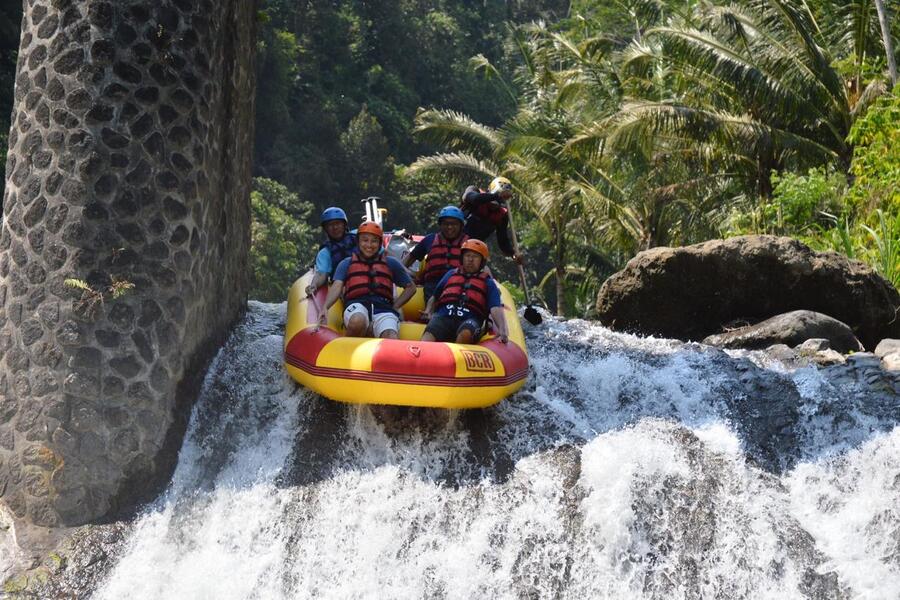
Telaga Waja Adventure Rafting Route: What Will You Pass?
The rafting route on the Telaga Waja River is commonly advertised at approximately 14 km, although the exact distance may vary depending on the operator and selected route. Along the journey, participants encounter different river sections that combine water challenges with views of the natural landscape.
Some features participants may experience include:
- Challenging Rapids: The route features rapids with varying characteristics, from relatively manageable sections to stronger currents that require coordination and attention. Participants should follow the guide’s paddling instructions when navigating these areas.
- Rock Cliffs and Green Vegetation: Parts of the river pass through natural rock formations, hillsides, and lush vegetation. These surroundings create an appealing contrast with the movement of the water.
- Natural Waterfalls: Depending on the route and water conditions, participants may see small waterfalls or streams flowing into the river. Their location and accessibility can vary, so stopping for photographs is subject to the guide’s instructions.
- Traditional Bridges: Some sections may offer views of bridges crossing the river and connecting nearby areas. These structures provide a glimpse of the countryside and the daily activities of local communities.
The combination of river features and natural scenery makes the journey more than simply a ride through rapids. Participants can enjoy the changing landscape while experiencing the different conditions along the route.
Interaction with the Guide: Local Stories and Culture
One of the memorable aspects of rafting in Telaga Waja is the opportunity to interact with the rafting guide throughout the journey. Guides lead the group through the route, explain paddling techniques, and provide instructions for responding to different river conditions.
Depending on their individual knowledge and experience, some guides may also share stories about nearby villages, local customs, and the surrounding environment. These conversations can help visitors understand more about the area beyond its reputation as a rafting destination.
A friendly atmosphere and occasional humor can also make the trip more enjoyable. However, participants should remain attentive whenever the guide gives safety instructions, particularly when approaching rapids or other demanding sections.
The combination of guidance, local interaction, and shared adventure helps create a more memorable experience for visitors exploring East Bali.
The Longest and Most Favorite Rapids on the Trail
Telaga Waja River is known for its extended stretches of flowing water and varied rapids, which contribute to its reputation as an exciting rafting destination in Bali. Some sections feature stronger currents and noticeable changes in water level, giving participants opportunities to experience the more challenging side of white-water rafting.
Certain rafting routes are also promoted for their drops, including sections advertised at approximately 4–5 meters. However, the exact features experienced depend on the operator’s route and current river conditions. Participants should confirm the route details with their chosen provider before booking.
For many visitors, navigating these sections is one of the highlights of the trip. The sound of rushing water, splashes, and coordinated paddling create an exciting atmosphere. At the same time, the surrounding scenery provides a refreshing contrast to the more active parts of the journey.
Rather than focusing only on the most challenging rapids, participants can enjoy the variety of the entire route, including calmer sections where they can appreciate the natural surroundings.
Duration, Rest, and Lunch
Telaga Waja Adventure Rafting generally takes around 2–3 hours on the water, depending on the selected route, river conditions, and group pace. The commonly advertised route distance is approximately 14 km, but the actual distance and duration should be confirmed with the rafting operator.
During the journey, participants pass through different river sections, including rapids, bends, and calmer stretches. Guides provide directions throughout the activity to help the group navigate the route and maintain coordination.
After completing the rafting session, participants may have an opportunity to rest and enjoy lunch at the operator’s restaurant or designated dining area. Some packages include a buffet meal featuring Indonesian dishes, such as rice, chicken, vegetables, and fruit. However, menus and meal arrangements vary between providers, so it is advisable to check the package inclusions before booking.
The break after rafting gives participants time to relax, change clothes if facilities are available, and enjoy the surrounding landscape before continuing their activities in Bali.
Thrill Of Telaga Waja Adventure Rafting: Try It Now!

Weather and Water Conditions: What to Know?
Before joining Telaga Waja Adventure Rafting, it is useful to understand how weather and rainfall can influence river conditions. Water levels and current strength may change throughout the year, affecting the character of the rafting route.
Factors to Consider
- Rainy Season (Approximately October–March): Rainfall can increase the river’s water level and current strength. This may make certain sections more challenging. Operators should assess the river conditions before allowing trips to proceed.
- Dry Season (Approximately April–September): Rainfall is generally lower during this period, although river conditions can still vary. Participants may encounter different water levels and current characteristics depending on recent weather.
- Checking the Weather Forecast: Checking the forecast before traveling can help with planning. However, a general weather forecast does not always reflect conditions along the entire river. Follow the operator’s assessment if heavy rain or changing river conditions affect the scheduled trip.
The rainy and dry seasons do not automatically determine whether rafting is safe or unsuitable. The decision to operate should depend on actual river conditions and the operator’s safety assessment.
Tips to Avoid Injuries and Muscle Tension
Rafting involves physical movement, especially when participants paddle through sections of stronger current. Preparing your body before the activity can help reduce unnecessary strain and make the experience more comfortable.
Here are several practical ways to prepare:
- Warm Up Before Starting: Do some gentle movements to prepare your arms, shoulders, back, and legs. Light stretching and mobility exercises can help your body get ready for paddling.
- Use the Correct Paddling Technique: Listen to the guide’s explanation of how to hold and use the paddle. Coordinated movements and proper technique can help reduce unnecessary strain on your arms and shoulders.
- Stay Hydrated: Drink enough water before the activity and follow the operator’s guidance regarding drinking opportunities. Staying hydrated is particularly important when spending time outdoors in warm weather.
- Check Your Equipment Fit: Make sure your helmet and life jacket fit securely and comfortably. Tell the guide or operator if any equipment feels too loose, too tight, or uncomfortable.
- Cool Down After Rafting: After the activity, take time to relax and consider gentle movements or light stretching if comfortable. Avoid forcing stretches if you experience pain or unusual discomfort.
Participants should also inform the operator about relevant physical limitations before the trip. Good preparation, suitable equipment, and attention to the guide’s instructions all contribute to a more comfortable rafting experience.
Conclusion: Enjoy the Thrill of Telaga Waja Adventure Rafting
Telaga Waja Adventure Rafting combines the excitement of white-water rafting with the natural beauty and local atmosphere of East Bali. From navigating different rapids and enjoying the river scenery to interacting with local guides, the journey offers several ways to experience the region beyond its popular tourist attractions.
Understanding the route, weather conditions, activity duration, and physical preparation can help participants plan their adventure more comfortably. Whether you are traveling with friends or organizing an outdoor activity for a group, Telaga Waja can be an exciting destination to consider.
Explore the available rafting packages at Telaga Waja Rafting and prepare for an adventure along one of East Bali’s well-known rafting rivers.
Frequently Asked Questions
1. Does the Telaga Waja rafting route have sections where participants can enjoy calmer water?
Yes. The route can include both rapids and relatively calmer stretches. These sections provide a change of pace during the journey, although the river remains a moving-water environment and participants should continue following the guide’s instructions.
2. Will the rafting guide explain the local culture during the trip?
Some guides may share information about nearby villages, local traditions, and the surrounding landscape. The amount of cultural information depends on the individual guide and the conditions during the rafting session.
3. Can participants stop at a waterfall during the rafting journey?
This depends on the route, water conditions, and the operator’s arrangements. Some sections may offer views of small waterfalls or streams, but stopping or approaching them is not guaranteed and must follow the guide’s safety instructions.
4. Why can the same rafting route feel different on different days?
River conditions are influenced by recent rainfall, water levels, and current strength. These factors can change how particular rapids feel and how the group moves along the route, even when the operator uses the same general course.
5. Is the rafting duration the same as the total time needed for the activity?
No. The advertised rafting duration generally refers to time spent on the river. The complete activity may take longer because participants also need time for registration, changing, safety briefings, equipment preparation, and post-rafting arrangements.
6. What should participants do if their muscles feel tired while paddling?
Participants should communicate with the guide rather than trying to push through excessive fatigue. Follow the guide’s directions, maintain a comfortable paddling technique, and let the guide know if you experience pain, dizziness, or unusual discomfort.
7. Can heavy rain affect a rafting schedule even if the weather is clear at the starting point?
Yes. Rainfall in areas upstream can influence river conditions even when the weather near the rafting base appears clear. Operators should consider conditions along the river, not only the weather at the starting or finishing point.
8. Why is a cool-down period useful after a rafting session?
A short recovery period gives participants time to relax after paddling and other physical movements. Gentle movement and comfortable stretching may help ease muscle tension, while drinking water and resting can support recovery after the activity.