

The Beauty and Challenges of Rafting at Telaga Waja
Rafting at Telaga Waja is an outdoor adventure that combines a Bali Rafting Tour with an opportunity to explore the natural beauty of East Bali. The Telaga Waja River flows from the Mount Agung area and passes through the scenic countryside of Karangasem. Some rafting operators advertise routes of approximately 14–16 kilometers, with around two to three hours spent on the water, depending on the selected route and river conditions.
The river features a variety of rapids, bends, and changes in elevation, offering an engaging experience for travelers who enjoy active outdoor activities. However, its water flow and difficulty can change depending on rainfall and other environmental conditions. Participants should always follow the operator’s requirements and the guide’s safety instructions.
Beyond the adrenaline, rafting at Telaga Waja provides a different perspective on Bali’s natural landscape. Along the route, participants may see rice fields, traditional villages, tropical vegetation, rocky riverbanks, and small waterfalls. This combination of adventure and scenery makes Telaga Waja an appealing destination for travelers who want to experience the island beyond its popular beaches and urban attractions.
Read More: Telaga Waja Rafting Karangasem: The Ultimate Activity in Bali!
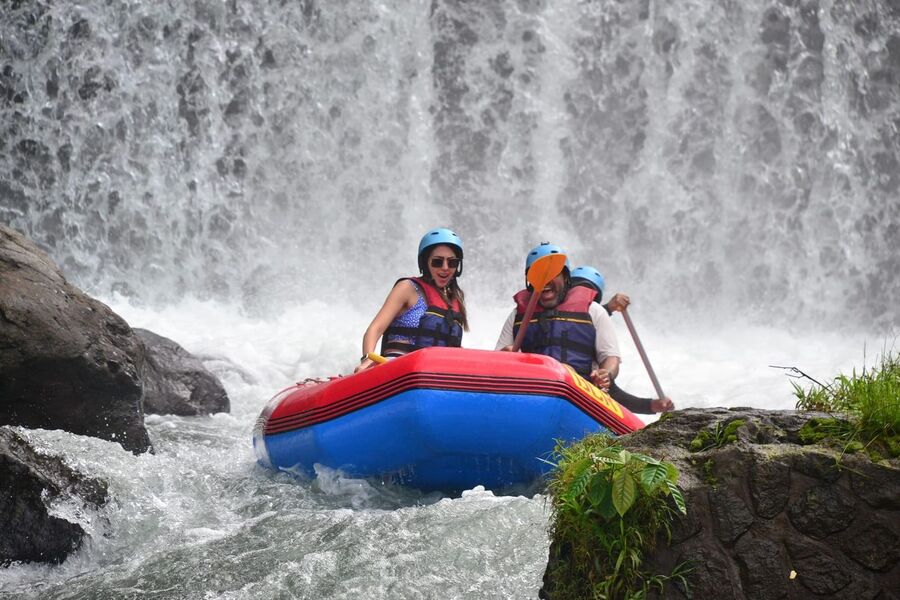
Natural Beauty Along the Telaga Waja River in Karangasem
Telaga Waja River is surrounded by the natural landscape of East Bali. As the raft moves downstream, participants can experience a countryside atmosphere shaped by flowing water, green vegetation, and the sounds of nature.
The scenery changes along the route, creating different impressions throughout the journey.
A. Rice Fields and Rural Bali
Some sections of the rafting route pass through areas with green rice fields, traditional houses, and views of local village life. These landscapes offer a glimpse of Bali’s agricultural surroundings, creating a peaceful contrast with the excitement of navigating the rapids.
Depending on the route, participants may see farmers working in nearby fields or observe the natural landscape from the river.
B. Tropical Forests and Rocky Cliffs
Parts of the river are bordered by tropical trees, bamboo vegetation, and natural rock formations. These surroundings create shaded sections and give the journey a more adventurous atmosphere.
The combination of vegetation and rocky riverbanks also makes the scenery feel different from the more developed tourist areas of Bali.
C. Waterfalls and Small Streams
Along certain sections of the route, participants may encounter small cascades and streams flowing into the main river. These natural features add variety to the landscape and provide refreshing moments during the journey.
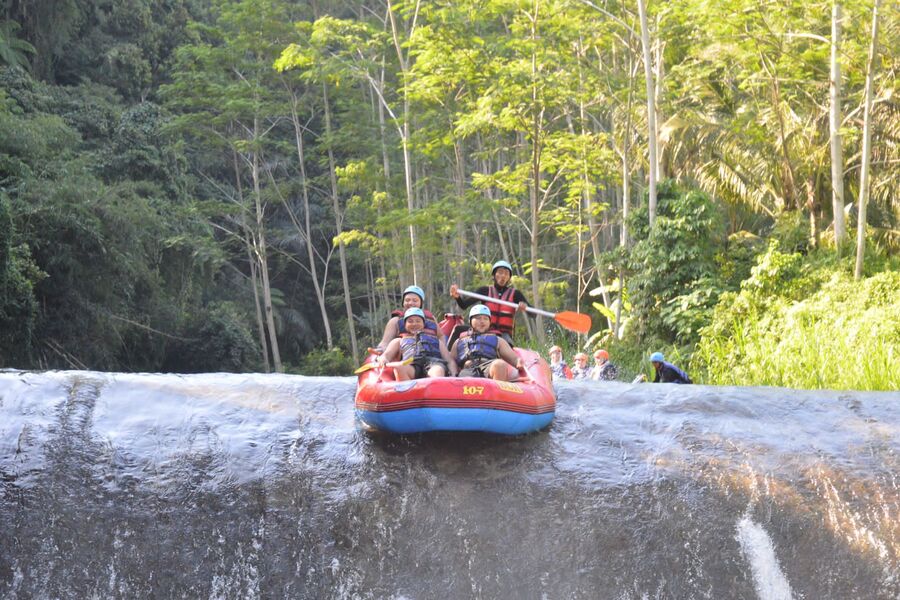
Some rafting routes also include a descent near an approximately 4-meter drop. This feature is route-dependent and should be confirmed with the operator before booking.
D. Water Conditions and Refreshing River Surroundings
The water in Telaga Waja can feel refreshing, especially during the warm tropical weather. Its appearance and clarity may change depending on rainfall, sediment, and other natural conditions.
Rather than assuming the river is always crystal clear, participants should understand that natural river conditions can vary throughout the year. The flowing water and surrounding greenery remain important parts of the overall outdoor experience.
Facing the Swift and Winding Currents of Telaga Waja
Although the river offers beautiful scenery, rafting in Telaga Waja also involves challenges. The changing current, bends, and rapids make the rafting experience at Telaga Waja engaging and require participants to remain attentive.
Teamwork is important throughout the journey. Participants need to listen to the guide, coordinate their paddling, and follow instructions when approaching more challenging sections.
A. Rapids with Varying Levels of Difficulty
Different sections of the Telaga Waja River can have varying levels of difficulty. Some descriptions classify parts of the river around Grade II–IV, but the actual classification depends on the route and water conditions.
Certain rapids may require coordinated paddling and careful steering by the guide. Participants should not assume that every section has the same difficulty or that the river remains unchanged throughout the year.
B. Descent Over an Artificial Water Drop
One feature often mentioned in Telaga Waja rafting descriptions is a descent over an artificial water drop of approximately 4 meters. It is an exciting part of certain routes because the raft moves through a noticeable change in elevation.
However, this is not necessarily a separate jump performed by participants. The raft navigates the drop under the direction of the river guide, and the feature’s availability depends on the operator’s route and current conditions.
Participants should follow the guide’s instructions and maintain the recommended position throughout this section.
C. Sharp Bends and Large Rocks
The river contains bends and natural rock formations that influence the movement of the water. Some sections may require the guide to steer the raft carefully while participants coordinate their paddling.
Listening to commands and maintaining balance are important, especially when approaching rapids or areas with obstacles.
D. Changes in Water Flow During the Rainy Season
Rainfall can influence the river’s water level, speed, and overall conditions. During periods of heavy rain, the flow may become stronger, and certain sections may be more challenging.
This is why operators need to assess local conditions before running rafting activities. Participants should also pay attention to any changes in the schedule or route communicated by the operator.
E. Access to the Starting and Finishing Points
The adventure does not only involve navigating the river. Reaching the starting point and leaving the finishing area may involve stairs, slopes, uneven ground, or wet pathways, depending on the operator’s location.
Wear secure footwear with good grip and follow the staff’s directions when walking around these areas. Avoid carrying unnecessary belongings that could make movement more difficult.
The Beauty and Challenges of Rafting at Telaga Waja
Safety During Rafting at Telaga Waja
Rafting is an outdoor activity that involves natural risks, even when organized by an experienced operator. Proper preparation, suitable equipment, and clear instructions help participants understand how to take part responsibly.
The following safety aspects are important to consider before starting the activity.
A. Experienced Instructors and River Guides
Each raft is generally accompanied by a river guide who steers the boat and provides instructions throughout the trip. Guides should be familiar with the route, river conditions, and appropriate responses to changing situations.
Participants should listen carefully, communicate any concerns, and follow the guide’s directions during the activity.
B. Appropriate Rafting Equipment
Essential equipment generally includes a helmet, life jacket, and paddle. The equipment should fit properly and be checked before entering the river.
Some operators may provide additional equipment depending on the route and package. Ask the staff for assistance if a helmet or life jacket feels loose or uncomfortable.
C. Safety Briefing Before Entering the River
Before the activity begins, participants should receive instructions covering basic paddling techniques, seating positions, guide commands, and what to do if someone falls into the water.
Pay particular attention to the instructions for responding to unexpected situations. Do not attempt to leave the raft or return to shore independently unless directed by the guide or rescue personnel.
D. Monitoring River and Weather Conditions
River conditions can change due to rainfall, water levels, and local weather. Rafting operators should assess these factors before allowing an activity to proceed.
If conditions are considered unsuitable, an operator may change the route, delay the activity, or suspend departures. Participants should follow these decisions rather than assume that rafting will always operate as scheduled.
E. Checking Route Suitability for Beginners and Families
Some operators may accept beginners and families who meet their participation requirements. However, there is no single route or age requirement that applies to every provider.
Before booking, ask about minimum age, height, health considerations, route difficulty, and whether the selected package is suitable for your group. Families should confirm these details directly with the operator.
Unforgettable Experience: Rafting at Telaga Waja
Rafting at Telaga Waja is more than a physical activity. It combines the excitement of navigating rapids with moments of relaxation while moving through Bali’s natural landscape.
The movement of the raft through different sections of the river creates a changing experience. Some moments require participants to paddle together and respond quickly to the guide’s commands, while calmer stretches offer opportunities to appreciate the surrounding rice fields, trees, and rocky riverbanks.
These quieter sections provide a different kind of enjoyment. Participants can take a moment to observe the scenery, listen to the sound of flowing water, and appreciate the natural surroundings between more challenging parts of the route.
Photography and video documentation can also help preserve memories of the trip. Some operators offer documentation services, although availability and pricing vary between packages. Participants should follow the guide’s instructions before taking out a personal camera or phone, particularly in sections where paddling and balance require full attention.
For many visitors, the combination of natural scenery, teamwork, and changing river conditions is what makes the experience memorable. Each trip can feel different depending on the route, weather, and water level.
Conclusion: Rafting at Telaga Waja as a Unique Experience
Rafting at Telaga Waja brings together outdoor adventure, natural scenery, and the excitement of navigating a changing river. From the rice fields and tropical vegetation to the rapids, bends, and river drops, the journey offers a distinctive way to explore the countryside of East Bali.
The experience is not only about adrenaline. Participants also have the opportunity to appreciate the landscape, practice teamwork, and learn how to respond to the river under the guidance of an experienced instructor.
Whether you are interested in challenging rapids or simply want to discover a different side of Bali, Telaga Waja can be an appealing option. Choose a suitable package, check the operator’s participation requirements, and pay attention to the safety briefing to make the most of your rafting adventure.
Frequently Asked Questions About Rafting at Telaga Waja
1. Does the scenery change significantly from the beginning to the end of the rafting route?
Yes. The landscape can change as the raft moves downstream. Participants may pass agricultural areas, sections with dense vegetation, rocky riverbanks, and different river formations. The exact scenery depends on the route used by the operator.
2. Why can the river look different in photographs taken at different times of the year?
Rainfall, water levels, sediment, and lighting can influence the river’s appearance. For example, heavy rain may affect water clarity, while sunny conditions can make the surrounding landscape appear brighter. Photographs taken in different seasons may therefore show noticeably different conditions.
3. Are all the waterfalls along the Telaga Waja route natural?
Not necessarily. The route may feature natural cascades as well as constructed or modified water-drop sections. If a particular waterfall or drop is important to your planned experience, ask the operator whether it is part of the selected route.
4. What makes rafting through a river with winding sections different from rafting on a straighter route?
Winding sections require the guide to adjust the raft’s direction as the current moves around bends and obstacles. Participants may need to coordinate their paddling according to the guide’s commands, making communication and teamwork particularly important.
5. Can the route be changed because of heavy rainfall?
Yes. Operators may adjust the route, delay departures, or suspend activities if rainfall or river conditions make the planned route unsuitable. The decision depends on the conditions assessed by the operator.
6. What should participants pay attention to when walking around the rafting start and finish areas?
Pay attention to wet steps, uneven paths, slopes, and other slippery surfaces. Wear secure footwear, use handrails where available, and follow staff instructions when moving between the river and activity facilities.
7. Is it possible to enjoy the natural surroundings without paddling continuously?
There may be calmer sections where the guide allows participants to relax briefly while remaining in the raft. However, participants should stay ready to paddle whenever instructed and should not stop following the guide’s commands.
8. How can participants protect the natural surroundings during a rafting trip?
Avoid throwing rubbish into the river, do not damage plants along the riverbanks, and follow the operator’s environmental guidelines. Keeping personal belongings secure and taking all waste back to designated disposal areas also helps protect the river environment.