

Telaga Waja Rafting – Test Your Guts Now With Extreme Rapids!
Telaga Waja Rafting is an exciting choice for adrenaline seekers who want to experience the thrill of Bali river rafting through flowing currents, challenging rapids, and scenic river landscapes. Located in East Bali, the Telaga Waja River offers an adventurous route with varying water conditions and obstacles that require teamwork, coordination, and quick responses.
Beyond the excitement of navigating the rapids, rafting in Telaga Waja is also an opportunity to explore Bali’s natural surroundings. Along the journey, participants can enjoy views of green hills, terraced rice fields, tropical vegetation, and traditional rural landscapes. The combination of river challenges and beautiful scenery makes this activity an appealing option for visitors looking for an outdoor adventure.
First-time participants can also consider this activity, provided they meet the operator’s requirements and follow the safety briefing carefully. Before entering the river, guides explain the basic paddling techniques, commands, and safety procedures. Participants should also understand that rafting involves natural risks, and river conditions can change depending on rainfall and other environmental factors.
If you are ready for an active outdoor experience, discover what makes Telaga Waja Rafting an exciting adventure in Bali.
Read More: Telaga Waja Rafting: Take On Challenging Rafting In Bali Now!
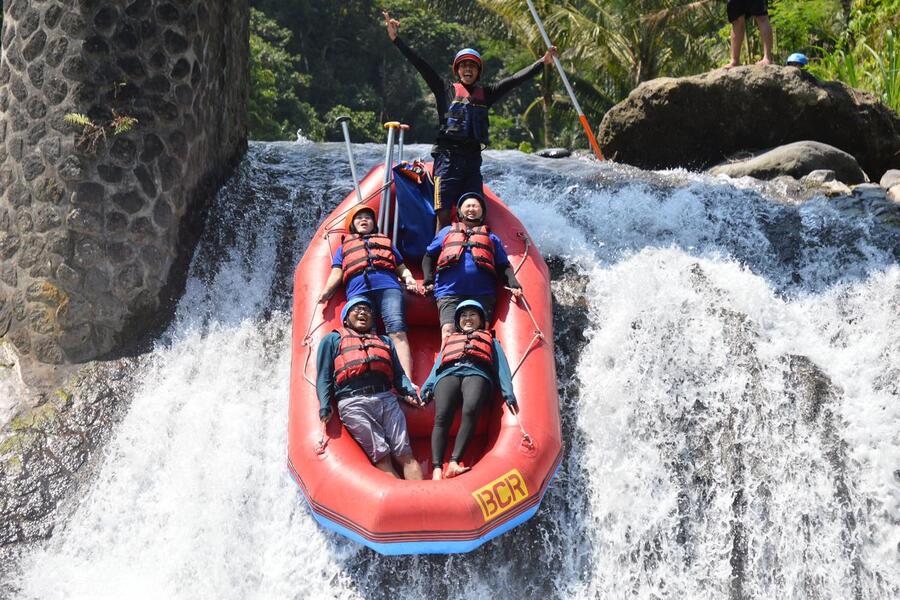
Why Is Telaga Waja Considered a Challenging Rafting River?
Telaga Waja River is widely known as one of the popular destinations for challenging rafting in Bali. Depending on the operator and selected route, the rafting journey may cover approximately 14–16 kilometers and take around 2–3 hours on the water. Along the way, participants encounter different river features, including flowing currents, waves, rocks, and sections that require careful maneuvering.
One feature often associated with Telaga Waja Rafting is a descent of approximately 4–5 meters on certain routes. This section can provide an exciting moment as the raft moves down the drop under the guide’s direction. However, the availability and characteristics of this feature depend on the route and current river conditions, so participants should confirm the details with their chosen operator.
Large rocks and changing currents also contribute to the challenge. Rafters need to listen to the guide’s commands, paddle together, and maintain their positions as the boat moves through different sections of the river. Good coordination is particularly important when navigating narrow passages or approaching obstacles.
The surrounding landscape adds another dimension to the experience. Participants may pass forested areas, rice fields, and rural scenery while enjoying the changing views along the river. This combination of physical activity and natural exploration makes Telaga Waja an appealing destination for adventure enthusiasts.
Difficulty Levels and Categories of Rapids in Telaga Waja Rafting
The difficulty of white-water rafting is commonly described using an international grading system, ranging from Grade I to Grade VI. Telaga Waja’s rapids can vary in intensity along the route, and some sections are commonly associated with moderate to more demanding white-water conditions.
The exact classification should not be assumed to apply to the entire river. Water levels, rainfall, route selection, and local conditions can influence how challenging individual sections become.
Common White-Water Rapid Categories
- Grade II – Moderate: These sections generally feature straightforward rapids with small waves and relatively clear passages. Participants can use them to become familiar with paddling commands and boat coordination.
- Grade III – Intermediate: Stronger currents, irregular waves, and obstacles may require more precise paddling and maneuvering. Teamwork becomes increasingly important.
- Grade IV – Advanced: These sections can involve powerful currents, larger waves, and more complex passages. They require careful navigation and coordinated responses under the guide’s direction.
Each rapid presents different conditions, so participants should not judge the difficulty of the entire journey based on one section. Always follow the guide’s instructions and remain seated in the recommended position when approaching challenging rapids.
Things to Prepare Before Starting Telaga Waja Rafting
Preparing properly before a rafting adventure in Telaga Waja can make the experience more comfortable. Although operators generally provide essential rafting equipment, participants should bring suitable personal items and clothing.
Preparation Checklist Before Rafting
- Comfortable Clothing: Wear lightweight, quick-drying clothes such as sportswear or a breathable T-shirt. Avoid heavy fabrics that become uncomfortable when wet.
- Suitable Footwear: Choose secure outdoor sandals or water shoes with good grip. Avoid loose footwear that may come off in the river.
- Sun Protection: Apply waterproof sunblock before the activity. A hat may be useful before or after rafting, but it should not interfere with the helmet during the trip.
- Change of Clothes and Towel: Bring dry clothes and a towel for changing after the activity.
- Waterproof Camera (Optional): If you want to capture the journey, use suitable waterproof protection and only handle your camera when the guide confirms it is safe.
- Personal Medication: Bring any essential personal medication and inform the operator or guide about relevant needs before the activity.
It is also a good idea to check the operator’s package details in advance. Included equipment, meals, transportation, changing facilities, and photography services can differ between providers.
With suitable preparation, you can focus more comfortably on the river experience and enjoy the scenery along the route.
Telaga Waja Rafting – Test Your Guts Now With Extreme Rapids!
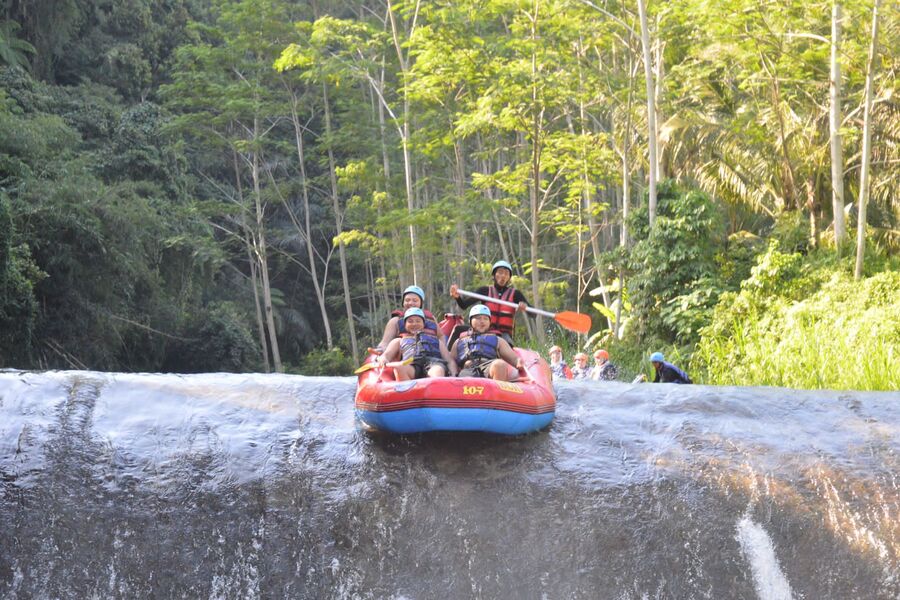
What Happens If You Fall Into the Water?
Falling into the river is one of the risks participants should understand before starting a rafting trip. It may happen if the raft encounters a strong wave, turns over, or moves through a difficult section. Knowing the basic safety instructions can help you respond more appropriately.
If you fall into the water, try to stay calm and follow the safety position explained during the briefing. In moving water, guides may instruct participants to float on their backs with their feet facing downstream and raised toward the surface. This position helps protect the feet and legs from obstacles beneath the water.
Do not attempt to stand in fast-moving water, as your feet could become trapped between rocks. Avoid swimming independently toward the riverbank or trying to return to the raft without following the guide’s instructions. Instead, pay attention to the rescue directions provided by your guide and use the safety equipment as instructed.
If you are close to the raft, follow the guide’s directions for getting back aboard. A correctly fitted life jacket and helmet are essential parts of rafting safety equipment, but they do not eliminate every risk. Listening carefully to the briefing before entering the river is therefore important.
Weather and Its Effect on River Water Levels
Weather conditions can influence the character of a rafting trip, particularly through changes in river volume and current strength. Rainfall in the surrounding area or upstream can affect the river even when the weather at the rafting starting point appears clear.
During periods of heavier rainfall, water levels may rise and currents can become stronger. In drier periods, some sections may have lower water levels, which can change the way the raft moves through the route. These conditions are not always predictable, so operators need to assess the river before conducting an activity.
Weather Factors That Can Influence River Conditions
- Heavy Rainfall: Rain can increase river volume and current speed, potentially making some rapids more demanding.
- Extended Dry Periods: Lower rainfall may reduce water levels and change the flow across certain sections of the route.
- Rainfall Upstream: Weather conditions in areas farther along the river’s watershed can affect water levels downstream, even if the rafting location is not experiencing rain.
- Changing Weather Conditions: Weather can shift during the day, so operators need to consider current conditions rather than relying only on a general seasonal forecast.
Participants should follow the operator’s decision if a trip is delayed, adjusted, or cancelled because of river conditions. The suitability of a rafting session depends on an assessment of the actual conditions, not simply whether it is the rainy or dry season.
Conclusion
Telaga Waja Rafting offers an exciting way to experience Bali’s natural landscapes while navigating flowing currents, waves, and challenging river sections. With routes that may extend approximately 14–16 kilometers, the journey combines active paddling, teamwork, and opportunities to enjoy the scenery of East Bali.
The experience requires more than courage. Understanding the safety briefing, wearing suitable equipment, coordinating with other participants, and following the guide’s commands are all important parts of a responsible rafting trip. River conditions can also change, so the difficulty of the experience depends on the route and the conditions on the day.
Whether you are an adventure enthusiast or a first-time participant who meets the operator’s requirements, Telaga Waja Rafting can be an exciting outdoor activity to consider during your Bali visit. Prepare yourself, work together with your team, and discover the challenges of rafting along the Telaga Waja River.
Frequently Asked Questions
1. Do all rapids require participants to paddle at the same intensity?
No. The paddling effort depends on the current, the shape of the rapid, and the guide’s instructions. Some sections may require stronger or more coordinated strokes, while others allow participants to follow a steadier rhythm.
2. Why is teamwork important when navigating narrow river passages?
Narrow passages may leave less room for maneuvering. Coordinated paddling helps the guide direct the raft more effectively and maintain its position as it moves through the available space.
3. Can participants choose to avoid a particularly challenging section?
This depends on the river route and the operator’s arrangements. Not every rapid can be bypassed independently, so participants should discuss their concerns with the operator before booking rather than expecting to change the route during the trip.
4. Does a higher rapid grade mean the entire rafting journey has the same difficulty?
No. Rapid grades describe individual sections of white water, not necessarily the entire river. A route can include sections with different levels of difficulty, and conditions may change with water levels and rainfall.
5. What should participants do when the guide gives a sudden paddling command?
Listen carefully and respond as instructed. Commands may be given to help the raft move through a rapid, avoid an obstacle, or maintain its direction. Following the guide’s directions promptly is an important part of navigating the river.
6. Why can the same rapid feel different on separate rafting trips?
River conditions are not always identical. Rainfall, water volume, current speed, and other natural factors can change how a particular section behaves from one trip to another.
7. Is physical strength the most important factor for handling challenging rapids?
Not necessarily. Physical fitness can help participants manage the activity, but listening, coordination, balance, and following instructions are also essential. Rafting is a team activity rather than a competition to paddle the hardest.
8. Should participants tell the guide if they feel uncomfortable during the journey?
Yes. Participants should communicate any discomfort, concerns, or difficulty following instructions to the guide as soon as possible. Sharing this information helps the guide understand the situation and provide appropriate directions.