
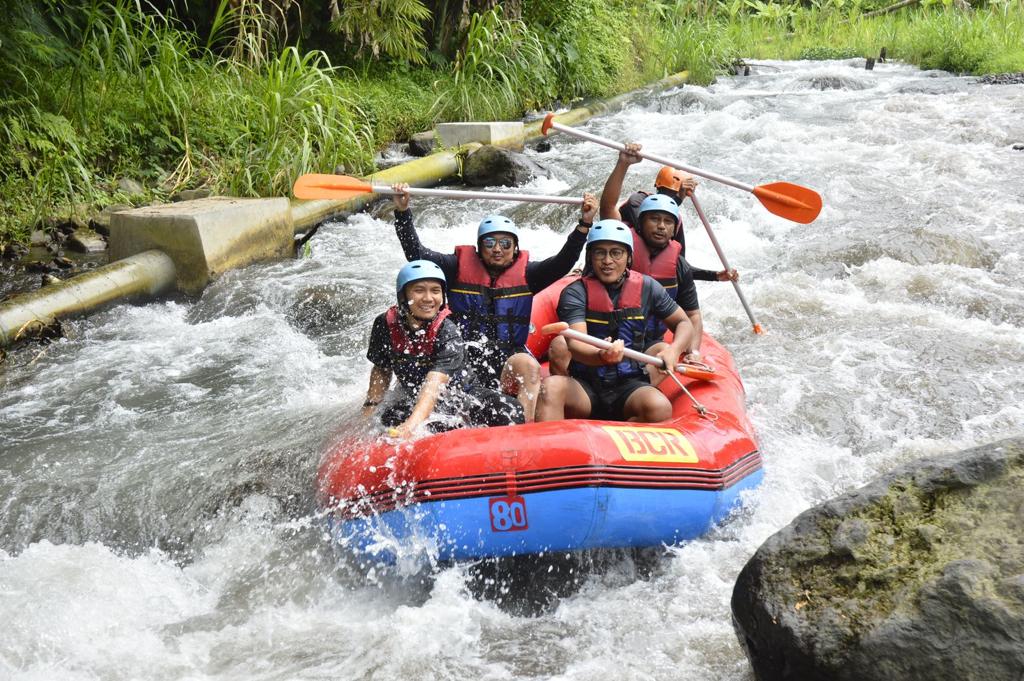
Telaga Waja Rafting Is a Fun and Interesting Activity!
Telaga Waja Rafting is an exciting outdoor activity on the Telaga Waja River in Karangasem Regency, Bali. Known for its flowing water, challenging rapids, and relatively long rafting route, this river is a popular destination for travelers seeking an adventurous way to explore Bali’s natural landscapes.
With rapids that can range from moderate to challenging, Telaga Waja River offers an exciting experience for adventure enthusiasts. Beginners may also be able to participate, depending on the river conditions, the operator’s requirements, and the guidance provided. Participants are generally equipped with essential safety gear, including helmets and life jackets, and receive instructions from rafting guides before starting the journey.
Beyond the rapids, Telaga Waja is surrounded by lush vegetation, rice fields, and tropical landscapes. The natural scenery adds another dimension to the adventure, allowing participants to appreciate Bali’s countryside while navigating the river.
Read More: Telaga Waja Rafting as the Best Activity in Bali!
Access and How to Get to Telaga Waja River
Telaga Waja River is located in Karangasem Regency, in eastern Bali. The journey from popular tourist areas such as Kuta, Seminyak, or Nusa Dua can take approximately 2–2.5 hours by car, depending on traffic and the exact starting point.
Visitors can travel to the rafting area by private vehicle, rental car, or transportation arranged through a rafting operator. Arranging transportation in advance can make the trip more convenient, especially for visitors staying in southern Bali.
Here are some transportation options to consider:
- Private Vehicle or Rental Car: Drive toward Karangasem and follow the directions to your chosen rafting operator’s base. Check the meeting point in advance because the starting point and facilities may differ between operators.
- Rafting Operator Transportation: Some operators offer hotel pickup and drop-off services. Confirm the available pickup areas, schedule, and additional costs when booking.
- Public Transportation: Travelers may use public transportation to reach parts of Karangasem, but reaching the rafting base can require additional local transport. Check the available routes and schedules before departure.
Planning your transportation ahead of time helps you arrive at the meeting point without rushing and gives you more time to prepare for the activity.

Advantages of Rafting in Telaga Waja
Rafting on the Telaga Waja River offers several attractions for visitors looking for an outdoor adventure in Bali. From its extended rafting route to its natural scenery, the river provides a combination of excitement and opportunities to enjoy the island’s countryside.
1. Easier Access in Certain Sections
One advantage of some Telaga Waja rafting locations is that access to the river may involve fewer or less demanding steps than at certain other rafting sites. This can make reaching the starting or finishing point more manageable for visitors who prefer not to navigate long stairways.
However, access conditions vary depending on the operator and the route. Participants should check the walking distance, stairs, and terrain involved before booking, particularly if they are traveling with children or people who may have difficulty walking.
With the right preparation, visitors can focus on enjoying the rafting experience while understanding what to expect at the river access points.
2. A Relatively Long Rafting Route
The Telaga Waja River is known for its relatively long rafting route. Depending on the operator and package, the course may cover approximately 14–16 km, with some providers advertising different distances.
Compared with shorter rafting experiences, this route offers more time to navigate rapids, enjoy the surrounding scenery, and experience different sections of the river.
The rafting journey often takes around 2–3 hours on the water, although the actual duration depends on river conditions, the operator’s route, and the pace of the group. Visitors should also allow extra time for registration, safety briefings, changing clothes, and lunch if it is included in their package.
A longer route can be appealing to travelers who want an extended outdoor activity rather than a brief rafting session.
3. Exciting and Challenging Rapids
For adventure enthusiasts, Telaga Waja River offers an engaging rafting experience with a variety of rapids and flowing sections. The changing water conditions and river features make the journey exciting for participants who enjoy outdoor activities.
The difficulty of the river can vary according to rainfall, water levels, and the section being navigated. For this reason, participants should follow the operator’s assessment of current conditions rather than relying only on general descriptions of the river.
Beginners may be able to join a suitable trip if they meet the operator’s requirements and are comfortable with the activity. Before departure, the guide explains paddling techniques, basic commands, and how participants should respond to instructions.
Following the guide’s directions is essential throughout the journey. Anyone who is uncertain about their ability to participate should discuss their concerns with the operator before booking.
4. A Dam Drop of Approximately 4 Meters
One of the features associated with certain Telaga Waja rafting routes is a water drop at a dam. The drop is often described as approximately 4 meters high, although the exact feature and route depend on the operator’s course.
Passing this section can be one of the most memorable parts of the trip because it adds a different challenge to the usual sequence of rapids. Guides provide instructions before the group approaches the drop, and participants must follow their directions carefully.
The feature may look intimidating to first-time rafters, but it should not be treated as a guaranteed experience or as something every participant must attempt under all conditions. Whether the section is included and can be navigated depends on the route, water conditions, and the operator’s safety assessment.
Visitors who are particularly interested in experiencing the dam drop should confirm its availability when choosing a rafting package.
5. Natural Scenery and Waterfalls
Telaga Waja Rafting offers more than a series of rapids. Along the route, participants may enjoy views of green rice fields, tropical vegetation, rocky riverbanks, and the surrounding countryside.
Depending on the route and weather conditions, visitors may also see small waterfalls or streams flowing toward the river. These natural features create opportunities to appreciate Bali’s landscape between more active sections of the journey.
The combination of river adventure and natural scenery makes the experience appealing to travelers who want to spend time outdoors while exploring a different side of Bali.
Water clarity and the appearance of the river can change with rainfall and seasonal conditions. Visitors should therefore expect a natural river environment rather than assume that the water will always look the same.
6. Facilities to Support Your Rafting Experience
Facilities can make a rafting trip more comfortable, particularly before and after time on the river. Depending on the operator and package, available facilities may include safety equipment, changing rooms, showers, toilets, and dining areas.
Lunch may also be included in certain packages, often featuring Indonesian dishes. However, the specific menu, facilities, and services are not necessarily the same across all rafting providers.
Before booking, check the package details to find out which items and services are included in the price. It is also worth confirming whether towels, lockers, transportation, insurance, and meals are provided or require an additional payment.
Understanding these details in advance helps you prepare appropriately and avoid unexpected expenses during your visit.
7. A Convenient Starting Point for Exploring East Bali
Telaga Waja River is located in an area of Bali that offers opportunities to explore cultural and natural attractions beyond the rafting activity.
Depending on your schedule, you may be able to combine rafting with visits to destinations such as Besakih Temple, Tirta Gangga, or Taman Ujung in Karangasem. These attractions have different locations and opening arrangements, so it is important to plan your route and travel time before setting out.
If you want to visit several places in one day, consider the duration of the rafting trip, the distance between attractions, and the time needed for meals and changing clothes afterward.
You can also ask your driver or tour provider to help organize a practical itinerary. Planning ahead makes it easier to enjoy the rafting adventure without rushing through the rest of your trip.
Conclusion: Enjoy an Exciting Adventure on Telaga Waja River
Telaga Waja Rafting is an appealing choice for travelers who want to combine an outdoor adventure with the natural beauty of Bali. Its relatively long route, varied rapids, dam drop on certain courses, and views of the surrounding countryside offer several reasons to consider adding this activity to your itinerary.
The experience can also be part of a broader trip around Karangasem, allowing visitors to combine rafting with nearby cultural and natural attractions. To make the most of your visit, choose an operator that clearly explains its route, safety procedures, facilities, and package inclusions.
If you are planning to try rafting in Telaga Waja, check the current river conditions and the operator’s participation requirements before booking. With suitable preparation and guidance, you can enjoy a memorable river adventure while discovering another side of Bali.
Frequently Asked Questions
1. How much time should I set aside for a Telaga Waja rafting trip?
The rafting portion often takes around 2–3 hours on the water, depending on the route and river conditions. You should also allow extra time for transportation, registration, the safety briefing, changing clothes, and lunch if included. If you plan to visit other attractions afterward, leave enough time for the journey between locations.
2. Is the dam drop included in every Telaga Waja rafting package?
Not necessarily. The dam drop is associated with certain routes, and the course offered may vary between operators. Water conditions and safety assessments can also affect whether a particular section is navigated. Confirm the route with your chosen operator before booking if this feature is important to you.
3. What should I check before booking a Telaga Waja rafting package?
Check the advertised route and duration, the safety equipment provided, the guide arrangements, the operator’s participation requirements, and the services included in the price. You should also confirm transportation availability, meal arrangements, changing facilities, and any additional charges. These details make it easier to compare packages fairly.
4. Can I combine Telaga Waja Rafting with sightseeing in Karangasem on the same day?
Yes, it may be possible to combine rafting with sightseeing, depending on your starting point and schedule. Besakih Temple, Tirta Gangga, and Taman Ujung are possible destinations to consider. However, travel times and attraction opening hours should be checked in advance, and you should allow enough time to complete the rafting activity without rushing.
5. Does the river look the same throughout the year?
No. Rainfall, water levels, and seasonal conditions can affect the river’s flow, clarity, and appearance. These changes may also influence the difficulty of the rafting route. Ask the operator about current conditions before your trip and follow its guidance on whether the activity is suitable on your chosen date.
6. What should I do if I am concerned about the walking access to the river?
Contact the operator before booking and ask about the distance between the base, starting point, and finishing point, as well as the number of stairs and the type of terrain involved. Explain any mobility concerns so the operator can clarify whether its facilities and route are appropriate for your needs.