
Telaga Waja Adventure Rafting: Check the Excitement Now!
Telaga Waja Adventure Rafting offers an exciting white water experience for travelers who want to explore Bali through an outdoor adventure. Located in Karangasem, East Bali, the Telaga Waja River is known for its flowing water, varied rapids, and scenic surroundings. These natural characteristics make it an appealing destination for visitors looking for an active experience beyond Bali’s beaches and cultural attractions.
Every section of the rafting trip brings a different experience. Participants navigate the river together, respond to the guide’s commands, and paddle through sections with changing current intensity. The combination of teamwork, water movement, and natural scenery makes the journey engaging from start to finish.
For travelers interested in an adventurous activity, Telaga Waja rafting is worth considering. The experience can be enjoyed by first-time participants and those with previous rafting experience, provided they meet the operator’s requirements and choose a route suitable for their physical condition. Understanding the river, following safety instructions, and preparing properly are essential parts of the adventure.
Read More: Telaga Waja Rafting in Karangasem Bali: Try the Fun Now!

Telaga Waja Adventure Rafting: A River with Challenging Long Rapids
The Telaga Waja River offers an extended rafting experience, with many operators advertising routes of approximately 14–16 kilometers. Depending on the selected package and river conditions, participants may spend around 2–3 hours on the water.
The route features different sections of flowing water and rapids. Some parts require coordinated paddling, while others may offer a chance to appreciate the surrounding landscape. The intensity can vary throughout the journey, depending on water levels, rainfall, and the route selected by the operator.
Participants may also encounter changes in the river’s shape, including narrower passages and wider sections. These variations make it important to pay attention to the guide’s instructions rather than assuming that the entire route has the same level of difficulty.
Along the way, the natural surroundings provide another part of the experience. Green vegetation, rocky riverbanks, and countryside views create an interesting contrast to the excitement of navigating the rapids.
Waterfall Descent Sensation: An Iconic Challenge at Telaga Waja Adventure Rafting
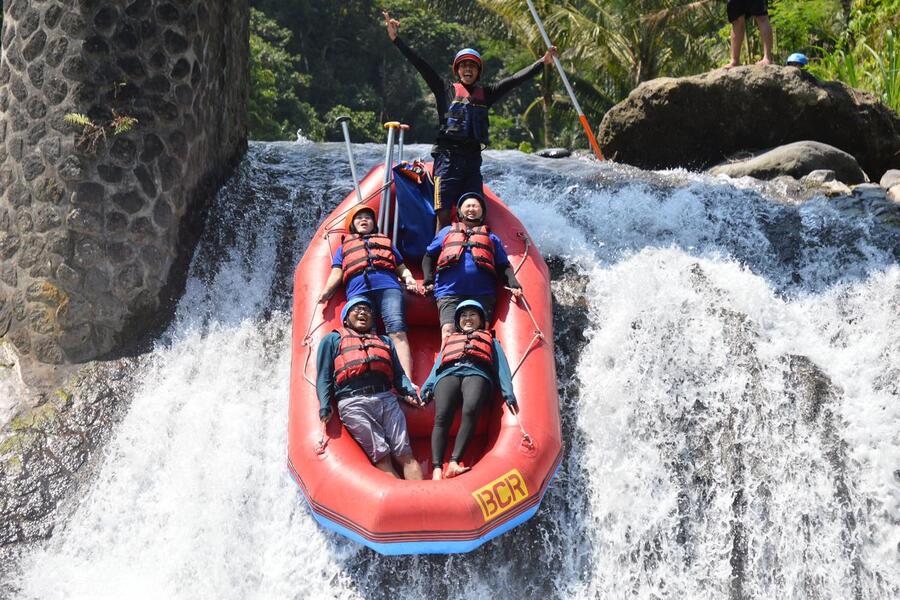
One feature associated with certain Telaga Waja rafting routes is a distinctive river descent of approximately 4–5 meters. Passing this section can become one of the most memorable moments of the trip, as the raft moves through a change in elevation accompanied by flowing water.
For first-time participants, the descent may feel exciting and a little intimidating. The best approach is to listen carefully to the guide’s briefing, maintain the instructed position, and follow the commands before approaching the section.
It is important to understand that this feature is not necessarily included in every rafting package. Its availability depends on the operator’s route and the river conditions on the day. If experiencing the descent is important to your trip, confirm the route details with the operator before booking.
Current Characteristics: How Extreme Are They Compared to Other Rivers?
The Telaga Waja River is often chosen by travelers looking for a more active white water experience. Compared with rafting on the Ayung River, which is commonly associated with scenic sections and a range of moderate rapids, Telaga Waja is often marketed for its longer route and more demanding sections.
However, the difficulty of any river depends on several factors. Water levels, rainfall, route selection, and the operator’s assessment all influence the experience. It is therefore more useful to compare the specific packages and conditions rather than assume that one river is always more extreme than another.
Current Characteristics That Make Telaga Waja Challenging
1. Sections with Strong Currents
Some parts of the river have stronger currents that require coordinated paddling. Participants should remain attentive and follow the guide’s commands when navigating these sections.
2. Rocky Rapids
Natural rocks and uneven river features can influence the direction of the water. The guide assesses the route and provides instructions to help the raft navigate these areas.
3. Changes in Water Flow
The speed and movement of the water may vary along the route. Rainfall and changing river levels can also affect these characteristics, making each trip dependent on the conditions of the day.
4. Narrow and Wide River Sections
The route may pass through different river formations. Narrower sections and wider stretches can create different paddling experiences and require participants to adjust their coordination according to the guide’s instructions.
Together, these features make Telaga Waja an interesting destination for people who enjoy active water sports and want to experience the changing characteristics of a natural river.
Avoiding Common Mistakes When Rafting at Telaga Waja
White water rafting is an enjoyable outdoor activity, but participants should understand that it involves natural risks. Lack of preparation, incorrect equipment use, and ignoring safety instructions can increase the chance of problems during the trip.
Knowing what to avoid before entering the river can help participants become better prepared and work more effectively with their group.
Common Rafting Mistakes and How to Avoid Them
1. Ignoring the Guide’s Instructions
One common mistake is failing to pay attention during the safety briefing or while navigating the river. Paddling commands and safety instructions are important for coordinating the raft. Listen carefully and follow the guide’s directions throughout the activity.
2. Wearing Safety Equipment Incorrectly
A loose helmet or poorly fitted life jacket may not provide the intended protection. Ask the guide or staff to check that your equipment fits properly before departure. Keep it secured throughout the rafting trip.
3. Panicking When Falling into the Water
Falling into the river can be frightening, but participants should try to remain calm and follow the rescue procedures explained during the briefing. Use the instructed floating position and wait for guidance from the rafting team. Do not attempt to stand in fast-moving water or swim independently toward the riverbank or raft unless directed by the guide.
4. Paddling Without Following the Commands
Paddling too early, too late, or in the wrong direction can disrupt the group’s coordination. Follow the guide’s commands and maintain the instructed paddling rhythm rather than trying to control the raft independently.
5. Moving Around Too Much Inside the Raft
Sudden movements can affect the raft’s balance, especially when passing through rapids. Remain in the instructed seating position, hold the designated safety areas, and avoid standing or changing seats without permission.
6. Bringing Unsecured Personal Belongings
Loose phones, cameras, jewelry, and other valuables can fall into the river. Bring only essential items and use suitable waterproof protection for devices when permitted by the operator.
The Thrill of Group Rafting: A More Exciting Shared Experience
Group rafting adds a social element to the adventure. Instead of navigating the river individually, participants share a raft and work together to respond to the guide’s commands.
Each person contributes to the group’s coordination by maintaining the correct position, paddling when instructed, and communicating with the other participants. This teamwork becomes particularly important when the raft enters sections with stronger currents or challenging rapids.
The experience can also create memorable moments. Friends may encourage each other through demanding sections, while families and coworkers can enjoy the satisfaction of completing the route together.
For companies and organizations, rafting may also be considered as part of a team-building program. The activity encourages communication, cooperation, and shared responsibility in an outdoor setting. However, group arrangements should be discussed with the operator in advance, including participant numbers, raft capacity, and any applicable age or health requirements.
Whether you are planning a trip with friends, family, or colleagues, choosing a suitable package and making sure everyone understands the safety briefing can help create a more enjoyable group experience.
Conclusion
Telaga Waja Adventure Rafting combines flowing river sections, varied rapids, and teamwork into an exciting outdoor activity in Karangasem, Bali. Its extended route and distinctive river features offer plenty of opportunities for participants to experience the challenges of white water rafting while enjoying the natural surroundings.
The adventure becomes even more rewarding when participants prepare properly, wear their equipment correctly, and follow the guide’s instructions. For groups, the shared experience of paddling together can also create lasting memories and strengthen cooperation.
If you are planning to try rafting in East Bali, explore the available Telaga Waja packages and confirm the route, inclusions, and operating conditions before booking. Get ready to enjoy an active river adventure with your friends, family, or teammates.
Frequently Asked Questions
1. How many people usually share one rafting boat?
The number of participants per raft depends on the boat capacity and the operator’s arrangements. Ask the provider about the maximum number of people per boat when booking, especially if you are traveling with a large group.
2. Can a group request to stay together in the same raft?
You can ask the operator to arrange your group in the same raft, but the final arrangement depends on boat capacity, participant numbers, and safety considerations. Larger groups may need to be divided into several rafts.
3. Should participants have previous rafting experience before joining?
Previous experience is not always required. Some packages accept beginners, subject to the operator’s age, health, and other participation requirements. First-time participants should pay close attention to the safety briefing and follow the guide’s instructions.
4. What should participants eat before a rafting activity?
Choose a light meal that gives you energy without making you feel overly full. Avoid heavy meals immediately before the activity, and follow any specific preparation advice provided by the operator. Participants should also stay hydrated.
5. Can participants wear glasses during Telaga Waja rafting?
If you need prescription glasses, ask the operator about suitable ways to secure them. A secure sports strap may help reduce the chance of losing them, but participants should follow the provider’s advice and avoid wearing loose accessories.
6. Is Telaga Waja rafting suitable for a company team-building event?
It can be an option for companies looking for an outdoor group activity. The experience involves communication, coordination, and shared effort. Discuss group size, participant requirements, and available arrangements with the operator before organizing the event.
7. What happens if one participant cannot keep up with the group’s paddling?
The guide manages the raft and gives commands based on the river conditions. Participants should inform the guide if they feel unable to continue paddling comfortably. They should not force themselves or change their position without instructions.
8. Can participants bring food or drinks inside the raft?
This depends on the operator’s rules and the selected package. It is generally better to avoid bringing loose food containers or drinks that can spill, fall into the river, or interfere with paddling. Ask the operator about refreshment arrangements during the trip.