
Rafting Telaga Waja Karangasem Bali: Exciting Adventure and Water Sports
Rafting Telaga Waja Karangasem is an exciting outdoor activity for visitors who want to explore a different side of Bali. Known for its beautiful beaches and rich cultural heritage, Bali also offers various adventure experiences, including white-water rafting on the Telaga Waja River.
Located in Karangasem Regency in East Bali, the Telaga Waja River offers a memorable rafting experience with flowing currents, challenging rapids, and scenic natural surroundings. Depending on the selected operator and route, the journey may cover approximately 14–16 kilometers and take around 2–3 hours on the water.
Beyond rafting, Bali has many other water sports that can complement your holiday. From snorkeling and diving to surfing and stand-up paddleboarding, visitors can choose activities that match their interests and preferred level of adventure.
This article explores what makes Rafting Telaga Waja Karangasem an appealing activity and introduces several other water sports worth considering during your visit to Bali.
The Uniqueness of Rafting on the Telaga Waja River
The Telaga Waja River is situated in Karangasem Regency, in the eastern part of Bali. It is a popular destination for white-water rafting, offering a combination of flowing currents, different rapid sections, and natural scenery.
The river’s characteristics and surrounding landscape create an experience that combines physical activity with outdoor exploration. Here are several features that make rafting on Telaga Waja worth considering.
1. Challenging Rapids
One of the main attractions of Telaga Waja rafting is the variety of rapids along the route. Participants may encounter waves, rocks, narrow passages, and sections that require coordinated paddling.
Some sections of the river are commonly associated with moderate to more demanding white-water conditions. However, rapid classifications can vary depending on the route, water levels, and rainfall. The difficulty of the entire journey should not be assumed to remain the same from beginning to end.
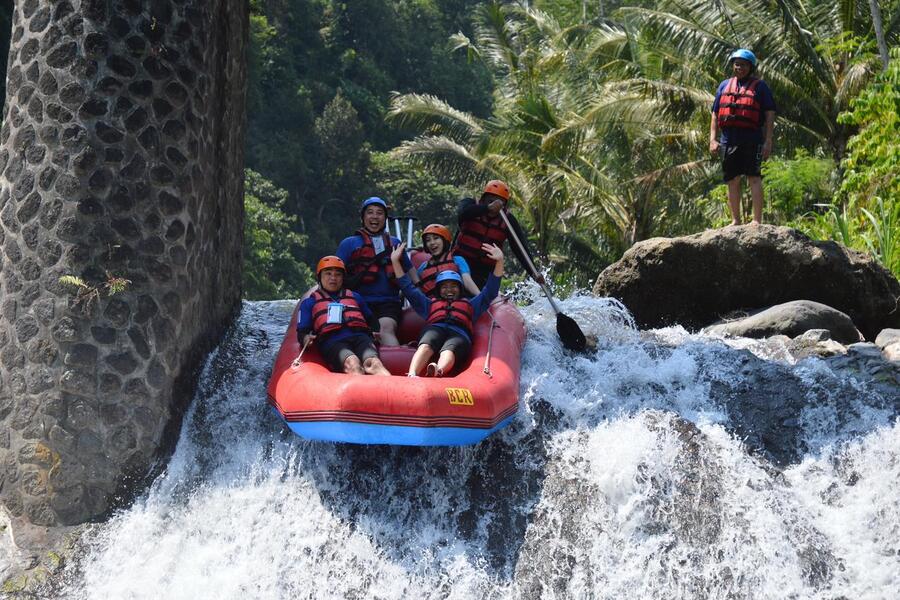
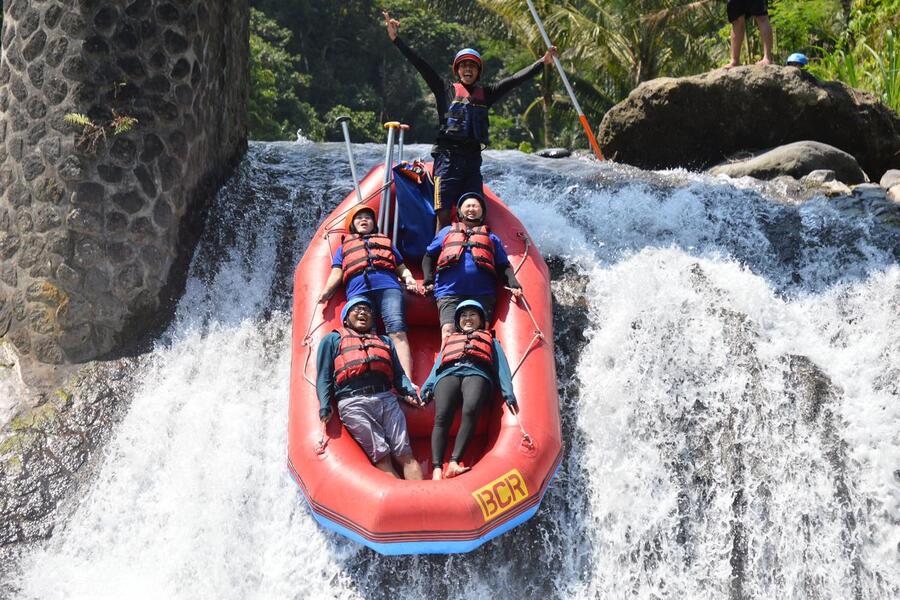
Certain routes are also known for a descent near Bajing Dam, often advertised as approximately four to five meters high. This feature can add excitement to the journey, but its availability and conditions should be confirmed with the rafting operator before booking.
2. Beautiful Natural Panorama
The natural scenery is another highlight of rafting on the Telaga Waja River. Along the route, participants can enjoy views of green hills, terraced rice fields, tropical vegetation, and rural surroundings.
The changing landscape provides a refreshing contrast to the excitement of navigating the rapids. Depending on the selected route, participants may also encounter natural rock formations or waterfall scenery.
The combination of river adventure and countryside views makes the experience appealing to visitors who want to enjoy Bali’s natural environment beyond its popular beaches.
3. Flowing River Water and Natural Surroundings
Telaga Waja is known for its flowing river water and mountain landscape. The appearance and clarity of the water can change depending on rainfall, sediment, and other environmental conditions.
These natural variations are part of the river environment. Rather than assuming that the water is always crystal clear, participants should understand that conditions can differ between visits.
For a more enjoyable experience, follow the operator’s instructions and avoid drinking untreated river water.
4. An Adventure for Different Experience Levels
Telaga Waja rafting can be considered by both first-time participants and people with previous rafting experience. Beginners can learn basic paddling techniques and safety procedures during the briefing before entering the river.
However, the activity involves moving water and natural obstacles, so it is not automatically suitable for every age or fitness level. Participants should check the operator’s minimum age, health, and physical requirements before booking.
Following the guide’s commands, maintaining coordination with other participants, and wearing the provided safety equipment are essential throughout the trip.
Preparation Before Rafting Telaga Waja Karangasem
Preparing the right personal items and understanding basic safety procedures can help make your rafting experience more comfortable. Consider the following preparations before starting your journey.
1. Wear Comfortable Clothes
Choose lightweight clothing that dries relatively quickly and allows you to move freely. Sportswear or a breathable T-shirt is generally more practical than heavy materials such as jeans.
2. Use the Provided Safety Equipment
Operators generally provide essential rafting equipment, including a helmet and life jacket. Make sure these items fit correctly and are secured before entering the river.
Do not adjust or remove your safety equipment while rafting unless instructed by your guide.
3. Wear Suitable Shoes or Sandals
Choose secure water shoes or outdoor sandals with good grip. Suitable footwear can help you move more comfortably when walking around the starting point, getting into the raft, or leaving the river.
Avoid loose footwear that may come off in the water.
4. Bring Additional Personal Items
Bring a change of clothes, a towel, and any essential personal medication. If you want to take photographs, use a waterproof camera or suitable waterproof protection for your phone.
Only handle electronic devices when the guide confirms that it is safe to do so.
5. Follow the Guide’s Instructions
Before the trip, the guide will explain paddling techniques, seating positions, commands, and basic safety procedures. Pay attention to the briefing and ask questions if anything is unclear.
During the journey, follow the guide’s instructions rather than making independent decisions when navigating obstacles or strong currents.
6. Understand Safety Procedures in Strong Currents
Rafting involves natural risks, and participants should know how to respond if they fall into the water.
If you fall out of the raft, try to remain calm and follow the safety position explained during the briefing. In moving water, guides may instruct you to float on your back with your feet raised and facing downstream.
Avoid standing in fast-moving water because your feet could become trapped between rocks. Do not attempt to swim independently back to the raft or riverbank. Follow the guide’s rescue instructions and use your life jacket as directed.
If the raft overturns, do not assume it will automatically return to its original position. Listen to the guide and follow the instructions for getting back to the raft or reaching a safe location.
Teamwork is also important. Coordinated paddling and clear communication help the group respond to the guide’s commands throughout the journey.
Other Interesting Water Sports in Bali
In addition to rafting on the Telaga Waja River, Bali offers a wide range of water sports for visitors with different interests. Some activities focus on exploring marine life, while others provide excitement through waves, speed, or balance.
Here are five water sports you can consider adding to your Bali holiday.
1. Snorkeling and Diving in Nusa Penida
Nusa Penida is known for its marine environment and underwater attractions. Snorkeling and diving allow visitors to explore coral reefs and observe various marine species in their natural habitat.
Some marine excursions in the area offer opportunities to see manta rays. However, wildlife sightings are never guaranteed, and participants should follow responsible marine tourism practices.
Snorkeling is generally suitable for people who want to explore underwater scenery near the surface, while scuba diving requires appropriate training and equipment.
2. Surfing at Kuta and Uluwatu Beaches
Bali is a popular destination for surfers, with Kuta and Uluwatu among its well-known surfing areas.
Kuta is often considered a convenient place for beginners to take surfing lessons, depending on the beach and wave conditions. Uluwatu is better known for its reef breaks and more demanding surf conditions, attracting experienced surfers.
Before entering the water, check the local surf conditions and choose a location that matches your ability.
3. Flyboarding in Tanjung Benoa
Flyboarding is a modern water sport that uses water pressure to lift participants above the surface. Riders wear a specially designed board connected to a watercraft through a hose.
The water pressure creates the sensation of hovering above the sea, making flyboarding an unusual activity for visitors looking for something different.
First-time participants generally receive instructions from an activity operator before trying the equipment. Always follow the operator’s guidance and safety requirements.
4. Parasailing and Jet Skiing
Parasailing and jet skiing are two popular water activities available in Bali, particularly around Tanjung Benoa.
Parasailing allows participants to enjoy an elevated view of the coastline while being lifted by a parachute connected to a boat. Jet skiing, on the other hand, offers a faster-paced experience as participants ride a motorized watercraft across the sea.
Both activities depend on weather and sea conditions. Follow the operator’s instructions and confirm the applicable safety requirements before participating.
5. Stand-Up Paddleboarding (SUP) in Sanur
For visitors who prefer a more relaxed water activity, stand-up paddleboarding is another option to consider.
SUP involves standing or kneeling on a wide board while using a paddle to move across the water. Sanur is one of the areas where visitors can find opportunities to try this activity, depending on local water and weather conditions.
Compared with white-water rafting or jet skiing, SUP generally offers a slower-paced way to enjoy the coastal environment. Beginners can start with basic instruction and practice balancing before moving farther from shore.
Conclusion: Discover Rafting and Water Sports in Bali
Rafting on the Telaga Waja River is an exciting outdoor activity for visitors who want to combine adventure with natural exploration. Its flowing currents, varied rapids, and countryside scenery create an experience that is different from a typical beach holiday.
However, Bali’s water sports experiences are not limited to rafting. Visitors can also explore marine life through snorkeling and diving, enjoy the waves while surfing, try flyboarding and jet skiing, or choose the more relaxed pace of stand-up paddleboarding.
Each activity offers a different way to experience the island’s waters. By considering your interests, experience level, and current weather conditions, you can choose activities that make your Bali holiday more enjoyable.
Whether you prefer navigating river rapids or exploring the coastline, Bali offers plenty of opportunities for an active and memorable adventure.
Frequently Asked Questions
1. Is Telaga Waja rafting located near Bali’s main water sports area?
No. Telaga Waja is in Karangasem Regency in East Bali, while many popular marine water sports, such as flyboarding and jet skiing, are concentrated around Tanjung Benoa in South Bali. Visitors should plan their travel time carefully if they want to experience both areas during one holiday.
2. Can I combine Telaga Waja rafting with other water sports in one day?
It may be possible to combine activities, but travel distances, activity durations, and operator schedules need to be considered. Rafting itself can take several hours, excluding transportation and preparation time. A separate day may provide a more comfortable schedule, especially when combining activities in different parts of Bali.
3. Which water sports in Bali focus on exploring underwater environments?
Snorkeling and scuba diving are the main options for exploring underwater scenery. Snorkeling usually takes place near the surface, while scuba diving allows trained participants to explore deeper underwater environments using specialized equipment.
4. Are river rafting and marine water sports affected by the same weather conditions?
Not in exactly the same way. River rafting is influenced by rainfall in the river’s watershed and changes in water levels or current strength. Marine activities are affected by factors such as wind, waves, visibility, and sea conditions. Operators assess these conditions separately before conducting activities.
5. What is the main difference between flyboarding and jet skiing?
Flyboarding uses water pressure to lift a participant above the sea on a specially designed board. Jet skiing involves riding a motorized watercraft across the water. Both provide different experiences, so the choice depends on whether you prefer balancing above the surface or controlling a watercraft.
6. Do visitors need previous experience to try stand-up paddleboarding?
Previous experience is not always necessary. Beginners can learn basic balancing and paddling techniques through an introductory lesson. However, they should start in suitable water conditions, use appropriate safety equipment, and follow the instructor’s guidance.
7. Why should surfers check the beach conditions before choosing between Kuta and Uluwatu?
The two areas can offer different wave characteristics and levels of difficulty. Kuta is commonly chosen for beginner lessons, while Uluwatu is known for more demanding reef breaks. Checking the surf conditions helps visitors choose a location that better matches their experience and ability.
8. How can visitors choose between rafting and other water sports in Bali?
Consider the kind of experience you want. Telaga Waja rafting is suitable to consider if you enjoy teamwork, paddling, and navigating river currents. Snorkeling and diving are options for exploring marine life, while surfing, flyboarding, jet skiing, and SUP offer different ways to enjoy the sea. Always check the activity requirements and conditions before booking.