

Rafting in Telaga Waja Is the Most Exciting Adventure!
Rafting in Telaga Waja is a popular adventure activity in Bali, offering a combination of flowing river currents, exciting rapids, and beautiful natural scenery. Located in Karangasem Regency, the Telaga Waja River attracts travelers who want to experience the thrill of navigating a river while exploring Bali’s countryside.
Along the route, participants may encounter lush vegetation, rocky riverbanks, green rice fields, and small waterfalls, depending on the section of the river and the surrounding conditions. One of the river’s main attractions is its relatively long rafting route, which some operators advertise as approximately 14–16 km. This gives participants an extended opportunity to experience different river sections and enjoy the scenery along the way.
Telaga Waja can appeal to both first-time rafters and experienced adventure enthusiasts. However, the river has sections that can be challenging, and its conditions may change with rainfall and water levels. Beginners should check the operator’s participation requirements and follow the guide’s instructions throughout the trip.
Read More: Telaga Waja Rafting Is the Ultimate Adventure for All Ages!
Route and Length of the Telaga Waja River Trail
Rafting on the Telaga Waja River takes participants through different sections of a natural river surrounded by Bali’s countryside. The exact route depends on the operator and package selected, but the experience generally combines calmer stretches with faster-moving water and exciting rapids.
The following overview describes the types of sections participants may encounter during the trip. It is a general guide rather than a fixed kilometer-by-kilometer itinerary.
- Starting Section: The journey begins with an opportunity to become familiar with the raft, the paddling technique, and the guide’s commands. The conditions in this section depend on the river’s current water level and the route selected.
- Intermediate Section: As the journey continues, participants may encounter faster currents, bends, and rapids that require cooperation and attention. Following the guide’s instructions helps the group respond to changing river conditions.
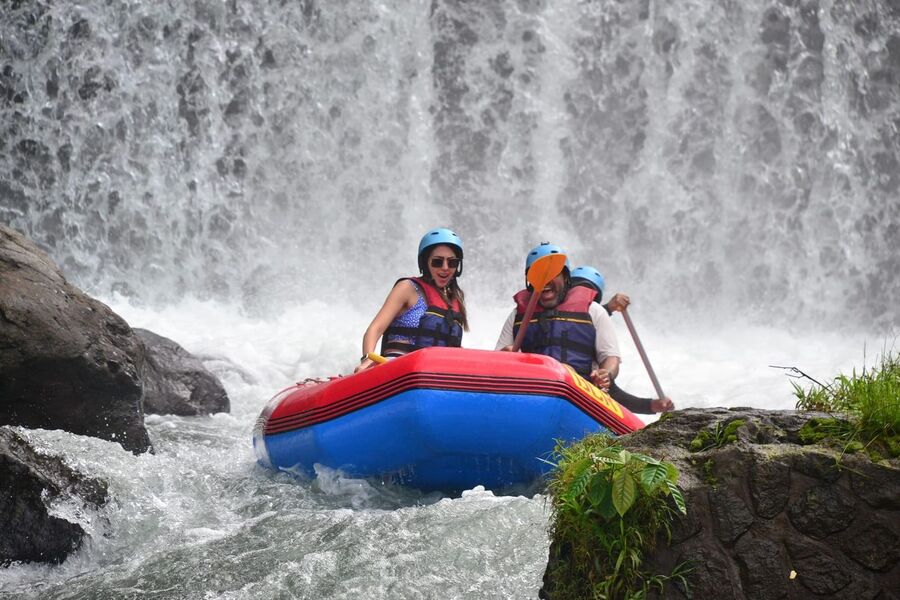
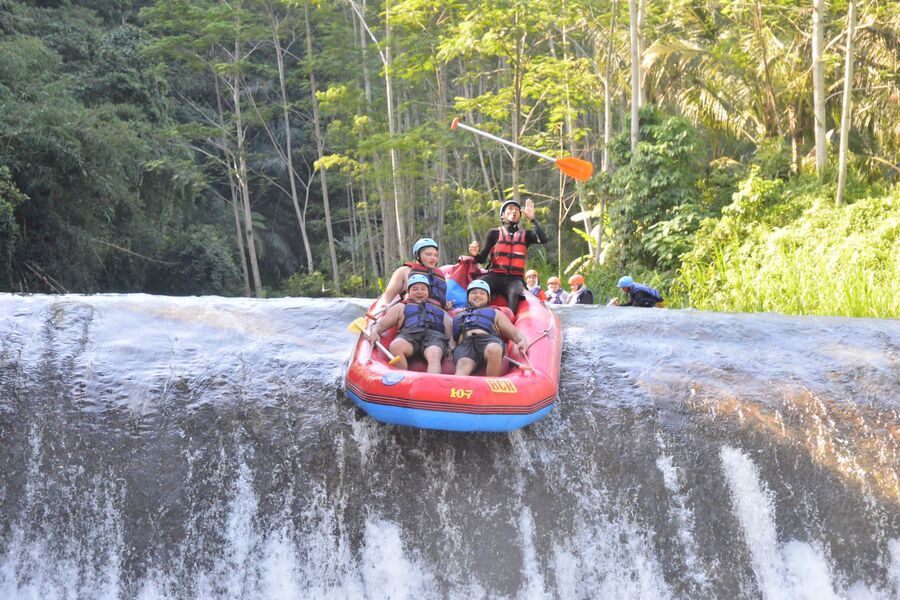
- Challenging Sections: Certain parts of the route may feature stronger currents, rocks, and other river features that add excitement to the adventure. Some routes also include a dam drop, subject to the operator’s course and current safety assessment.
- Final Section: Toward the end of the trip, participants continue following the designated route to the finishing point. Depending on the river conditions, the final stretch may offer a different pace and further opportunities to enjoy the surrounding landscape.
The rafting portion often takes around 2–3 hours, although the duration varies according to the route, water conditions, and operator. Participants should allow additional time for registration, the safety briefing, transportation, and changing clothes after the activity.
Rafting in Telaga Waja Is the Most Exciting Adventure!
Difficulty Levels of Rafting in Telaga Waja and Challenges Along the Route
The Telaga Waja River features different river conditions along its course. Participants may experience a combination of flowing stretches, bends, and rapids that require attention and teamwork.
Rather than assigning fixed difficulty levels to specific kilometers, it is more useful to understand the types of challenges that may occur throughout the journey.
- Calmer Stretches: Some sections provide an opportunity to become familiar with the raft and establish a paddling rhythm. Participants should still remain attentive and follow the guide’s instructions.
- Faster Currents and Rapids: Other sections may require coordinated paddling and quick responses to the guide’s commands. These stretches add excitement and make teamwork an important part of the experience.
- Rocky Sections and River Bends: Natural obstacles and changes in the river’s direction may require the guide to adjust the raft’s course. Participants should pay attention to instructions and avoid making independent movements that could interfere with the group.
- Dam Drop on Selected Routes: Certain Telaga Waja rafting routes feature a water drop at a dam. Its reported height varies by source, so participants interested in this feature should confirm the exact route and conditions with their operator.
The difficulty of the river can change with rainfall, water levels, and other environmental factors. A route that feels different on one day may present different challenges on another. For this reason, participants should follow the operator’s assessment of current conditions rather than rely solely on general descriptions.
Although rafting guides help participants navigate the river, rafting is an outdoor adventure that involves inherent risks. Appropriate equipment, a clear safety briefing, and cooperation with the guide are essential throughout the trip.
Natural Beauty Along the Rafting Trip
In addition to its exciting river conditions, Telaga Waja offers opportunities to enjoy Bali’s natural landscape. The scenery varies along the route, creating a balance between active rafting and moments to appreciate the surroundings.
Participants may encounter:
- Tropical Vegetation: Green vegetation along the riverbanks contributes to the natural atmosphere and provides a refreshing contrast to the excitement of the rapids.
- Rocky Cliffs and Riverbanks: Natural rock formations and uneven riverbanks add character to the landscape and make the journey visually interesting.
- Green Rice Fields: Depending on the route and surrounding terrain, participants may see agricultural landscapes that reflect Bali’s rural character.
- Small Waterfalls and Streams: Some sections may feature waterfalls or streams flowing toward the river, adding to the scenery along the journey.
The combination of flowing water, vegetation, and countryside views makes rafting in Telaga Waja appealing to travelers who want more than an adrenaline-filled activity. However, visibility, water clarity, and the appearance of the landscape may vary with weather and seasonal conditions.
Participants should also follow the guide’s instructions before taking photographs. It is best to keep cameras and phones securely stored unless they are protected for water activities and can be used without distracting from the trip.
Preparation Tips Before Starting the Adventure
Preparing properly can make your Telaga Waja rafting trip more comfortable and help you understand what to expect. Before heading to the river, consider the following tips.
- Wear Comfortable Clothing: Choose lightweight clothing that allows you to move freely and dries relatively quickly. Swimwear or suitable sportswear may be appropriate, depending on your comfort and the operator’s recommendations.
- Choose Suitable Footwear: Wear secure water shoes or sports sandals designed to stay on your feet in wet conditions. Avoid footwear that can easily slip off during the activity.
- Bring a Change of Clothes: You will likely get wet during the trip, so bring dry clothes for after rafting. A small towel and personal toiletries may also be useful.
- Protect Your Skin: Apply water-resistant sunscreen before the activity and consider other sun protection recommended by the operator.
- Listen Carefully to the Guide: Pay attention during the safety briefing and learn the basic paddling commands. Follow instructions throughout the trip, particularly when approaching rapids or other challenging sections.
- Keep Valuables Secure: Avoid bringing unnecessary valuables onto the raft. Store phones, cameras, wallets, and other personal belongings in a secure place or use suitable waterproof protection when permitted.
- Check the Route and Current Conditions: Before departure, confirm the expected duration, route, and participation requirements with the operator. Ask whether any particular river features are included and whether the current conditions affect the planned trip.
Good preparation helps participants focus on the adventure while reducing avoidable inconvenience. If you have a medical condition, mobility limitation, or concern about your ability to participate, discuss it with the operator before booking.
Conclusion
Rafting in Telaga Waja is an exciting way to experience Bali’s natural environment while navigating a river with varied currents and rapids. Its relatively long route, changing river sections, and surrounding countryside make it an appealing choice for travelers seeking an outdoor adventure.
The experience combines physical activity, teamwork, and opportunities to appreciate the scenery along the river. However, the exact route, duration, difficulty, and availability of particular features can vary depending on the operator and river conditions.
If you are planning to try Telaga Waja River Rafting, check the route details, safety procedures, and current conditions before booking. Prepare suitable clothing and footwear, secure your valuables, and follow the guide’s instructions throughout the trip. With appropriate preparation, you can enjoy a memorable rafting adventure during your Bali holiday.
Frequently Asked Questions
1. Why can the Telaga Waja rafting route take several hours?
The route includes multiple river sections, and participants must navigate them at a pace appropriate to the conditions. The total time on the water depends on the route, water levels, group coordination, and the operator’s procedures. Registration, safety briefings, transportation, and changing clothes add to the overall time needed for the activity.
2. Does every Telaga Waja rafting route cover the same distance?
No. The advertised distance can differ between operators and packages because the starting point, finishing point, and selected course may vary. Some operators advertise routes of approximately 14–16 km, while others may provide different estimates. Confirm the distance directly with your chosen operator if the route length is important to your plans.
3. Can the river’s difficulty change between the beginning and end of a rafting trip?
Yes. Different sections of the river may have different currents, bends, and rapids. Rainfall and changes in water levels can also affect the conditions along the route. Participants should follow the guide’s instructions throughout the journey rather than assume that the difficulty will remain the same from start to finish.
4. Is the dam drop included in every Telaga Waja rafting itinerary?
Not necessarily. The dam drop is associated with certain routes, and its availability depends on the operator’s course and the current safety assessment. The reported height can also vary between sources. If you want to experience this feature, ask the operator whether it is included in your selected package and whether conditions permit the raft to pass through it.
5. What is the best way to prepare for a relatively long rafting route?
Wear comfortable clothing and secure footwear suitable for wet conditions. Bring a change of clothes, protect your skin from the sun, and avoid carrying unnecessary valuables. Before starting, pay attention to the safety briefing and make sure you understand the guide’s basic commands. You should also allow enough time for the full activity rather than scheduling another appointment too closely afterward.
6. Can weather affect the scenery and experience during Telaga Waja Rafting?
Yes. Rainfall and seasonal changes can influence water levels, current strength, water clarity, and the appearance of the surrounding landscape. Weather can also affect whether a particular section is suitable for rafting. Check the forecast and ask your operator about current river conditions before departure.
7. How can I compare Telaga Waja rafting packages if the routes are different?
Compare more than the advertised price or distance. Check the starting and finishing points, estimated time on the water, route features, safety equipment, guide arrangements, transportation, meals, and other included services. If you are interested in a particular feature, such as a dam drop, confirm that it is part of the package. This makes it easier to choose an option that matches your schedule and expectations.