
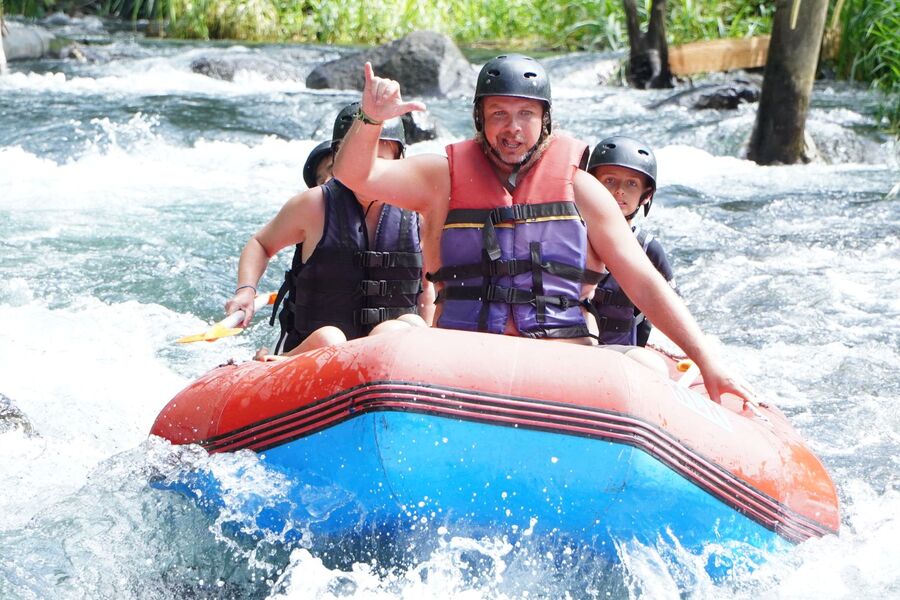
Complete Guide to the Best Rafting Experience in Telaga Waja
Rafting in Telaga Waja River is one of the popular ways to enjoy a rafting experience in Bali. Located in Karangasem Regency, eastern Bali, the river is known for its flowing currents, extended rafting routes, and beautiful natural surroundings. These features create an exciting outdoor adventure for travelers who want to explore a different side of the island.
Telaga Waja River offers rafting routes commonly ranging from approximately 14–16 kilometers, depending on the operator. The journey generally takes around 2–3 hours on the water, passing through rapids, rocky sections, small waterfalls, and river bends that add variety to the adventure.
Besides the excitement of navigating the river, participants can also observe Balinese rural landscapes from a different perspective. Green rice fields, traditional bridges, tropical vegetation, and local activities along the riverbanks create a memorable atmosphere throughout the trip.
Read More: Telaga Waja Rafting Is the Best Adventure Holiday in Bali!
Telaga Waja River Location and Rafting Route
Telaga Waja River is located in Karangasem Regency, Bali. The journey from popular tourist areas such as Kuta or Denpasar generally takes around two hours, although actual travel time depends on traffic and the exact pickup location.
The river system is connected to the mountainous landscape around Mount Agung, flowing through green hills, tropical vegetation, and fertile agricultural areas. Rafting operators commonly use routes in the Rendang area, although the exact starting and finishing points may differ between providers.
The rafting course offers a combination of flowing currents, rapids, rocky sections, and scenic landscapes. Along the way, participants may encounter natural waterfalls, river cliffs, and traditional bridges. The sound of flowing water and surrounding wildlife also contributes to the natural atmosphere.
Although Telaga Waja is mainly known for rafting, the surrounding countryside offers opportunities to appreciate Bali’s rural environment. Visitors interested in other activities, such as trekking or relaxing near the river, should check which locations are accessible and whether separate arrangements are required.
What Makes Telaga Waja River Special?
Telaga Waja River is recognized for its flowing water and varied rafting route. Its natural characteristics are influenced by the surrounding highlands, riverbed formations, elevation changes, and rainfall.
Clear Water and Natural Surroundings
The river is often appreciated for its relatively clear water, particularly when conditions are favorable. Water clarity can change depending on rainfall, sediment, and other environmental factors, so it should not be assumed to remain the same throughout the year.
The surrounding landscape is another attraction. Green hills, terraced rice fields, and tropical vegetation create a refreshing environment for participants during the journey.
An Extended Rafting Route
With routes commonly offered at approximately 14–16 kilometers, Telaga Waja provides an extended rafting experience compared with shorter river trips. The journey generally takes around 2–3 hours on the water, depending on the operator and river conditions.
This extended route allows participants to experience different sections of the river, from flowing stretches to more challenging rapids.
A Steep River Descent
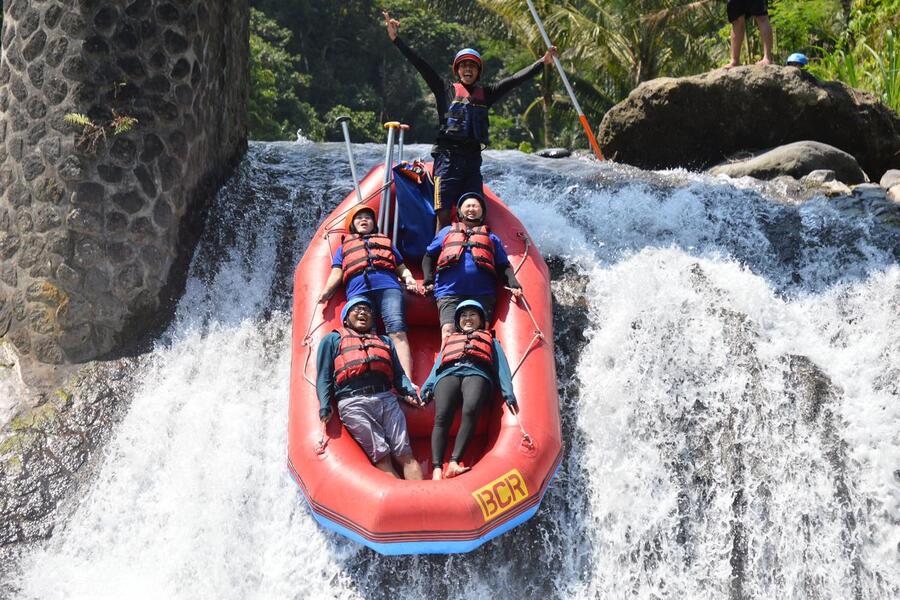
Some Telaga Waja rafting routes feature a notable descent over a river structure, often described as approximately 4–5 meters high. This section can create one of the most memorable moments of the trip.
However, the exact structure, height, and availability of this feature depend on the route and operator. Participants should follow the guide’s instructions when approaching the descent, as no river feature should be considered risk-free.

Challenges to Expect When Rafting in Telaga Waja
Telaga Waja River offers different river conditions that make the rafting journey exciting for adventure lovers. Some of the challenges participants may encounter include:
- Rapids with Flowing Currents: Different sections of the river require participants to coordinate their paddling and follow the guide’s instructions.
- Steep River Descent: Certain routes include a descent over a river structure that creates a sudden change in the raft’s movement.
- Natural Rocks and Obstacles: Rocky sections require careful navigation and coordination to help the raft pass through the selected route.
- River Bends: Changes in the river’s direction require participants to respond to paddling instructions and maintain teamwork.
These challenges are part of what makes the journey interesting. Experienced guides help participants navigate the route by assessing the river conditions and providing instructions throughout the trip.
With suitable preparation and attention to the safety briefing, participants can enjoy the adventure while understanding the responsibilities involved in river rafting.
Safety and Guidance for Beginners Before Starting Telaga Waja Rafting
First-time participants can join selected Telaga Waja rafting trips, provided they meet the operator’s requirements and are comfortable with the activity. Although the river is known for its challenging sections, beginners can receive guidance from trained river instructors.
Safety Equipment
Rafting operators commonly provide essential equipment, including:
- Life Jackets: Provide buoyancy and must be worn and adjusted correctly throughout the activity.
- Helmets: Help protect the head from potential impacts during the trip.
- Paddles: Used by participants to coordinate movements and help navigate the raft.
Participants should check that their equipment fits properly before entering the river. Safety equipment reduces certain risks but does not eliminate all hazards associated with rafting.
Professional River Guides
Each raft is generally accompanied by a guide who provides instructions, helps coordinate paddling, and assesses the river route. Participants should communicate any concerns and follow the guide’s directions.
Pre-Rafting Safety Briefing
Before departure, participants should receive an explanation of basic paddling techniques, seating positions, river conditions, and emergency procedures. Pay particular attention to what to do if you fall out of the raft.
Choosing a Suitable Route
The suitability of a rafting trip depends on the participant’s physical condition, experience, and the river conditions on the day. Beginners should inform the operator that it is their first rafting experience and ask which available trip is appropriate.
Complete Guide to the Best Rafting Experience in Telaga Waja
When Is the Best Time for Rafting in Telaga Waja?
Rafting in Telaga Waja is offered throughout much of the year, but the experience can differ between the dry and rainy seasons. The best time depends on the weather, river conditions, and the type of adventure participants prefer.
Dry Season: April to October
The dry season generally brings less frequent rainfall and can offer more predictable weather for outdoor activities. Participants may find it easier to enjoy the surrounding scenery when the weather is sunny.
However, river conditions still vary, and the dry season does not guarantee a particular water level or current strength.
Rainy Season: November to March
During the rainy season, increased rainfall may affect water levels and current strength. Some participants enjoy the more dynamic river conditions, but stronger currents can also increase the difficulty of certain sections.
Operators should assess the weather and river conditions before each trip. If conditions are unsuitable, the route may be adjusted or the activity postponed for safety reasons.
Recommended Departure Time
Many rafting operators offer morning departures, commonly between 9:00 AM and 11:00 AM. Morning trips can be a convenient option for visitors who want to enjoy the activity before continuing with other holiday plans.
The actual departure schedule depends on the operator and selected package, so confirm your pickup and starting time when booking.
Telaga Waja Rafting Packages and Prices
The price of rafting packages on Telaga Waja River varies depending on the service provider, facilities, and additional services included.
A rafting package may offer some of the following facilities:
- Rafting safety equipment, including helmets and life jackets
- River guide and rafting instructions
- Accident insurance, subject to the package’s policy and coverage
- Lunch after the rafting activity
- Hotel pickup and drop-off transportation
- Photo and video documentation, depending on the package
Prices may vary between operators and booking channels. The IDR 300,000–600,000 per-person range can be used as an indicative estimate from the original article, but it should not be treated as a confirmed current price.
Before making a reservation, check the latest rate and confirm whether lunch, transportation, insurance, and photography are included or charged separately.
Preparation Tips Before Departing for Telaga Waja Rafting
Preparing the right clothing and personal belongings can make the rafting experience more comfortable. Here are some useful tips to consider before departure:
- Wear Comfortable Clothes: Choose lightweight, quick-drying clothing suitable for water activities.
- Use Appropriate Footwear: Water shoes or secure sandals designed for outdoor activities are preferable to loose footwear.
- Bring a Change of Clothes: Pack dry clothes and personal toiletries for after the rafting trip.
- Apply Sunscreen: Use water-resistant sunscreen to help protect your skin from sun exposure.
- Store Valuables Safely: Avoid bringing wallets, jewelry, or unprotected electronic devices onto the raft.
- Bring Personal Medication: If you need regular medication, inform the operator and keep it stored appropriately before starting the activity.
It is also advisable to arrive on time, listen carefully during the briefing, and inform the operator about any medical conditions or physical limitations before participating.
Conclusion
Telaga Waja River offers an exciting rafting adventure for travelers who want to experience Bali’s natural landscapes while navigating flowing currents and challenging river sections. Its extended route, natural waterfalls, rocky obstacles, and distinctive river descent create a varied experience for outdoor adventure lovers.
Beyond the excitement, participants can appreciate the surrounding countryside, learn teamwork, and enjoy the guidance of experienced river instructors. Choosing the right season, understanding the package inclusions, and preparing properly can help make the trip more enjoyable.
Whether you are a first-time participant or an experienced adventure seeker, rafting in Telaga Waja is worth considering as part of your Bali holiday. Check the route and current conditions with your chosen operator before booking, then get ready to enjoy an unforgettable river adventure.
Frequently Asked Questions
1. How much time should I set aside for rafting, including preparation?
The rafting journey itself commonly takes around 2–3 hours on the water. You should also allow additional time for registration, changing clothes, the safety briefing, and post-rafting arrangements. Transportation time depends on your pickup location.
2. Are the starting and finishing points always the same for every rafting operator?
No. Operators may use different access points and finishing locations along the river. Confirm the exact meeting point, starting location, and post-rafting transfer arrangements before your trip.
3. Can I choose a shorter route if I do not want to raft for several hours?
Route options depend on the operator’s available packages. Ask whether shorter alternatives are offered and whether they use a different starting or finishing point.
4. Does water clarity affect the rafting experience?
Water clarity can influence how the river looks, but it does not determine whether a route is suitable for rafting. River safety assessments also consider water level, current strength, rainfall, and other conditions.
5. What should I check in the insurance included in a rafting package?
Ask whether the insurance is included in the quoted price, what activities and incidents it covers, and whether there are exclusions or participant eligibility requirements. Do not assume that every package provides identical coverage.
6. Is it possible for an operator to change the rafting route on the day of the activity?
Yes. Operators may adjust the route according to rainfall, water levels, current strength, and safety assessments. This is one reason why the exact route should be confirmed with the provider rather than assumed from general descriptions.
7. How can I tell whether a rafting package offers good value for its price?
Compare the total price with the services included. Pay attention to equipment, guide services, insurance, lunch, transportation, documentation, and any additional charges. A lower price does not necessarily include the same facilities as a more comprehensive package.
8. What should I do if I have a physical limitation but still want to try rafting?
Discuss your condition with the operator before booking. Ask about participant requirements, route difficulty, and available assistance. The operator can help determine whether a particular trip is suitable, although some conditions may make rafting inadvisable.