
Best Rafting in Bali: Explore River Routes and Adventure Options
Understanding the Best Rafting in Bali Through River Characteristics
The term best rafting in Bali is often used by travelers searching for a rafting experience before choosing a destination or operator. However, “best” does not always mean the strongest currents or the longest route. The right choice should consider your experience, river conditions, facilities, safety standards, and the type of adventure you want.
One destination worth considering is Telaga Waja in Karangasem. The river features a relatively long route with a combination of faster currents, rapids, turns, calmer sections, and Bali’s natural scenery.
According to operator information, the route can cover approximately 12–16 kilometers, while the rafting activity generally takes around 2.5–3 hours. The actual duration and river experience can vary depending on water conditions and group speed.
What Makes a Rafting Experience Different?
Choosing the best rafting tour in Bali is not simply about finding the most extreme activity. A good rafting experience usually combines river characteristics, professional guides, equipment, environmental conditions, and an activity level that matches the participants.
A Long and Varied Route
Telaga Waja offers a route with changing characteristics throughout the journey. Participants can move through calmer stretches before encountering currents, rapids, turns, or drops that require better coordination.
This variety means participants cannot rely only on physical strength. They need to follow the guide’s commands and work together with everyone inside the raft.
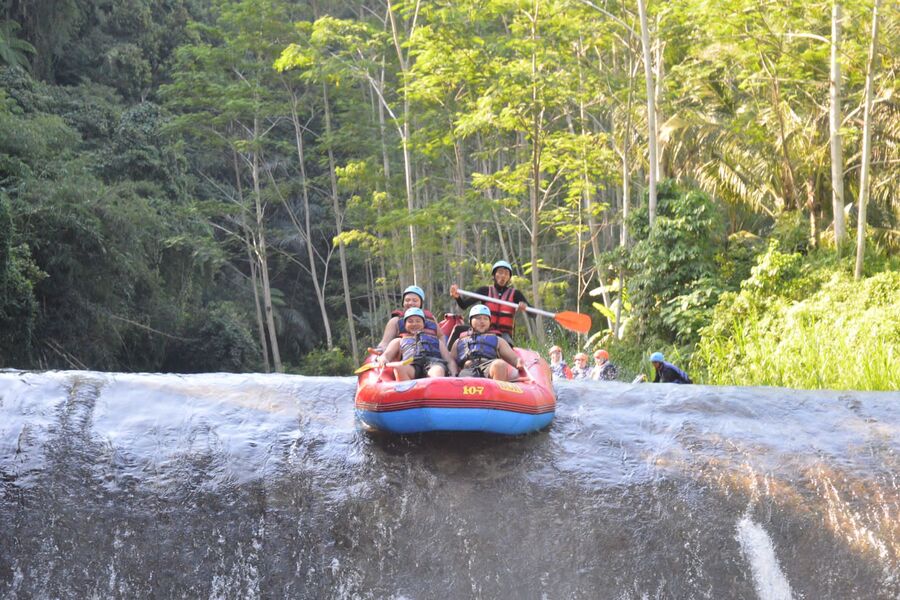
Natural Scenery in Karangasem
Rafting also provides a different perspective of Bali’s landscape. Along the route, participants may pass rice fields, tropical vegetation, cliffs, smaller streams, and rural surroundings.
When weather conditions are favorable, the surrounding area may also offer mountain views. Calmer sections of the river provide an opportunity to appreciate the scenery without constantly focusing on the rapids.
A Combination of Currents and Rapids
For travelers looking for the best white water rafting in Bali, river conditions are naturally an important consideration. Telaga Waja features sections with more active currents and rapids that require coordination between participants and the guide.
However, river conditions are not always the same. Rainfall and changes in water levels can affect the current, meaning a rafting trip on one day may feel different from another.
How to Choose the Right Rafting Destination
When searching for the best river rafting in Bali, do not compare destinations based only on their names. Consider how the activity matches your personal needs and travel plans.
Before choosing a rafting experience, check:
- River characteristics and route length
- Estimated activity duration
- Difficulty level
- Guide experience and role
- Safety equipment
- Facilities after rafting
- Food and refreshments
- Transportation options
- Participant requirements
- Weather and river conditions
This approach helps travelers make decisions based on practical factors rather than popularity alone.
What Is Usually Included in a Rafting Package?
Facilities can vary depending on the operator and selected package. Telaga Waja operator information lists rafting equipment, professional guides, insurance, lunch, mineral water, lockers, showers, and towels among the available services.
Hotel transportation and photography may depend on the package or additional services. Travelers should therefore check the package details carefully before making a reservation.
When comparing a best Bali rafting tour package, look at the complete list of inclusions rather than focusing only on the advertised price. Two packages with different prices may also differ in transportation, meals, facilities, or additional services.
How Difficult Is Telaga Waja Rafting?
Telaga Waja combines calmer sections with more active parts of the river. Participants need to paddle together and follow instructions when the raft enters sections that require better coordination.
For beginners, the experience can be suitable as long as they meet the operator’s requirements and the river conditions are considered appropriate. Professional guides play an important role in explaining how participants should respond to changing river conditions.
Experienced rafters should also follow the safety briefing. Previous rafting experience does not mean that participants can ignore the characteristics of a new river, weather conditions, or guide instructions.
Who Is Suitable for This Activity?
Rafting can be a good option for travelers looking for an outdoor activity with friends, family, or a group. However, suitability still depends on individual physical condition, operator requirements, and the river conditions on the day of the activity.
First-time rafters should not compare their abilities with more experienced participants. The main priority should be understanding instructions and maintaining coordination throughout the journey.
Experienced participants can enjoy the changing currents and longer route, but they should still follow the safety procedures established by the operator.
Preparing for Your Rafting Trip
Simple preparation can make the experience more comfortable. Wear clothing that dries easily and footwear that is suitable for a wet environment.
Bring a change of clothes for after the activity. Valuable items should not be taken into the raft and should instead be stored using the facilities provided by the operator.
Before leaving your hotel, check the meeting point, schedule, package inclusions, and transportation arrangements. This is especially important for travelers who have other activities planned on the same day.
Safety Should Be a Priority
When searching for the best place for rafting in Bali, safety should be one of the main considerations. Rafting takes place in a natural environment, so certain risks cannot be completely eliminated.
Participants should wear their helmet and life jacket correctly and pay attention during the safety briefing. Paddling commands from the guide should also be followed because the movement of everyone in the raft needs to remain coordinated.
Important safety practices include:
- Use all safety equipment according to instructions.
- Pay attention to the briefing before entering the river.
- Follow the guide’s commands during the journey.
- Do not stand inside the raft unless instructed.
- Keep personal belongings safely stored.
- Inform the operator about any condition that may affect participation.
- Do not continue if you are feeling unwell.
Safety equipment and procedures can help reduce risks, but they cannot eliminate every risk associated with a natural river environment. Weather and river conditions must also be taken into account.
When Are River Conditions Most Suitable?
There is no single river condition that is automatically best for every participant. Water levels can change because of rainfall in upstream areas, which can also affect current strength.
Travelers with less rafting experience may feel more comfortable when conditions are easier to manage. More experienced participants may prefer a more active river, provided the conditions remain within the operator’s safety requirements.
Before departure, check the weather forecast and confirm current river conditions with the operator. The decision to operate should follow professional assessment based on the actual conditions.
Tips for a Better Rafting Experience
Travelers searching for the best river for rafting in Bali should not focus only on how powerful the rapids are. Consider the complete experience, including transportation, preparation, facilities, safety briefing, guide support, and conditions after the activity.
Beginners should follow the group’s rhythm and avoid attempting their own maneuvers. Experienced rafters should also treat every river as a different environment because water conditions and procedures can vary.
Do not overlook the calmer sections of the route. They provide time to recover energy and enjoy the surrounding landscape before continuing toward more active parts of the river.
Conclusion
Best rafting in Bali is not simply about finding the river with the biggest rapids. A suitable experience should consider the route, difficulty level, safety standards, facilities, river conditions, and the needs of each participant. Telaga Waja in Karangasem offers a combination of a relatively long route, varied currents, and natural scenery that can make it an appealing rafting destination in Bali.
If you are planning a rafting trip, check the package details, facilities, river conditions, and transportation options before making a reservation. Contact the operator through the official website to get the latest information and choose a rafting service that fits your travel plans.
FAQ
What does Best Rafting in Bali actually mean?
Best rafting in Bali should be understood according to each traveler’s needs rather than simply the level of excitement. River characteristics, safety, facilities, duration, and suitability for participants are all important factors.
Is Telaga Waja suitable for first-time rafters?
Beginners can participate as long as they meet the operator’s requirements and the river conditions are appropriate. Participants should follow the safety briefing and guide instructions throughout the activity.
How long does Telaga Waja rafting take?
The rafting activity generally takes around 2.5–3 hours according to operator information. The actual duration may vary depending on river conditions and group speed.
What should I bring for rafting?
Wear comfortable clothing that dries easily and suitable footwear for water activities. Bring a change of clothes and keep valuable items in the storage facilities provided.
Is hotel transportation available?
Transportation can depend on the selected package and hotel location. Confirm the pickup point, schedule, additional costs, and transportation arrangements before booking.